Beschreibung
Produktdetails
Format
ePUB
Kopierschutz
Nein
Family Sharing
Nein
Text-to-Speech
Ja
Erscheinungsdatum
23.11.2020
Herausgeber
Anne Etienne + weitereVerlag
Intellect BooksSeitenzahl
241 (Printausgabe)
Sprache
Englisch
EAN
9781789383669
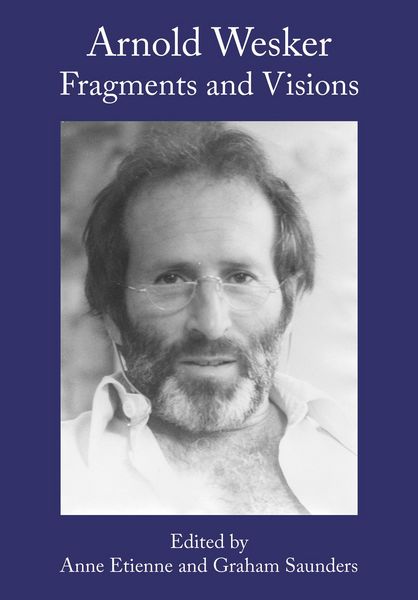
This new collection adds significantly to the body of scholarship on this important dramatist. This is the first study of the whole body of Wesker's work, and has created new interest in this key figure in post-war British theatre.
A new study of Wesker's work is overdue. The editors are recognized scholars in the field with a track record of publication on British theatre. An impressive list of contributors comprises important scholars of post-war theatre - including John Bull and Chris Megson - alongside practitioners such as Edward Bond and Pamela Howard, who bring professional insights to bear.
Arnold Wesker was hailed in the press as 'one of the great overlooked' of British drama when he died in April 2016. Despite his pivotal engagement with the cultural politics of 1960s Britain and his international career, only a fraction of Wesker's dramatic output tends to be studied. He is still remembered and discussed as the author of The Trilogy, three plays staged between 1958-60 that fail to reflect the daring aesthetics of his later work, thereby perpetuating an incorrect image of a naturalist playwright.
This important new book remedies the recent critical neglect of the dramatist, building on existing scholarship and introducing new insights and perspectives. It examines the whole body of Wesker's work for the first time, including some of his non-dramatic work, and considers it from a variety of perspectives. These include Wesker's reception in Europe, his Jewishness and his attitude to politics and to community. Significant use is made of material from the Arnold Wesker archive, held by the Harry Ransom Humanities Research Center at the University of Texas at Austin, USA.
It includes chapters on Wesker's representation of, and attitude towards, women, his relationship with his Jewish origins and identity, and his role in establishing Centre 42 following his imprisonment for participation in the Aldermaston March in 1959. Centre 42 was initially a touring festival aimed at devolving art and culture from London to the other working class towns of Britain, and arose from Resolution 42 of the 1960 Trades Union Congress, which concerned the importance of arts in the community.
Of most interest to academics and scholars of post-war British theatre, and to those teaching and studying theatre and drama. Accessibly written, with potential for textbook and reading list use and of interest to anyone with interest in British theatre history of the 1950s and 1960s .
Noch keine Bewertungen vorhanden
Verfassen Sie die erste Bewertung zu diesem Artikel
Helfen Sie anderen Kundinnen und Kunden durch Ihre Meinung.
Kurze Frage zu unserer Seite
Vielen Dank für Ihr Feedback
Wir nutzen Ihr Feedback, um unsere Produktseiten zu verbessern. Bitte haben Sie Verständnis, dass wir Ihnen keine Rückmeldung geben können. Falls Sie Kontakt mit uns aufnehmen möchten, können Sie sich aber gerne an unseren Kund*innenservice wenden.
zum Kundenservice