• Produktbild: Spoken Word in the UK
  • Produktbild: Spoken Word in the UK

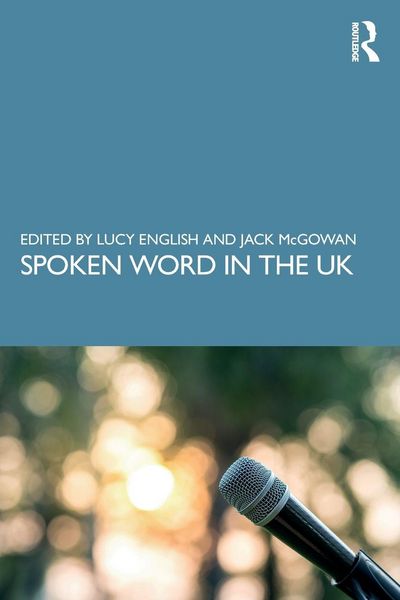
Spoken Word in the UK

49,99 €

inkl. gesetzl. MwSt., Versandkostenfrei


Beschreibung

Produktdetails

Einband

Taschenbuch

Erscheinungsdatum

29.04.2021

Abbildungen

6 SW-Abb., 6 SW-Zeichn.

Herausgeber

English Lucy + weitere

Verlag

Taylor & Francis

Seitenzahl

490

Maße (L/B/H)

23,4/15,6/2,6 cm

Gewicht

737 g

Sprache

Englisch

ISBN

978-0-367-35253-0

Beschreibung

Produktdetails

Einband

Taschenbuch

Erscheinungsdatum

29.04.2021

Abbildungen

6 SW-Abb., 6 SW-Zeichn.

Herausgeber

Verlag

Taylor & Francis

Seitenzahl

490

Maße (L/B/H)

23,4/15,6/2,6 cm

Gewicht

737 g

Sprache

Englisch

ISBN

978-0-367-35253-0

Herstelleradresse

Libri GmbH
Europaallee 1
36244 Bad Hersfeld
DE

Email: gpsr@libri.de

Noch keine Bewertungen vorhanden

Verfassen Sie die erste Bewertung zu diesem Artikel

Helfen Sie anderen Kundinnen und Kunden durch Ihre Meinung.

Kundinnen und Kunden meinen

Bewertungen (0)

Die Leseprobe wird geladen.
  • Produktbild: Spoken Word in the UK
  • Produktbild: Spoken Word in the UK
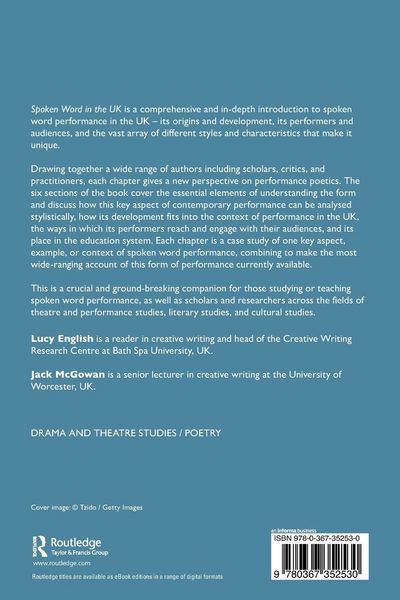
  • Foreword by Luke Kennard; Introduction: Setting the Stage: An Introduction to Spoken Word in the UK - Jack McGowan and Lucy English (Editors); Section 1: Background to Spoken Word in the UK; Chapter 1: Biting Back Against the Fascist Octopus: The Story of Apples and Snakes - Russell Thompson; Chapter 2: Suffering Fools: The survival and adaptation of British absurd, comic, and satirical traditions in the era of poetry slams - Steve Larkin; Chapter 3: Black Country, Ay We - Voices from Post-Industrial Britain - Emma Purshouse and R. M. Francis; Chapter 4: The New October Poets - Adrian Johnson; Chapter 5: Glasgow, Scotland and Spoken Word from 1986 to 2018 - Jim Ferguson; Chapter 6: A critical account of the development of Spoken Word events and settings in Wales in collaboration with partners in Sweden and Ireland - Mel Perry and Dominic Williams; Chapter 7: The Democracy of Poetry: The Bristol Spoken Word Scene - Lucy English; Section 2: Audience and Performer; Chapter 8: The Spoken Word Experience: affect transmission in contemporary performance poetry - Jack McGowan; Chapter 9: The Limitations of the Page/Stage Dichotomy: Examining the page/stage divide - Niall O'Sullivan; Chapter 10: Exploring the relationship between audience and performer, the implications of the affective turn in reader-response and the emancipation of the passive spectator - Scott Martingell; Chapter 11: 'Speak Your Truth': Authenticity in UK Spoken Word Poetry - Katie Ailes; Chapter 12: Audience as Co-Author: Poet-Audience Relationship in Performance Poetry - Lauren McNamara; Chapter 13: Listen to me! The moral value of the poetry performance space - Karen Simecek; Chapter 14: Audience and performer responses to performing 1-2-1 and intimate poetry - Debra Watson; Section 3: Cultural Exchange; Chapter 15: Poetic Orality in Working-Class Culture 1840-70 - Simon Rennie; Chapter 16: She Grrrowls: Feminism in Contemporary Spoken Word - Carmina Masoliver; Chapter 17: Playing for Affect in Counterpublics: An Interdisciplinary Investigation into the Transformative Potential of Spoken Word Hybridity - Katy Wareham Morris; Chapter 18: The Metic Experience of the Black British Writer: Challenging the Margins - Nick Makoha; Chapter 19: Overthrowing Societal Norms Through the Spoken Word: Benjamin Zephaniah's Dub Poetry in City Psalms - Ian Hickey; Chapter 20: The Impact of Malika's Poetry Kitchen on the UK Poetry Scene - Sundra Lawrence; Section 4: Styles and Techniques; Chapter 21: Fish Out of Water or Creative Chameleon?: Spoken Word as a form of Social Mobility - Kate Fox; Chapter 22: Style and Technique in Spoken Word - David Hubble; Chapter 23: British Spoken Word Voice - Hannah Silva; Chapter 24: I thought I was just coming to watch: Audience Participation in Spoken Word Performance - Rose Condo; Section 5: Pedagogy of Spoken Word; Chapter 25: How can developing an Overarching Pedagogical Metaphor defining my own poetics, aid my teaching of creative writing and 'Spoken Word Education'? - Amy Neilson; Chapter 26: Spoken Word Education: The Role of a Spoken Word Educator: Pitfalls and Possibilities - Sara Hirsch; Chapter 27: Searching for Consistency: Applying Reflective Equilibrium to Performance Poetry Criticism - Ross McFarlane and Bibi June Schwithal; Chapter 28: Spoken Word as Therapy and Power - Jhilmil Breckenridge; Chapter 29: Intersections Between Spoken Word in the UK and US: A Nexus in Dialogue - Helen Johnson and Jacob Sam La Rose; Section 6: Publicity and Distribution; Chapter 30: Speaking with Machines & Machines that Speak: Spoken Word & Digital Performance Poetry - David Devanny; Chapter 31: The Capital of Culture and the Culture of Capital: The Controversy of Commerce in Spoken Word - Peter Bearder; Chapter 32: Poetry Slam in the UK - Toby Campion; Chapter 33: More Show, Less Tell?: How do we talk about spoken word now that it is working on a theatre stage? - Sharon Clark and Ruth Stacey; Chapter 34: Spoken Word in Print. Instant Coffee: A conversation with Clive Birnie from Burning Eye Books -Clive Birnie (interviewed by Lucy English)