KI-Beratung Beta

Gutscheinbedingungen

**Gültig bis 18.11.2026 auf englischsprachige Klassiker (klassiker-32728) online auf thalia.at und in der Thalia App. Einzelne Artikel können ausgeschlossen sein. Ausgenommen sind preisgebundene Artikel & eBooks. Pro Einkauf einmal einlösbar. Click & Collect nur bei Onlinevorabzahlung möglich. Keine Barauszahlung. Nicht kombinierbar mit anderen Aktionen und Gutscheinen. Gutschein wird auf max. 500€ Bestellwert angerechnet. Nicht gültig für Geschenkkarten, Versandkosten und Services.

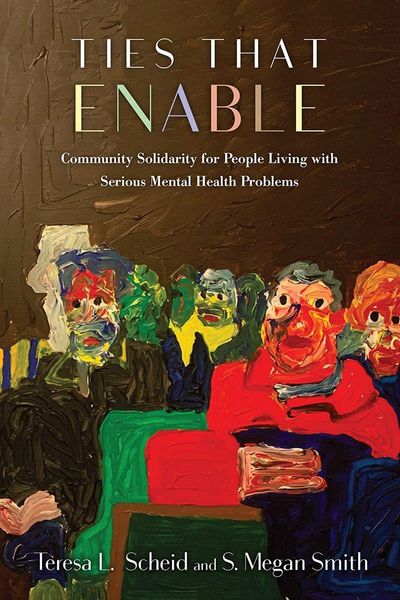
Produktbild: Ties That Enable

Ties That Enable Community Solidarity for People Living with Serious Mental Health Problems

157,99 €

inkl. gesetzl. MwSt., Versandkostenfrei


Beschreibung

Ties that Enable is written for students, providers, and advocates seeking to understand how best to improve mental health care - be it for themselves, their loved ones, their clients, or for the wider community. The authors integrate their knowledge of mental health care as researchers, teachers, and...

Beschreibung

Ties that Enable is written for students, providers, and advocates seeking to understand how best to improve mental health care - be it for themselves, their loved ones, their clients, or for the wider community. The authors integrate their knowledge of mental health care as researchers, teachers, and advocates and rely on the experiences of people living with severe mental health problems to help understand the sources of community solidarity. Communities are the primary source of social solidarity, and given the diversity of communities, solutions to the problems faced by individuals living with severe mental health problems must start with community level initiatives. "Ties that Enable" examines the role of a faith-based community group in providing a sense of place and belonging as well as reinforcing a valued social identity. The authors argue that mental health reform efforts need to move beyond a focus on individual recovery to more complex understandings of the meaning of community care. In addition, mental health care needs to move from a medical model to a social model which sees the roots of mental illness and recovery as lying in society, not the individual. It is our society's inability to provide inclusive supportive environments which restrict the ability of individuals to recover. This book provides insights into how communities and system level reforms can promote justice and the higher ideals we aspire to as a society.

Rezension

"Scheid and Smith shed light on the ways that, over time, changes in policy and trends in mental health care have actually left people stranded in 'the community.' This is a welcome and unique addition to the work on people with serious mental illness, and I enthusiastically look forward to seeing, using, and citing it."- Kerry Dobransky, author of Managing Madness in the Community: The Challenge of Contemporary Mental Health Care
"Ties that Enable provides an excellent qualitative complement to the quantitative research on recovery and mental illness. The authors' detailed accounts of client relationships and experiences are excellent."
- Fred E. Markowitz, Department of Sociology, Northern Illinois University

Produktdetails

Einband

Gebundene Ausgabe

Erscheinungsdatum

13.08.2021

Abbildungen

4 color images, 2 tables

Verlag Rutgers University Press

Produktdetails

Einband

Gebundene Ausgabe

Erscheinungsdatum

13.08.2021

Abbildungen

4 color images, 2 tables

Verlag Rutgers University Press
Seitenzahl

168

Maße (L/B/H)

22,9/15,2/1,3 cm

Gewicht

4 g

Sprache

Englisch

ISBN

978-1-978818-76-7

Herstelleradresse

Libri GmbH
Europaallee 1
36244 Bad Hersfeld
DE

Email: gpsr@libri.de

Noch keine Bewertungen vorhanden

Verfassen Sie die erste Bewertung zu diesem Artikel

Helfen Sie anderen Kundinnen und Kunden durch Ihre Meinung.

Kundinnen und Kunden meinen

Bewertungen (0)

Weitere Artikel finden Sie in

  • Produktbild: Ties That Enable

  • Preface 

    1 The Current Impasse over Mental Health Care 

    2 Looking Back: Reflections on the Reality of Community-Based Mental Health Care 

    3 Being a "Right Person": Social Acceptance in a Faith-Based Program 

    4 Doing the "Best" We Can: Developing Social Relationships and Overcoming Isolation 

    5 Us and Them: Confronting Recovery in the Face of Marginalization 

    6 Going Backward: Are We Doomed to Repeat the Failures of the Past? 

    7 Working toward Community Solidarity and Social Justice 

    Epilogue 

    Acknowledgments

    Notes 

    References 

    Index