Gutscheinbedingungen

**Gültig bis 04.08.2026 ab einem Mindestbestellwert von 30€ auf Spielzeug, Schreibwaren, Filme, Geschenke & Trends, Musik, tolino eReader & Zubehör, Hörbücher und Hörbuch-Downloads (außer Abo), nicht preisgebundene Bücher und Kalender online auf thalia.at und in der Thalia App. Einzelne Artikel können ausgeschlossen sein. Aufgrund der Buchpreisbindung sind deutschsprachige Bücher und eBooks ausgenommen. Zusätzlich ausgenommen sind preisgebundene Artikel, Abos & Flatrates, eBooks, Games, Geschenkkarten/-boxen, Shelfies, Software, Zeitschriften sowie einzelne Artikel von tonies®. Pro Einkauf einmal einlösbar. Click & Collect nur bei Onlinevorabzahlung möglich. Keine Barauszahlung. Nicht kombinierbar mit anderen Aktionen und Gutscheinen. Gutschein wird auf max. 500€ Bestellwert angerechnet. Nicht gültig für Versandkosten und Services. Preisgebundene Artikel sind vom Mindestbestellwert ausgeschlossen.

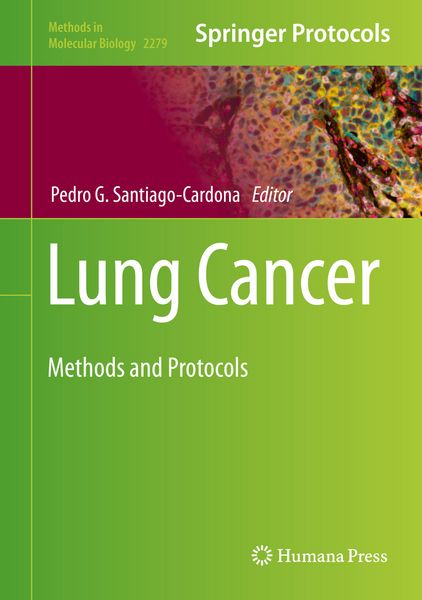
  • Produktbild: Lung Cancer
  • Produktbild: Lung Cancer
- 12%

Lung Cancer Methods and Protocols

12% sparen

173,99 € UVP 197,99 €

inkl. gesetzl. MwSt., Versandkostenfrei


Beschreibung

Produktdetails

Einband

Gebundene Ausgabe

Erscheinungsdatum

09.03.2021

Herausgeber

Pedro G. Santiago-Cardona

Verlag

Springer Us

Seitenzahl

258

Maße (L/B/H)

26/18,3/2,1 cm

Gewicht

714 g

Auflage

1st ed. 2021

Sprache

Englisch

ISBN

978-1-07-161277-4

Beschreibung

Produktdetails

Einband

Gebundene Ausgabe

Erscheinungsdatum

09.03.2021

Herausgeber

Pedro G. Santiago-Cardona

Verlag

Springer Us

Seitenzahl

258

Maße (L/B/H)

26/18,3/2,1 cm

Gewicht

714 g

Auflage

1st ed. 2021

Sprache

Englisch

ISBN

978-1-07-161277-4

Herstelleradresse

Libri GmbH
Europaallee 1
36244 Bad Hersfeld
DE

Email: GPSR Kontakt

Noch keine Bewertungen vorhanden

Verfassen Sie die erste Bewertung zu diesem Artikel

Helfen Sie anderen Kundinnen und Kunden durch Ihre Meinung.

Kundinnen und Kunden meinen

Bewertungen (0)

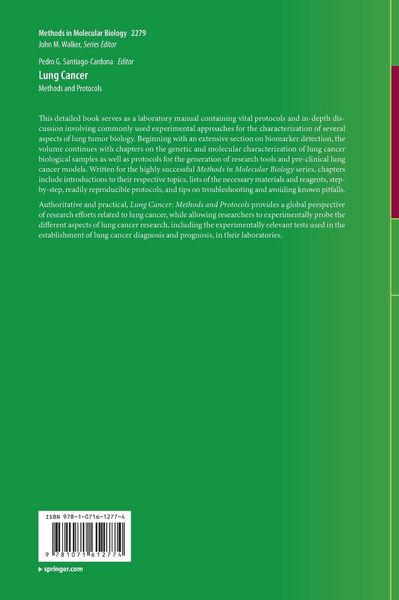
  • Produktbild: Lung Cancer
  • Produktbild: Lung Cancer
  • Automated TTF-1 Immunohistochemistry Assay for the Differentiation of Lung Adenocarcinoma Versus Lung Squamous Cell Carcinoma.- Immunohistochemical Detection of p40 Expression in Lung Cancer Clinical Samples.- Automated Immunohistochemistry Assay for the Detection of Napsin-A in Formalin-Fixed Paraffin-Embedded Tissues from Lung Tumors.- Detection of Programmed Cell Death Ligand 1 Expression in Lung Cancer Clinical Samples by an Automated Immunohistochemistry System.- Western Blot as a Support Technique for Immunohistochemistry to Detect Programmed Cell Death Ligand 1 Expression.- Creation of Formalin-Fixed, Paraffin-Embedded 3D Lung Cancer Cellular Spheroids for the Optimization of Immunohistochemistry Staining Procedures.- Immunoblot Validation of Phospho-Specific Antibodies Using Lung Cancer Cell Lines.- Detection of Non-Small Lung Cell Carcinoma-Associated Genetic Alterations Using a NanoString Gene Expression Platform Approach.- A PCR-Based Approach for Driver Mutation Analysis of EGFR , KRAS , and BRAF Genes in Lung Cancer Tissue Sections.- Six-Color Crystal TM Digital PCR for the High-Plex Detection of EGFR Mutations in Non-Small Cell Lung Cancer.- Detection of MET Exon 14 Skipping Alterations in Lung Cancer Clinical Samples Using a PCR-Based Approach.- Immunocytochemical Detection of ALK and ROS1 Rearrangements in Lung Cancer Cytological Samples.- A Method for the Establishment of Human Lung Adenocarcinoma Patient-Derived Xenografts in Mice.- A Method for the Establishment and Characterization of Mouse Lung Adenocarcinoma Cell Lines that Mimic Traits of Human Adenocarcinomas.- Whole Transcriptome Sequencing Analysis of Cancer Stem/Progenitor Cells Obtained from Mouse Lung Adenocarcinomas.- In Vivo Imaging of Orthotopic Lung Cancer Models in Mice.- An Annexin V- FITC - Propidium Iodide-Based Method for Detecting Apoptosis in a Non-Small Cell Lung Cancer Cell Line.- Detection of DNA Adduct Formation in Rat Lungs by a Micro-HPLC/MS/MS Approach.- A Method for Liposome Co-Encapsulation of Phenethyl Isothiocyanate and Cisplatin and Determining its Toxicity against Lung and Lung Cancer Cells.