Gutscheinbedingungen

**Gültig bis 15.06.2026 auf Spiele & Spielzeug online auf thalia.at, in der Thalia App ab einem Mindestbestellwert von 30€ und in allen Thalia Buchhandlungen in Österreich. In den Buchhandlungen nur gültig auf lagernde Ware. Einzelne Artikel können ausgeschlossen sein. Ausgenommen sind preisgebundene Artikel sowie online auf thalia.at und in der Thalia App einzelne Artikel von tonies®. Pro Einkauf einmal einlösbar. Nur gültig gegen Vorlage oder im Onlineshop hinterlegter Bonuscard. Infos zur Einlösung in der Buchhandlung sind auf der Bonuscard-Vorteilspreisseite zu finden. Click & Collect nur bei Onlinevorabzahlung möglich. Keine Einlösung bei Scan & Go-Bezahlung. Keine Barauszahlung. Nicht kombinierbar mit anderen Aktionen und Gutscheinen. Gutschein wird auf max. 500€ Bestellwert angerechnet. Nicht gültig für Geschenkkarten, Versandkosten und Services.

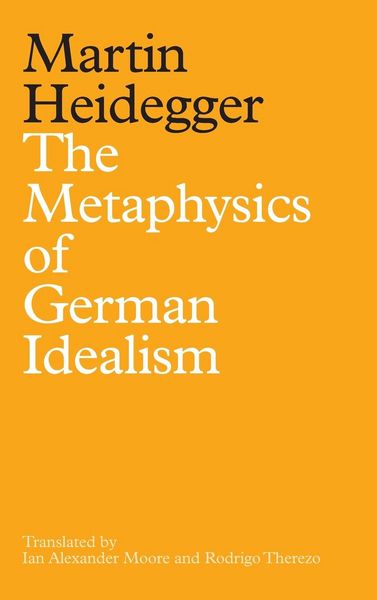
Produktbild: The Metaphysics of German Idealism

The Metaphysics of German Idealism A New Interpretation of Schelling's Philosophical Investigations into the Essence of Human Freedom and Matters

79,99 €

inkl. gesetzl. MwSt., Versandkostenfrei


Beschreibung

Produktdetails

Einband

Gebundene Ausgabe

Erscheinungsdatum

16.07.2021

Verlag

John Wiley & Sons

Seitenzahl

180

Maße (L/B/H)

23,7/16,3/2,5 cm

Gewicht

386 g

Auflage

1. Auflage

Übersetzt von

Moore Ian Alexander + weitere

Sprache

Englisch

ISBN

978-1-5095-4010-5

Beschreibung

Rezension

"Unlike the course he offered on the same subject five years earlier, Heidegger's 1941 lectures on Schelling's 'freedom treatise' demonstrate his decisive break from 'metaphysics,' including German idealism, and allow us to see more clearly the radical reorientation of his later thought. No less fascinating is the large portion of the present volume devoted to an interpretation of Kierkegaard's concept of existence and its relation to the (so-called) 'existentialism' of Being and Time. This excellent translation is a must-read for students and scholars alike."
Taylor Carman, Barnard College
 
"Heidegger's lecture course from 1941 not only attempts a new interpretation of Schelling's essay on the essence of human freedom, extending his 1936 treatment of that same text, but contains a wealth of material on Heidegger's ongoing reflections on the history of metaphysics and an important series of elucidations of Being and Time. This careful and sensitive translation will not only be of great interest to scholars of German Idealism, but is essential reading for anyone following Heidegger's own philosophical development."
William McNeill, DePaul University

Produktdetails

Einband

Gebundene Ausgabe

Erscheinungsdatum

16.07.2021

Verlag

John Wiley & Sons

Seitenzahl

180

Maße (L/B/H)

23,7/16,3/2,5 cm

Gewicht

386 g

Auflage

1. Auflage

Übersetzt von

  • Moore Ian Alexander
  • Rodrigo Therezo

Sprache

Englisch

ISBN

978-1-5095-4010-5

Herstelleradresse

Libri GmbH
Europaallee 1
36244 Bad Hersfeld
DE

Email: gpsr@libri.de

Kundinnen und Kunden meinen

0 Bewertungen

Informationen zu Bewertungen

Zur Abgabe einer Bewertung ist eine Anmeldung im Konto notwendig. Die Authentizität der Bewertungen wird von uns nicht überprüft. Wir behalten uns vor, Bewertungstexte, die unseren Richtlinien widersprechen, entsprechend zu kürzen oder zu löschen.

Die Bewertungen sind nach Format, Anzahl Sterne und Datum sortiert.

Verfassen Sie die erste Bewertung zu diesem Artikel

Helfen Sie anderen Kund*innen durch Ihre Meinung

Kundinnen und Kunden meinen

0 Bewertungen filtern

Die Leseprobe wird geladen.
  • Produktbild: The Metaphysics of German Idealism
  • Translators' Introduction

    INTRODUCTION

    THE NECESSITY OF A HISTORICAL THINKING

    1. Schelling's Treatise as the Peak of the Metaphysics of German Idealism

    2. Historical Thinking, Historiographic Explanation, Systematic Reflection

    3. Elucidations of the Title of the Treatise

    4. The Organization of the Treatise

    5. Brief Excursus on a Further Misgiving (the Historiographic - the Current - That Which Has Been)

    PART I

    PRELIMINARY REFLECTION ON THE DISTINCTION BETWEEN GROUND AND EXISTENCE

    6. The Core Section of the Treatise: The Distinction between Essence Insofar as It Exists and Essence Insofar as it Is Merely Ground of Existence

    7. The Organization of the Preliminary Reflection

    First Chapter

    The Conceptual-Historical Elucidation of Ground and Existence

    8. Essentia and Existentia

    9. "Existence" and "Philosophy of Existence" (K. Jaspers)

    10. Kierkegaard's Concept of Existence

    11. Kierkegaard, "Philosophy of Existence," and Being and Time (1927)

    a)    What Occasion Is There for Classifying Being and Time as "Philosophy of Existence"?

    ) Analytic of Existence

    ) Existence - As Understood in the Sense of Kierkegaard's Restriction of It

    ) Philosophy of Anxiety, of the Nothing, of Death, of Care . . .

    ) Philosophical Anthropology

    b) Rejection of the Classification of Being and Time as Philosophy of Existence by Way of an Elucidation of the Concepts of Existence and Da-sein (Elucidations of Being and Time)

    ) Existence and Dasein as Meaning "Actuality in General" (As Understood in Traditional Usage of Language)

    ) Dasein as the Bodily-Psychic-Rational Being-Actual of the Human, and Existence as the Subjectivity of Self-Being (Jaspers)

    ) "Existentiell" and "Existential" Concepts of Existence

    ) "Understanding of Being" as the Decisive Determination of Dasein and Existence in Being and Time

    ) Dasein, Temporality, and Time

    ) Temporality, Da-sein, Existence

    ) Anxiety, Death, Guilt, the Nothing within the Realm of Questioning in Being and Time

    ) The "Essence" of Da-sein

    ) Understanding of Being, and Being

    ) Being and the Human - Anthropomorphism

    12. Preliminary Interpretation of Schelling's Concept of Existence

    13. The Inceptive Impetuses Determining the Essence of Ground and Their Historical Transformation

    Second Chapter

    The Root of Schelling's Distinction between Ground and Existence

    14. Elucidation of the Essential Determination of Being as Willing

    a)    The Essential Predicates of Being

    ) Ground-lessness

    ) Eternity

    ) Independence from Time

    ) Self-Affirmation

    b) Justification of the Predicates of Being

    c) In What Way Willing Is Sufficient for the Predicates of Being

    d) Being in Its Highest and Ultimate Jurisdiction

    15. Being as Willing as the Root of the Distinction between Ground and Existence

    Third Chapter

    The Inner Necessity of Schelling's Distinction between Ground and Existence

    Fourth Chapter

    The Various Formulations of Schelling's Distinction between Ground and Existence

    16. The Proper Aim of the Interpretation of the Freedom Treatise: Reaching the Fundamental Position of the Metaphysics of German Idealism. Evil and the System

    17. Transition from the Preliminary Reflection to the Interpretation of the Core Section of the Treatise and of the Latter Itself

    PART II

    AN INTERPRETATION OF THE CORE SECTION, "THE ELUCIDATION OF THE DISTINCTION" BETWEEN GROUND AND EXISTENCE

    18. The "Elucidation of the Distinction" as the Presentation of Beings as a Whole (God, World, Human)

    First Chapter

    The Reflection that Takes God as a Starting Point

    19. The Direct Elucidation: The Presentation of the Being of Beings "in" God. Philosophy as Unconditional Knowledge of the Absolute in Contrast to Theology and Mathematics. The Various Senses of the Word "Nature"

    a) Philosophy and Theology

    b) Philosophy and Mathematics

    c) The Concept of the Absolute in Schelling and Hegel

    20. The Analogical Elucidation: Presentation of the Correspondence Between the Stations of the Being of the Absolute

    21. The Circularity of the Distinction Between Ground and Existence

    22. Summary of What Was Said about the Distinction in God

    23. Excursus: The Unconditional Precedence of the Certainty (That Is to Say, Concurrently: the Beingness) of the Absolute

    Second Chapter

    The Reflection that Takes its Point of Departure from Things

    24. The Ground in God as "Originary Yearning"

    25. Creation as Formation through the Imagination; the Creature as "Image"

    Third Chapter

    The Reflection that Takes its Point of Departure from the Human

    26. The Necessity of Creation and the Essence of the Human as the Proper Creature in which God Himself Reveals Himself

    27. Human Will as "Divine Glimpse of Life" and "Seed of God"

    CONCLUSION

    OVERVIEW

    28 The "Distinction" and the Essence of Freedom and of Human Freedom in Particular

    29 The "Distinction" in its Full Essence

    30. The "Distinction" and the Essence of the Human

    31. The Essence of Evil

    32. Evil and the System

    33. The System and the Truth (Certainty) of Beings as a Whole

    34. What Confrontation Means with Respect to Metaphysics

    RECAPITULATIONS AND COURSE OF THE INTERPRETATION

    Recapitulation of 14 January

    Recapitulation of 21 January

    Recapitulation of 28 January

    Recapitulation of 4 February

    Recapitulation of 11 February

    Recapitulation of 18 February

    Recapitulation of 25 February

    Recapitulation of 4 March

    Recapitulation of 11 March

    APPENDIX

    Preliminary Glimpses and Directives

    Transitional Reflection on Hegel

    The Confrontation with the Metaphysics of German Idealism and with Metaphysics in General

    Supplement (Leibniz)

    German-English Glossary
    English-German Glossary
    Greek/Latin-English Lexicon