KI-Beratung Beta

Gutscheinbedingungen

**Gültig am 20.11.2026 ab einem Mindestbestellwert von 30€ auf Spielzeug, Schreibwaren, Filme, Geschenke & Trends, Musik, tolino eReader & Zubehör, Hörbücher und Hörbuch-Downloads, nicht preisgebundene Bücher und Kalender online auf thalia.at und in der Thalia App. Einzelne Artikel können ausgeschlossen sein. Aufgrund der Buchpreisbindung sind deutschsprachige Bücher und eBooks ausgenommen. Zusätzlich ausgenommen sind Abos & Flatrates, Games, Geschenkkarten/-boxen, Shelfies, Software, Zeitschriften sowie einzelne Artikel von tonies®. Pro Einkauf einmal einlösbar. Click & Collect nur bei Onlinevorabzahlung möglich. Keine Barauszahlung. Nicht kombinierbar mit anderen Aktionen und Gutscheinen. Gutschein wird auf max. 500€ Bestellwert angerechnet. Nicht gültig für Versandkosten und Services. Preisgebundene Artikel sind vom Mindestbestellwert ausgeschlossen.

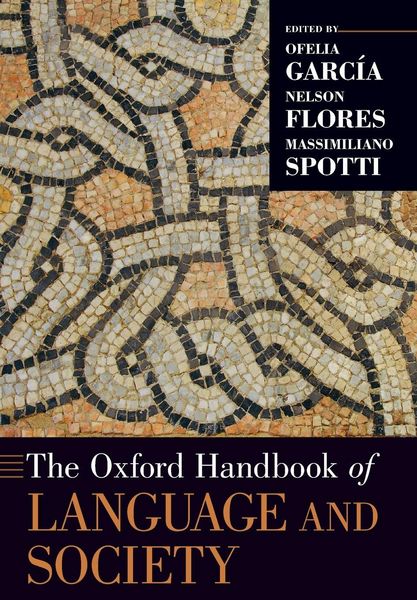
Produktbild: The Oxford Handbook of Language and Society

The Oxford Handbook of Language and Society

88,99 €

inkl. gesetzl. MwSt., Versandkostenfrei


Produktdetails

Einband

Taschenbuch

Erscheinungsdatum

01.12.2020

Herausgeber Ofelia García + weitere
Verlag Oxford Academic

Produktdetails

Einband

Taschenbuch

Erscheinungsdatum

01.12.2020

Herausgeber
Verlag Oxford Academic
Seitenzahl

586

Maße (L/B/H)

24,4/17/3,1 cm

Gewicht

997 g

Sprache

Englisch

ISBN

978-0-19-753751-0

Herstelleradresse

Libri GmbH
Europaallee 1
36244 Bad Hersfeld
DE

Email: gpsr@libri.de

Noch keine Bewertungen vorhanden

Verfassen Sie die erste Bewertung zu diesem Artikel

Helfen Sie anderen Kundinnen und Kunden durch Ihre Meinung.

Kundinnen und Kunden meinen

Bewertungen (0)

Die Leseprobe wird geladen.
  • Produktbild: The Oxford Handbook of Language and Society
    • Introduction: Language and Society: A critical poststructuralist perspective (Ofelia García, Nelson Flores, Max Spotti)
    • 1. Language and society: Historical overview and emergence of a field of study (Florian Coulmas)
    • 2. Language, imperialism and the modern nation-state system: Implications for language rights (Stephen May)
    • 3. Language and political economy (Alfonso Del Percio, Mi-Cha Flubacher and Alex Duchene)
    • 4. Language and power (Luisa Martín-Rojo)
    • 5. Language ideologies (Jonathan Rosa and Christa Burdick)
    • 6. Language policy and local practices (Alastair Pennycook)
    • 7. Language, migration, diaspora: Challenging the big battalions of groupism (Finex Ndhlovu)
    • 8. Bi-multilingualism, globalization and super-diversity: Toward Sociolinguistic repertoire (Max Spotti and Jan Blommaert)
    • 9. Diglossia and beyond (Jürgen Jaspers)
    • 10. Language shift and sustainability: Critical discourses and beyond (Melissa Engman and Kendall King)
    • 11. Discourses of endangerment from mother tongues to machine readability (Robert Moore)
    • 12. Sign languages (H-Dirksen L. Bauman and Joseph Murray)
    • 13. Multiliteracies and Transcultural Education (Lynn Mario Menezes de Souza)
    • 14. Urban languages in African Contexts: Toward a multimodal approach to urban languages (Busi Makoni)
    • 15. Indigenous peoples and their languages (Pia Lane and Miki Makihara)
    • 16. Entry Visa Denied: The Construction of Symbolic Language Borders in Educational Settings (Guadalupe Valdés)
    • 17. Linguistic profiling and discrimination (John Baugh)
    • 18. From Gerontolinguistics to Elderspeak: Sociolinguistic myths (Sinfree Makoni)
    • 19. Language and racialization (Anne Charity Hudley)
    • 20. Language and sexuality (Tomasso Milani)
    • 21. Linguistic landscapes (Luk Van Mensel, Mieke Vandenbrouke and Robert Blackwood)
    • 22. Multimodality (Elisabetta Adami)
    • 23. The Internet, language and virtual interactions (Piia Varis and Tom van Neunen)
    • 24. Mediatization and the language of journalism (Tom Van Hout and Peter Burger)
    • 25. Work (Melissa Moyer)
    • 26. Bilingual Education (Nelson Flores)
    • Conclusion: Moving the study of Language and Society into the future (Nelson Flores, Max Spotti and Ofelia García)