KI-Beratung Beta

Gutscheinbedingungen

**Gültig am 27.11.2026 auf Spielzeug, Schreibwaren, Filme, Geschenke & Trends, Musik, tolino eReader & Zubehör, Hörbücher und Hörbuch-Downloads, nicht preisgebundene Bücher und Kalender online auf thalia.at und in der Thalia App. Einzelne Artikel können ausgeschlossen sein. Aufgrund der Buchpreisbindung sind deutschsprachige Bücher und eBooks ausgenommen. Zusätzlich ausgenommen sind Abos & Flatrates, Games, Geschenkkarten/-boxen, Shelfies, Software, Zeitschriften sowie einzelne Artikel von tonies®. Pro Einkauf einmal einlösbar. Click & Collect nur bei Onlinevorabzahlung möglich. Keine Barauszahlung. Nicht kombinierbar mit anderen Aktionen und Gutscheinen. Gutschein wird auf max. 500€ Bestellwert angerechnet. Nicht gültig für Versandkosten und Services.

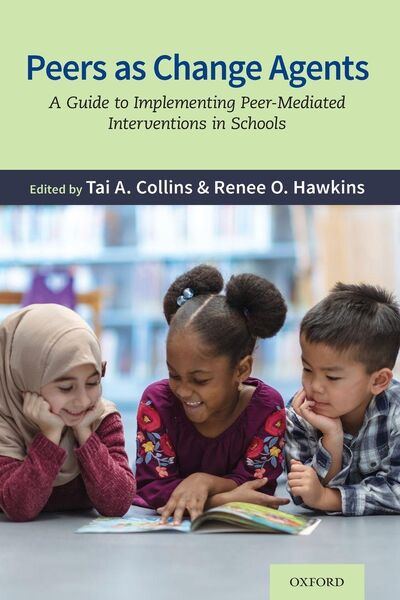
Produktbild: Peers as Change Agents

Peers as Change Agents A Guide to Implementing Peer-Mediated Interventions in Schools

88,99 €

inkl. gesetzl. MwSt., Versandkostenfrei


Beschreibung

In schools, much of the responsibility of implementing interventions to improve outcomes for students falls on teachers, which may lead to capacity and resource issues. One solution to this problem is the use of Peer-Mediated Interventions (PMIs), which include a variety of approaches that utilize similar...

Beschreibung

In schools, much of the responsibility of implementing interventions to improve outcomes for students falls on teachers, which may lead to capacity and resource issues. One solution to this problem is the use of Peer-Mediated Interventions (PMIs), which include a variety of approaches that utilize similar individuals to the target student (e.g., students in school-based interventions) as interventionists or behavior change agents. Although there is a wealth of research to support the effectiveness of students as interventionists, peers remain an under-utilized resource in school-based intervention delivery. Peers as Change Agents is a comprehensive resource for school-based professionals working to incorporate PMIs across academic, behavioral, and social-emotional interventions. The text synthesizes the current research on school-based PMIs and distills the literature into concrete strategies that can be easily implemented in school-based contexts. Building on the foundational principles of PMIs, the authors reconceptualize this work into three new categories: Peer-Mediated Academic Interventions; Peer-Mediated Behavioral Interventions; and Peer-Mediated Group Supports, to better address students' unique needs. Chapters also highlight the advantages of PMIs, including their potential for cultural relevance. As school staff continue to grapple with the practical challenges of ensuring equity in student outcomes, Peers as Change Agents provides educators, school psychologists, and counsellors effective and efficient tools to support students as change agents in their own learning communities.

Produktdetails

Einband

Taschenbuch

Erscheinungsdatum

05.02.2021

Herausgeber Tai A. Collins + weitere
Verlag Oxford Academic

Produktdetails

Einband

Taschenbuch

Erscheinungsdatum

05.02.2021

Herausgeber
Verlag Oxford Academic
Seitenzahl

302

Maße (L/B/H)

23,4/15,6/1,6 cm

Gewicht

462 g

Sprache

Englisch

ISBN

978-0-19-006871-4

Herstelleradresse

Libri GmbH
Europaallee 1
36244 Bad Hersfeld
DE

Email: gpsr@libri.de

Noch keine Bewertungen vorhanden

Verfassen Sie die erste Bewertung zu diesem Artikel

Helfen Sie anderen Kundinnen und Kunden durch Ihre Meinung.

Kundinnen und Kunden meinen

Bewertungen (0)

Die Leseprobe wird geladen.
  • Produktbild: Peers as Change Agents
    • Chapter 1: A New Conceptualization of Peer-Mediated Interventions
    • Tai A. Collins and Renee O. Hawkins
    • Chapter 2: Peers as Change Agents
    • Renee O. Hawkins, Mary Kate Gerrard, Christa Newman, and Hannah McIntire
    • Chapter 3: Peers as Culturally Relevant Change Agents
    • Tai A. Collins, Meagan Scott, Julia Villarreal, and Bryn Endres
    • Chapter 4: Peer-Mediated Academic Interventions
    • Shobana Musti-Rao and Michele M. Nobel
    • Chapter 5: Peer Tutoring
    • David A. Klingbeil, Stacy-Ann A. January, and Lanae R. Drachslin
    • Chapter 6: Peer-Assisted Learning Strategies (PALS)
    • Devin M. Kearns, Sarah R. Powell, Douglas Fuchs, and Lynn S. Fuchs
    • Chapter 7: Games-Based Cooperative Learning
    • Elizabeth McCallum, Jamie Yarbrough, and Ara J. Schmitt
    • Chapter 8: Peer-Mediated Writing Interventions
    • Christine K. Malecki and Samantha Coyle
    • Chapter 9: Peer-Mediated Behavioral Interventions
    • Keith C. Radley
    • Chapter 10: Peer Management Interventions
    • Kate Helbig and Evan Dart
    • Chapter 11: Peer-Mediated Social Skills Training
    • Jessica Simpson and Tim Lewis
    • Chapter 12: Peer Support Interventions in Inclusive Classrooms
    • Erik W. Carter
    • Chapter 13: Peer-Mediated Pivotal Response Training
    • Dacia McCoy, Chelsea Ritter, and J. Meredith Murphy
    • Chapter 14: Peer Modeling Interventions
    • Hunter King, Aaron J. Fischer, Heather L.J. Lewis, and Julio Payan
    • Chapter 15: Peer-Mediated Play Interventions
    • Laura Nabors
    • Chapter 16: Restorative and Conflict Resolution Interventions
    • Rhonda N. T. Nese, Sara McDaniel, Paul Meng, Lisette Spraggins, Vicki Babbs, and Erik J. Girvan
    • Chapter 17: Peer-Mediated Group Supports
    • Christopher H. Skinner, Tara Moore, and Jessica Eshbaugh
    • Chapter 18: School-Wide Positive Behavioral Interventions and Supports
    • Kent McIntosh and Angus Kittelman
    • Chapter 19: Classroom Management
    • Todd Haydon, Cara Dillon, Alana Kennedy, and Meagan Scott
    • Chapter 20: Technology-Based Classroom Management
    • S. Kathleen Krach and Lori R. Kern
    • Chapter 21: Interdependent Group Contingencies
    • Daniel M. Maggin, Christerallyn Brown, and Skip Kumm
    • Chapter 22: Independent and Dependent Group Contingencies
    • Tom Cariveau