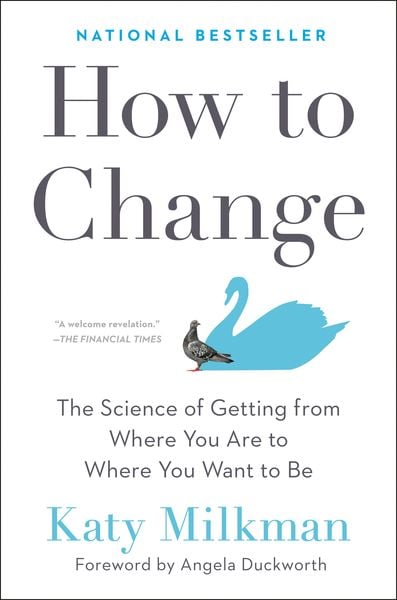
Award-winning Wharton Professor and Choiceology podcast host Katy Milkman has devoted her career to the study of behavior change. In this ground-breaking book, Milkman reveals a proven path that can take you from where you are to where you want to be, with a foreword from psychologist Angela Duckworth, the best-selling author of Grit.
Set audacious goals. Foster good habits. Create social support. You've surely heard this advice before. If you've ever tried to change or encourage it -- to boost exercise or healthy eating, to prevent missed deadlines or kick-start savings -- then you know there are thousands of apps, books, and YouTube videos promising to help and offering sound guidance. And yet, you're still not where you want to be.
This trailblazing book from award-winning behavioral scientist and Wharton Professor Katy Milkman explains why. In a career devoted to uncovering what helps people change, Milkman has discovered a crucial thing many of us get wrong: our strategy. Change, she's learned, comes most readily when you understand what's standing between you and success and tailor your solution to that roadblock. If you want to work out more but find exercise difficult and boring, downloading a goal-setting app probably won't help. But what if, instead, you transformed your workouts so they became a source of pleasure instead of a chore? Turning an uphill battle into a downhill one is the key to success.
Drawing on Milkman's original research and the work of her dozens of world-renowned scientific collaborators, How to Change shares an innovative new approach that will help you change or encourage change in others. Through case studies, engaging stories, and examples from cutting-edge research, this book illustrates how to identify and overcome the barriers that regularly stand in the way of change. How to Change will teach you:
• Why timing can be everything when it comes to making a change
• How to turn temptation and inertia into assets that can help you conquer your goals
• That giving advice, even if it's about something you're struggling with, can help you achieve more
Whether you're a manager, coach, or teacher aiming to help others change for the better or are struggling to kick-start change yourself, How to Change offers an invaluable, science-based blueprint for achieving your goals, once and for all.
Kundinnen und Kunden meinen
5.0/5.0
2 Bewertungen
5 Sterne
(2)
4 Sterne
(0)
3 Sterne
(0)
2 Sterne
(0)
1 Sterne
(0)
Why change is hard and how this book helped me understand it
Michael F. am 30.11.2025
Bewertungsnummer: 2666833
Bewertet: Buch (Taschenbuch)
How to Change by Katy Milkman is a book about understanding why change is so difficult and what we can do to make it easier. I chose this book because I often feel stuck between who I am now and who I want to become. As someone building a personal brand and working on my music, I know how easy it is to slip into old habits, lose focus, or get distracted by life. I hoped this book would give me tools to understand my own behavior better, and it did exactly that.
Milkman’s main message is that change is not just about motivation or willpower. Instead, it’s about understanding the psychological and emotional barriers we face. She shows that change becomes easier when we use strategies that match the specific problem we’re dealing with. For example, if procrastination is the issue, you need different tools than if insecurity is holding you back. I liked this practical approach because it made the advice feel more realistic and personal.
One of the first ideas in the book is the “fresh start effect.” Milkman explains that we’re more likely to change when we feel like we have a clean slate — a new year, a birthday, a move, or even a Monday. At first, I thought this was a bit obvious, but then I realized how often I wait for a “perfect moment” to begin something. In music, I often wait for inspiration or the right mood. After reading this, I started creating my own “fresh starts” by setting small milestones or choosing symbolic days to begin new habits. It helped me break out of the cycle of waiting for the “right” moment.
Another idea that stood out was “temptation bundling.” This means pairing something you should do with something you enjoy. For example, listening to a playlist you love only while practicing something difficult. This hit me personally because I sometimes struggle with finishing songs or sticking to a schedule. By pairing boring tasks (editing vocals, organizing files) with something fun (snacks, a nice drink, or a favorite playlist), I noticed it became easier to stay consistent.
I also appreciated how Milkman talks about confidence and identity. She explains that people often fail because they don’t believe they can change, not because they are incapable. This reminded me a lot of my own journey. There are moments where I know what I want to grow as an artist, to stay focused, to build a brand but my actions don’t always match. The book helped me understand that change is not a straight line. It’s normal to have setbacks, but what matters is creating systems that pull you back on track.
While the book is full of helpful studies, sometimes it felt a bit too scientific. There were moments where I wished for more personal stories or emotional examples. Still, the science was interesting, and it made the advice feel trustworthy.
Overall, how to Change gave me a better understanding of how to work with my natural behavior instead of against it. It taught me that change becomes easier when we use the right tools for the right challenges. For anyone trying to improve their life, especially creatives like me who struggle with consistency, this book offers clear and practical strategies for becoming the person you want to be.
A Science-Backed Approach to Real Change in Everyday Life (A.W.)
Bewertung am 11.11.2024
Bewertungsnummer: 2339234
Bewertet: Buch (Taschenbuch)
How to Change by Katy Milkman has honestly been an eye-opener for me, especially as someone who struggles with breaking bad habits, overcoming procrastination, and staying motivated. If we’re being real, that’s probably a challenge for most of us. Milkman is a behavioral scientist, so her approach is backed by a lot of research, but what makes the book stand out is how she translates all that science into real-life strategies. This isn’t your typical self-help book filled with vague advice. It’s a carefully thought-out guide that offers practical, research-based techniques that feel genuinely helpful.
One of the concepts that really stuck with me was "temptation bundling." This idea, which Milkman introduces, basically means combining something you enjoy with something you need to get done. As a student who sometimes struggles to get started on assignments or studying, this approach was super helpful. I tried it out by listening to podcasts I like while working on assignments, and it actually made it easier to dive into my work. The genius of Milkman’s approach is that she doesn’t ask you to completely change your habits overnight. Instead, she suggests small, practical changes that you can fit into your existing routine, making it much more manageable.
Another fascinating concept Milkman covers is the “fresh start effect.” She explains that starting new habits on meaningful dates, like the beginning of a semester, your birthday, or even just a Monday, can give you a motivational boost. This insight really clicked for me because it changed how I think about goal-setting. I realized that I don’t have to wait for New Year’s to set new goals; any fresh start can be a good time to make changes. For example, the start of the week or month can serve as a mental “reset,” which has helped me feel more motivated to stick to my goals.
One thing I appreciated about How to Change is that Milkman doesn’t push a one-size-fits-all solution. She introduces a variety of methods based on different psychological principles, meaning there’s a good chance that everyone can find something that works for them. She covers topics like overcoming procrastination, understanding motivation, and building resilience in a way that feels realistic and not overly idealistic. However, I did notice that some of her strategies assume you have a decent level of self-discipline. While her techniques are incredibly helpful, they might be a bit challenging to maintain if you’re someone who struggles with motivation regularly. That said, the variety of strategies she offers means that most readers will likely find at least a couple of techniques that feel doable.
I really liked her emphasis on sustainability and gradual improvement. Milkman doesn’t suggest drastic life changes. Instead, she focuses on small, incremental adjustments that can be incorporated into daily life. As a student, I found this especially useful because it’s often hard to juggle school, work, and personal life. Her advice was easy to apply without needing to commit hours to a complex self-improvement routine. This approach made personal growth feel more accessible and even enjoyable.
Overall, How to Change is a science-based, practical guide that has genuinely changed how I approach my own habits and goals. Milkman’s style is engaging and approachable, which makes complex psychological concepts easy to understand and apply. One of the book’s biggest strengths is how she manages to make the science of behavior change feel personal and actionable. I would recommend this book to anyone who wants to understand themselves better and find effective tools for achieving their goals without feeling overwhelmed.
Kurze Frage zu unserer Seite
Vielen Dank für Ihr Feedback
Wir nutzen Ihr Feedback, um unsere Produktseiten zu verbessern. Bitte haben Sie Verständnis, dass wir Ihnen keine Rückmeldung geben können. Falls Sie Kontakt mit uns aufnehmen möchten, können Sie sich aber gerne an unseren Kund*innenservice wenden.