Gutscheinbedingungen

**Gültig bis 17.08.2026 auf Schreibwaren & Office-Artikel online auf thalia.at, in der Thalia App und in teilnehmenden Thalia Buchhandlungen in Österreich mit Schulsortiment. In den Buchhandlungen nur gültig auf lagernde Ware. Einzelne Artikel können ausgeschlossen sein. Ausgenommen sind preisgebundene Artikel. Pro Einkauf einmal einlösbar. Nur gültig gegen Vorlage oder im Onlineshop hinterlegter Bonuscard. Infos zur Einlösung in der Buchhandlung sind auf der Bonuscard-Vorteilspreisseite zu finden. Click & Collect nur bei Onlinevorabzahlung möglich. Keine Einlösung bei Scan & Go-Bezahlung. Keine Barauszahlung. Nicht kombinierbar mit anderen Aktionen und Gutscheinen. Gutschein wird auf max. 500€ Bestellwert angerechnet. Nicht gültig für Geschenkkarten, Versandkosten und Services.

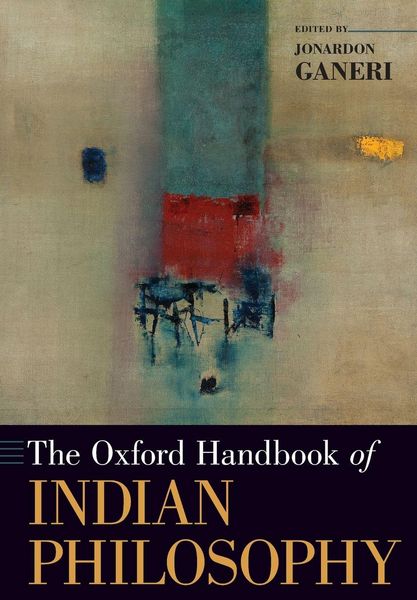
Produktbild: Oxford Handbook of Indian Philosophy

Oxford Handbook of Indian Philosophy

79,99 €

inkl. gesetzl. MwSt., Versandkostenfrei


Beschreibung

Produktdetails

Einband

Taschenbuch

Erscheinungsdatum

01.12.2020

Herausgeber

Jonardon Ganeri

Verlag

Oxford Academic

Seitenzahl

836

Maße (L/B/H)

24,4/17/4,4 cm

Gewicht

1413 g

Sprache

Englisch

ISBN

978-0-19-750381-2

Beschreibung

Produktdetails

Einband

Taschenbuch

Erscheinungsdatum

01.12.2020

Herausgeber

Jonardon Ganeri

Verlag

Oxford Academic

Seitenzahl

836

Maße (L/B/H)

24,4/17/4,4 cm

Gewicht

1413 g

Sprache

Englisch

ISBN

978-0-19-750381-2

Herstelleradresse

Libri GmbH
Europaallee 1
36244 Bad Hersfeld
DE

Email: GPSR Kontakt

Noch keine Bewertungen vorhanden

Verfassen Sie die erste Bewertung zu diesem Artikel

Helfen Sie anderen Kundinnen und Kunden durch Ihre Meinung.

Kundinnen und Kunden meinen

Bewertungen (0)

Die Leseprobe wird geladen.
  • Produktbild: Oxford Handbook of Indian Philosophy
    • Introduction: Why Indian Philosophy? Why Now? Jonardon Ganeri
    • Timeline: Indian Philosophy in 100+ Thinkers Jonardon Ganeri
    • Methods, Literatures, Histories
    • 1. Interpreting Indian Philosophy: Three Parables Matthew Kapstein
    • 2. History and Doxography of the Philosophical Schools Ashok Aklujkar
    • 3. Philosophy as a Distinct Cultural Practice: The Transregional Context Justin E. H. Smith
    • 4. Comparison or Confluence in Philosophy? Mark Siderits
    • Legacies of Sutta and Sutra: Philosophy Before Dignaga (100-480)
    • 5. Nagarjuna on Emptiness: A Comprehensive Critique of Foundationalism Jan Westerhoff
    • 6. Philosophical Quietism in Nagarjuna and Early Madhyamaka Tom Tillemans
    • 7. Habit and Karmic Result in the Yogasastra, Christopher Framarin
    • 8. Vasubandhu on the Conditioning Factors and the Buddha's Use of Language Jonathan Gold
    • 9. Buddhaghosa on the Phenomenology of Love and Compassion Maria Heim
    • 10. The Philosophy of Mind of Kundakunda and Umasvati Piotr Balcerowicz
    • 11. Vatsyayana: Cognition as a Guide to Action Matthew Dasti
    • 12. Bhartrhari on Language, Perception and Consciousness Vincenzo Vergiani
    • The Age of Dialogue: A Sanskrit Cosmopolis (480-800)
    • 13. Coreference and Qualification: Dignaga Debated by Kumarila and Dharmakirti John Taber and Kei Kataoka
    • 14. Reflexive Awareness and No-Self: Dignaga Debated by Uddyotakara and Dharmakirti Monima Chadha
    • 15. The Metaphysics of Self in Prasastapsda's Differential Naturalism Shalini Sinha
    • 16. Proving Idealism: Dharmakirti Birgit Kellner
    • 17. Santideva's Impartialist Ethics Charles Goodman
    • 18. A History of Materialism from Ajita to Udbhata Ramkrishna Bhattacharya
    • 19. Consciousness and Causal Emergence: Santaraksita against Physicalism Christian Coseru
    • 20. Pushing Idealism Beyond its Limits: The Place of Philosophy in Kamalasila's Steps of Cultivation, Dan Arnold
    • The Age of Disquiet (800-1300)
    • 21. Jayarasi Against the Philosophers Piotr Balcerowicz
    • 22. Two Theories of Motivation and their Assessment by Jayanta Rajam Raghunathan
    • 23. Utpaladeva and Abhinavagupta on the Freedom of Consciousness Isabelle Ratié
    • 24. The Nature of Idealism in the Moksopaya/ Yoga-vasistha, François Chenet
    • 25. Logic in the Tradition of Prabhacandra (Marie-Hélène Gorisse)
    • 26. An Indian Philosophy of Law: Vijñanesvara's Epitome of the Law, Donald Davis
    • 27. Sriharsa's Dissident Epistemology: Of Knowledge as Assurance Jonardon Ganeri
    • Philosophy From Gangesa (1300-1460)
    • 28. A Defeasibility Theory of Knowledge in Gangesa Stephen Phillips
    • 29. Jayatirtha and the Problem of Perceptual Illusion Michael Williams
    • 30. Madhava's Garland of Jaimini's Reasons as Exemplary Mimamsa Philosophy Francis Clooney
    • 31. Hindu Disproofs of God: Refuting Vedantic Theism in the Samkhya-sutra, Andrew Nicholson
    • Early Modernity: New Philosophy in India (1460-1757)
    • 32. Raghunatha Siromani and the Examination of the Truth about the Categories, Michael Williams
    • 33. Nilakantha Caturdhara's Advaita Vedanta Christopher Minkowski
    • 34. Muhibballah Ilahabadi on Ontology: Debates over the Nature of Being Shankar Nair
    • Freedom and Identity on the Eve of Independence (1857-1947)
    • 35. Jawaharlal Nehru, Mohandas Gandhi, and the Contexts of Indian Secularism Akeel Bilgrami
    • 36. Freedom in Thinking: The Immersive Cosmopolitanism of Krishnachandra Bhattacharyya Jonardon Ganeri
    • 37. Bimrao Ramji Ambedkar's Modern Moral Idealism: A Metaphysics of Emancipation Gopal Guru
    • 38. Anukul Chandra Mukerji: The Modern Subject Nalini Bhushan and Jay L. Garfield