Gutscheinbedingungen

**Gültig bis 07.06.2026 auf Hörbuch-Downloads (außer Abo) online auf thalia.at und in der Thalia App (außer Hörbuch-Download). Einzelne Artikel können ausgeschlossen sein. Ausgenommen sind preisgebundene Artikel, Abos & Flatrates, Shelfies. Pro Einkauf einmal einlösbar. Click & Collect nur bei Onlinevorabzahlung möglich. Keine Barauszahlung. Nicht kombinierbar mit anderen Aktionen und Gutscheinen. Gutschein wird auf max. 500€ Bestellwert angerechnet. Nicht gültig für Geschenkkarten, Versandkosten und Services.

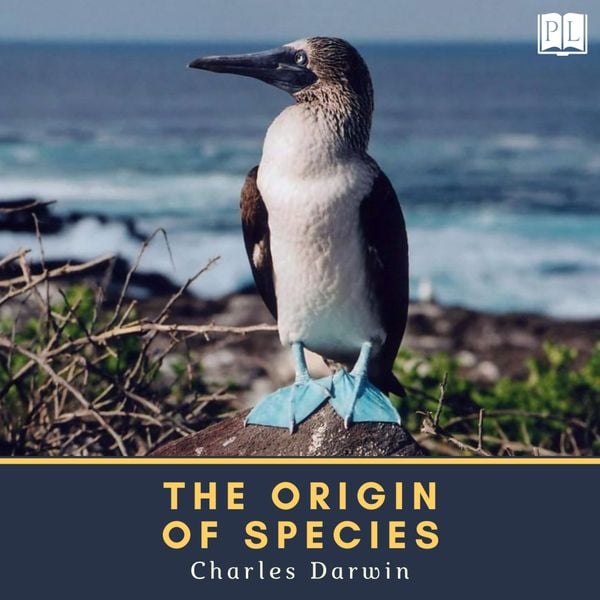
Produktbild: The Origin of Species

The Origin of Species

Gesprochen von
1
0,00 € * inkl. gesetzl. MwSt.
* im Probemonat gratis danach 7,95 €/Monat

Im Hörbuch-Abo laden

  • Monatlich einen Titel wählen & behalten
  • Jederzeit pausieren oder kündigen
  • Weitere Hörbücher im Abo für max. 7,95 €

Unser Thalia Hörbuch-Abo

Wie finde ich ein Hörbuch?

Sie können den gewünschten Titel einfach direkt über die Suchmaske finden oder Sie lassen sich über den Reiter „Hörbücher“ inspirieren.

Wie kann ich einen Titel hören?

Genießen Sie Ihre Hörbücher in der kostenlosen Thalia Lesen & Hören App auf Ihrem Smartphone und Tablet oder mit dem tolino Webreader direkt in Ihrem Browser.

Unsere Abo-Vorteile für Sie:

Den ersten Monat gratis testen. Danach zahlen Sie monatlich den Festpreis von 7,95 €.

Mit unserem Thalia Hörbuch-Abo haben Sie die Auswahl aus einer Vielzahl an Titeln verschiedener Genres.

Bleiben Sie flexibel. Pausieren Sie Ihr Abo, wenn Ihnen die Zeit fehlt. Eine Kündigung ist monatlich möglich.

Nutzen Sie den exklusiven Rabatt gegenüber dem Einzelkauf und zahlen Sie immer max. 7,95 €.

In der Thalia Lesen & Hören App können Sie Ihre Hörbücher mit bis zu fünf Familienmitgliedern teilen und hören.

So einfach funktioniert unser Abo!

Thalia Hörbuch-Abo abschließen

Testen Sie das Hörbuch-Abo 30 Tage kostenlos, danach zahlen Sie monatlich nur 7,95 €.

Abo-Guthaben einlösen

Wählen Sie pro Monat einen Titel aus einer großen Auswahl an Hörbüchern und lösen Sie Ihr monatliches Abo-Guthaben ein.

Herunterladen & sofort hören

Installieren Sie die Thalia Lesen & Hören App zum schnellen Starten und Verwalten Ihrer Hörbücher.

Bei jedem weiteren Hörbuch sparen

Jedes weitere Hörbuch erhalten Sie zum vergünstigten Thalia Hörbuch-Abo Preis von max. 7,95 €.

Nein, App installieren Ja, App öffnen

Beschreibung

Produktdetails

Family Sharing

Ja

Gesprochen von

Michael Armenta

Spieldauer

23 Stunden und 29 Minuten

Abo-Fähigkeit

Ja

Erscheinungsdatum

01.08.2020

Hörtyp

Lesung

Fassung

ungekürzt

Medium

MP3

Anzahl Dateien

34

Verlag

Parolita Libro

Sprache

Englisch

EAN

4064066676582

Beschreibung

Produktdetails

Family Sharing

Ja

Mit Family Sharing können Sie Hörbücher innerhalb Ihrer Familie (max. sechs Mitglieder im gleichen Haushalt) teilen. Sie entscheiden selbst, welches Hörbuch Sie mit welchem Familienmitglied teilen möchten. Auch das parallele Hören durch verschiedene Familienmitglieder ist durch Family Sharing möglich. Um Hörbücher zu teilen oder geteilt zu bekommen, muss jedes Familienmitglied ein Konto bei einem tolino-Buchhändler haben.

Gesprochen von

Michael Armenta

Spieldauer

23 Stunden und 29 Minuten

Abo-Fähigkeit

Ja

Erscheinungsdatum

01.08.2020

Hörtyp

Lesung

Fassung

ungekürzt

Medium

MP3

Anzahl Dateien

34

Verlag

Parolita Libro

Sprache

Englisch

EAN

4064066676582

Kundinnen und Kunden meinen

1 Bewertungen

Informationen zu Bewertungen

Zur Abgabe einer Bewertung ist eine Anmeldung im Konto notwendig. Die Authentizität der Bewertungen wird von uns nicht überprüft. Wir behalten uns vor, Bewertungstexte, die unseren Richtlinien widersprechen, entsprechend zu kürzen oder zu löschen.

Die Bewertungen sind nach Format, Anzahl Sterne und Datum sortiert.

5 Sterne

(1)

4 Sterne

(0)

3 Sterne

(0)

2 Sterne

(0)

1 Sterne

(0)

A masterpiece of its time

Bewertung am 31.05.2021

Bewertungsnummer: 1488923

Bewertet: Buch (Taschenbuch)

Charles Darwin’s "On the origin of species by means of natural selection, or the preservation of favoured races in the struggle for life." from 1859 is not just a book. His work is a masterpiece of its time. Precocious thoughts are revealed. The wide knowledge and experience acquired throughout his voyages and studies, as well as his undeniable passion for trying to understand the origin of organic beings can be felt through all his words. I was surprised how pleasant it is to read, considering this scientific work was written over 160 years ago, when science and humanity were on another level. Still, his innumerous and detailed observations of characteristics and structure of many different organic beings, like plants and animals, mammals and insects etc., from all over the world are long, but necessary in order to set the context for his revolutionary theory of descent with modification through variation and natural selection. He guides us from the variations between and within species under domestication and compares it to the ones under nature by the means of a various experiment of crossing and assessing the fertility. He then goes on explaining the struggle for life that leads to his theory of natural selection by the survival of the fittest, made possible by mutable species over long periods of time. He then gives further arguments with a focus on the large importance of embryological character to support his theory and mentions the difficulties encountered for the differentiation and classifications of species, genera and what he calls varieties. He basically mentions what will later be described as taxonomy. A look at the geological proofs and gaps and the observations of the geographical distributions and variations, is given. At the end he gives some last arguments for his theory, before his conclusive words. It is clear, that with his work he represents a revolutionary step for the natural science opposed to the traditional, religious point of view on which nature was created by the creator. It is almost hard to imagine how his new thoughts may have shaken the world at his time. Criticism was large towards his theory but Darwin was well aware of this. Though, it is remarkable how he avoids elegantly to make any offence towards Christianity and the theory of Creation which can clearly not match the one he is elaborating. He himself believed in God, at least in the beginning of his life, but this did not hold him back from asking the right questions about the origin of the organic beings beyond what was thought to be right at this time. In doing so, he leads the way for open mindedness towards more rigorous thinking. Indeed he is confident, that in the future more naturalists will be convinced of his theory. In order to attempt to persuade the sceptic reader, he brings up important points of his work and he sincerely agree with the fact that there are still some inexplicable relations. So, on the one hand, he shows, that he is convinced of his arguments but on the other hand he admits not having the answer to every question. He is noble in the way he admits, that still little is known from the history of ancient species that gone extinct. Incomplete geological record seem to be an issue to prove every step of evolution for his theory, as it is still the case today, with many gaps and unexplored parts of the world. Further, for instance he claims that it can not be proven that species are clearly differentiable from each other and that there is no proof that species would be invariable, like the theory of Creation is suggesting. In the contrary, likewise his statement that the laws governing inheritance are quite unknown, today with genetics there are more answers to his questions in favour of his theory. He also insists on the fact that it is hard for a human being to be able to imagine such tiny, very slow and constant changes by means of progressive adaptation occurring over millions of years. This is in my opinion, still an issue today. And, the importance of domestication and his attention brought towards future need of further domestication, shows the growing impact of humans on nature. Which was an important part of the 20th century, and which built the base for the modern world we know now. Concerning his writing, it is very scientific in the means of the exactitude of the detailed descriptions made and at the same time he is able to bring his studies and observations as a fascinating story to the reader. He also ensures, that the reader is still following by summing the content at the end of each chapter. It is sometimes hard to imagine that this work has been made so long ago, but the use of terms like savages or even negroes remind us brusquely that this was another time. Overall, it is really impressive to think about what his work procured in the future, as we can clearly see how important his theory still is today. Many of his findings belong to general knowledge for us now, where back to his time, it was new and very brave to bring such a new theory contradicting the religion point of view, which was of much higher importance at this time. His arguments are solid and undeniably critical questions are asked in his great work. Scientific history since, has showed that the main part of his theory are still valid today. With a far larger and complete knowledge of the topic, with genetics, discovered just a few years after Darwin’s oeuvre, as well as new technologies that are available to us know, this is just impressive and Darwin himself would most probably be very pleased to see what his work initiated. He would probably also love to see what more could have been discovered since, on the foundations of his findings.

A masterpiece of its time

Bewertung am 31.05.2021
Bewertungsnummer: 1488923
Bewertet: Buch (Taschenbuch)

Charles Darwin’s "On the origin of species by means of natural selection, or the preservation of favoured races in the struggle for life." from 1859 is not just a book. His work is a masterpiece of its time. Precocious thoughts are revealed. The wide knowledge and experience acquired throughout his voyages and studies, as well as his undeniable passion for trying to understand the origin of organic beings can be felt through all his words. I was surprised how pleasant it is to read, considering this scientific work was written over 160 years ago, when science and humanity were on another level. Still, his innumerous and detailed observations of characteristics and structure of many different organic beings, like plants and animals, mammals and insects etc., from all over the world are long, but necessary in order to set the context for his revolutionary theory of descent with modification through variation and natural selection. He guides us from the variations between and within species under domestication and compares it to the ones under nature by the means of a various experiment of crossing and assessing the fertility. He then goes on explaining the struggle for life that leads to his theory of natural selection by the survival of the fittest, made possible by mutable species over long periods of time. He then gives further arguments with a focus on the large importance of embryological character to support his theory and mentions the difficulties encountered for the differentiation and classifications of species, genera and what he calls varieties. He basically mentions what will later be described as taxonomy. A look at the geological proofs and gaps and the observations of the geographical distributions and variations, is given. At the end he gives some last arguments for his theory, before his conclusive words. It is clear, that with his work he represents a revolutionary step for the natural science opposed to the traditional, religious point of view on which nature was created by the creator. It is almost hard to imagine how his new thoughts may have shaken the world at his time. Criticism was large towards his theory but Darwin was well aware of this. Though, it is remarkable how he avoids elegantly to make any offence towards Christianity and the theory of Creation which can clearly not match the one he is elaborating. He himself believed in God, at least in the beginning of his life, but this did not hold him back from asking the right questions about the origin of the organic beings beyond what was thought to be right at this time. In doing so, he leads the way for open mindedness towards more rigorous thinking. Indeed he is confident, that in the future more naturalists will be convinced of his theory. In order to attempt to persuade the sceptic reader, he brings up important points of his work and he sincerely agree with the fact that there are still some inexplicable relations. So, on the one hand, he shows, that he is convinced of his arguments but on the other hand he admits not having the answer to every question. He is noble in the way he admits, that still little is known from the history of ancient species that gone extinct. Incomplete geological record seem to be an issue to prove every step of evolution for his theory, as it is still the case today, with many gaps and unexplored parts of the world. Further, for instance he claims that it can not be proven that species are clearly differentiable from each other and that there is no proof that species would be invariable, like the theory of Creation is suggesting. In the contrary, likewise his statement that the laws governing inheritance are quite unknown, today with genetics there are more answers to his questions in favour of his theory. He also insists on the fact that it is hard for a human being to be able to imagine such tiny, very slow and constant changes by means of progressive adaptation occurring over millions of years. This is in my opinion, still an issue today. And, the importance of domestication and his attention brought towards future need of further domestication, shows the growing impact of humans on nature. Which was an important part of the 20th century, and which built the base for the modern world we know now. Concerning his writing, it is very scientific in the means of the exactitude of the detailed descriptions made and at the same time he is able to bring his studies and observations as a fascinating story to the reader. He also ensures, that the reader is still following by summing the content at the end of each chapter. It is sometimes hard to imagine that this work has been made so long ago, but the use of terms like savages or even negroes remind us brusquely that this was another time. Overall, it is really impressive to think about what his work procured in the future, as we can clearly see how important his theory still is today. Many of his findings belong to general knowledge for us now, where back to his time, it was new and very brave to bring such a new theory contradicting the religion point of view, which was of much higher importance at this time. His arguments are solid and undeniably critical questions are asked in his great work. Scientific history since, has showed that the main part of his theory are still valid today. With a far larger and complete knowledge of the topic, with genetics, discovered just a few years after Darwin’s oeuvre, as well as new technologies that are available to us know, this is just impressive and Darwin himself would most probably be very pleased to see what his work initiated. He would probably also love to see what more could have been discovered since, on the foundations of his findings.

Kundinnen und Kunden meinen

On the Origin of Species

von Charles Darwin

0 Bewertungen filtern

  • Produktbild: The Origin of Species