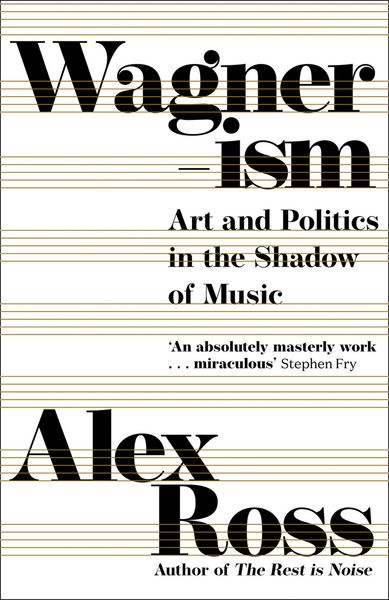
Wagnerism Art and Politics in the Shadow of Music
-
- Taschenbuch
- eBook ausgewählt
-
Form:Einzelkauf Download
-
Sprache:Englisch
13,45 €
inkl. gesetzl. MwSt.Beschreibung
Produktdetails
Format
ePUB 3
Kopierschutz
Ja
Family Sharing
Ja
Text-to-Speech
Ja
Erscheinungsdatum
15.09.2020
Verlag
HarperCollinsSeitenzahl
784 (Printausgabe)
Dateigröße
10078 KB
Sprache
Englisch
EAN
9780007518517
Alex Ross, renowned author of the international bestseller The Rest Is Noise, reveals how Richard Wagner became the proving ground for modern art and politics-an aesthetic war zone where the Western world wrestled with its capacity for beauty and violence.
For better or worse, Wagner is the most widely influential figure in the history of music. Around 1900, the phenomenon known as Wagnerism saturated European and American culture. Such colossal creations as The Ring of the Nibelung, Tristan und Isolde, and Parsifal were models of formal daring, mythmaking, erotic freedom, and mystical speculation. A mighty procession of writers, artists, and thinkers, including Charles Baudelaire, Virginia Woolf, Isadora Duncan, Vasily Kandinsky, and Luis Buñuel, felt his impact. Anarchists, occultists, feminists, and gay-rights pioneers saw him as a kindred spirit. Then Adolf Hitler incorporated Wagner into the soundtrack of Nazi Germany, and the composer came to be defined by his ferocious anti-Semitism. His name is now almost synonymous with artistic evil.
Wagnerism restores the magnificent confusion of what it means to be a Wagnerian. A pandemonium of geniuses, madmen, charlatans, and prophets do battle over Wagner's many-sided legacy. The narrative ranges across artistic disciplines, from architecture to the novels of Philip K. Dick, from the Zionist writings of Theodor Herzl to the civil-rights essays of W. E. B. Du Bois, from O Pioneers! to Apocalypse Now. In many ways,Wagnerism tells a tragic tale. An artist who might have rivalled Shakespeare in universal reach is implicated in an ideology of hate. Still, his shadow lingers over twenty-first century culture, his mythic motifs coursing through superhero films and fantasy fiction. Neither apologia nor condemnation, Wagnerism is a work of intellectual passion, urging us toward a more honest idea of how art acts in the world.
Noch keine Bewertungen vorhanden
Verfassen Sie die erste Bewertung zu diesem Artikel
Helfen Sie anderen Kundinnen und Kunden durch Ihre Meinung.
Kurze Frage zu unserer Seite
Vielen Dank für Ihr Feedback
Wir nutzen Ihr Feedback, um unsere Produktseiten zu verbessern. Bitte haben Sie Verständnis, dass wir Ihnen keine Rückmeldung geben können. Falls Sie Kontakt mit uns aufnehmen möchten, können Sie sich aber gerne an unseren Kund*innenservice wenden.
zum Kundenservice