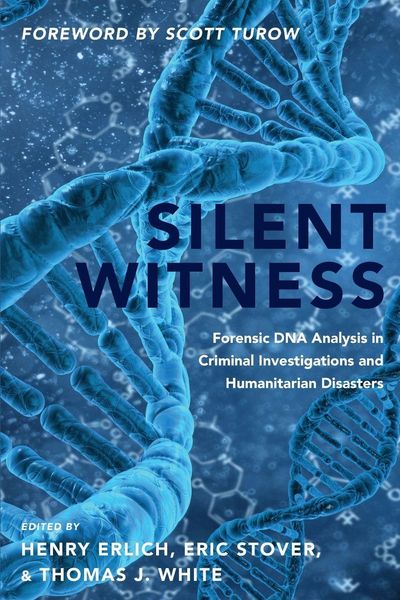
Silent Witness Forensic DNA Evidence in Criminal Investigations and Humanitarian Disasters
-
- Taschenbuch ausgewählt
- eBook
-
Sprache:Englisch
67,99 €
inkl. gesetzl. MwSt.,
Beschreibung
Produktdetails
Einband
Taschenbuch
Erscheinungsdatum
23.10.2020
Herausgeber
Erlich Henry + weitereVerlag
Oxford AcademicSeitenzahl
412
Maße (L/B/H)
23,4/15,6/2,2 cm
Gewicht
623 g
Sprache
Englisch
ISBN
978-0-19-090945-1
Since its introduction in the late 1980s, DNA analysis has revolutionized the forensic sciences: it has helped to convict the guilty, exonerate the wrongfully convicted, identify victims of mass atrocities, and reunite families whose members have been separated by war and repressive regimes. Yet, many of the scientific, legal, societal, and ethical concepts that underpin forensic DNA analysis remain poorly understood, and their application often controversial. Told by over twenty experts in genetics, law, and social science, Silent Witness relates the history and development of modern DNA forensics and its application in both the courtroom and humanitarian settings. Across three thematic sections, Silent Witness tracks the scientific advances in DNA analysis and how these developments have affected criminal and social justice, whether through the arrests of new suspects, as in the case of the Golden State Killer, or through the ability to identify victims of war, terrorism, and human rights abuses, as in the cases of the disappeared in Argentina and the former Yugoslavia and those who perished during the 9/11 attacks. By providing a critical inquiry into modern forensic DNA science, Silent Witness underscores the need to balance the benefits of using forensic genetics to solve crime with the democratic right to safeguard against privacy invasion and unwarranted government scrutiny, and raises the question of what it means to be an autonomous individual in a world where the most personal elements of one's identity are now publicly accessible.
Noch keine Bewertungen vorhanden
Verfassen Sie die erste Bewertung zu diesem Artikel
Helfen Sie anderen Kundinnen und Kunden durch Ihre Meinung.
Kurze Frage zu unserer Seite
Vielen Dank für Ihr Feedback
Wir nutzen Ihr Feedback, um unsere Produktseiten zu verbessern. Bitte haben Sie Verständnis, dass wir Ihnen keine Rückmeldung geben können. Falls Sie Kontakt mit uns aufnehmen möchten, können Sie sich aber gerne an unseren Kund*innenservice wenden.
zum Kundenservice