Gutscheinbedingungen

**Gültig von 22.06.2026 ab 19 Uhr bis 23.06.2026 24 Uhr auf Spielzeug, Schreibwaren, Filme, Geschenke & Trends, Musik, tolino eReader & Zubehör, Hörbücher und Hörbuch-Downloads (außer Abo), nicht preisgebundene Bücher und Kalender online auf thalia.at und in der Thalia App. Einzelne Artikel können ausgeschlossen sein. Aufgrund der Buchpreisbindung sind deutschsprachige Bücher und eBooks ausgenommen. Zusätzlich ausgenommen sind preisgebundene Artikel, Abos & Flatrates, eBooks, Games, Geschenkkarten/-boxen, Shelfies, Software, Zeitschriften sowie einzelne Artikel von tonies®. Pro Einkauf einmal einlösbar. Click & Collect nur bei Onlinevorabzahlung möglich. Keine Barauszahlung. Nicht kombinierbar mit anderen Aktionen und Gutscheinen. Gutschein wird auf max. 500€ Bestellwert angerechnet. Nicht gültig für Versandkosten und Services.

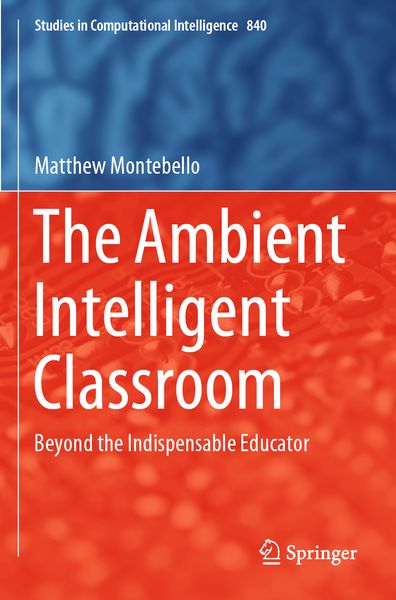
  • Produktbild: The Ambient Intelligent Classroom
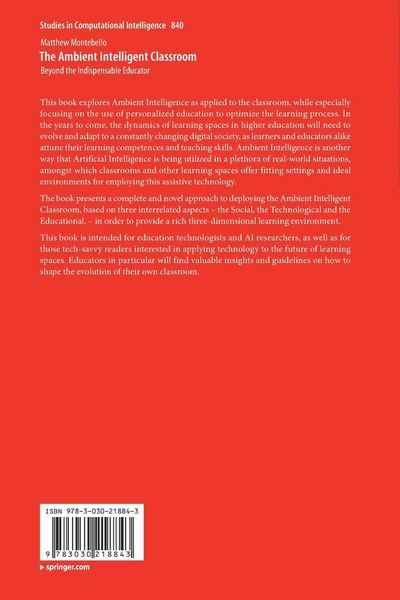
  • Produktbild: The Ambient Intelligent Classroom
Band 840

The Ambient Intelligent Classroom Beyond the Indispensable Educator

99,99 €

inkl. gesetzl. MwSt., Versandkostenfrei


Beschreibung

Produktdetails

Einband

Taschenbuch

Erscheinungsdatum

14.08.2020

Verlag

Springer

Seitenzahl

145

Maße (L/B/H)

23,5/15,5/1 cm

Gewicht

271 g

Auflage

1st ed. 2019

Sprache

Englisch

ISBN

978-3-030-21884-3

Beschreibung

Produktdetails

Einband

Taschenbuch

Erscheinungsdatum

14.08.2020

Verlag

Springer

Seitenzahl

145

Maße (L/B/H)

23,5/15,5/1 cm

Gewicht

271 g

Auflage

1st ed. 2019

Sprache

Englisch

ISBN

978-3-030-21884-3

Herstelleradresse

Springer-Verlag KG
Sachsenplatz 4-6
1201 Wien
AT

Email: ProductSafety@springernature.com

Kundinnen und Kunden meinen

0 Bewertungen

Informationen zu Bewertungen

Zur Abgabe einer Bewertung ist eine Anmeldung im Konto notwendig. Die Authentizität der Bewertungen wird von uns nicht überprüft. Wir behalten uns vor, Bewertungstexte, die unseren Richtlinien widersprechen, entsprechend zu kürzen oder zu löschen.

Die Bewertungen sind nach Format, Anzahl Sterne und Datum sortiert.

Verfassen Sie die erste Bewertung zu diesem Artikel

Helfen Sie anderen Kund*innen durch Ihre Meinung

Kundinnen und Kunden meinen

0 Bewertungen filtern

  • Produktbild: The Ambient Intelligent Classroom
  • Produktbild: The Ambient Intelligent Classroom
  • 1 Introduction.- 1.1 Introduction.- 1.2 Teacher-Centred Pedagogy.- 1.3 Student-Centred and Reflexive Methodologies.- 1.4 Learning Modalities and Affordances.- 1.5 Conclusion.- References.- 2 Ambient Intelligence.- 2.1 Introduction.- 2.2 Historical Background.- 2.2.1 Ubiquitous and Pervasive.- 2.2.2 Internet of Things.- 2.2.3 Smart and Calm Computing.- 2.3 Enabling Technologies.- 2.3.1 Techniques.- 2.3.2 Sensors.- 2.3.3 Setups.- 2.4 AmI in Action.- 2.4.1 Assisted Living.- 2.4.2 Transportation.- 2.4.3 Civic Environments.- 2.5 Case for the Classroom.- 2.5.1 Social Dimension.- 2.5.2 Technological Dimension.- 2.5.3 Educational Dimension.- 2.6 Conclusion.- References.- 3 Social Aspect.- 3.1 Introduction.- 3.2 Human Aspect of a Classroom.- 3.2.1 Multidimensionality.- 3.2.2 Simultaneity.- 3.2.3 Immediacy.- 3.2.4 Unpredictability.- 3.2.5 Publicness.- 3.2.6 History.- 3.3 Connectivism Learning Theory.- 3.4 Related Work .- 3.5 Implications to the AmI Classroom.- 3.6 Conclusion.- References.- 4 Technological Aspect.- 4.1 Introduction.- 4.2 Technology in Education.- 4.3 Adaptive Learning Theory.- 4.4 Related Work.- 4.4.1 The ‘Intelligent Classroom'.- 4.4.2 iClass.- 4.4.3 ClassMATE.- 4.5 Implications to the AmI Classroom.- 4.5.1 Unobtrusive Hardware.- 4.5.2 Seamless Communication Infrastructure.- 4.5.3 Distributed Device Network.- 4.5.4 Intuitive User Interface.- 4.5.5 Dependable and Secure.- 4.5.6 Learner Profile and the Educator.- 4.5.7 Compatibility and Scope.- 4.5.8 Fruitfulness and Role.- 4.5.9 Student Outcome and Clarity.- 4.6 Conclusion.- References.- 5 Educational Aspect.- 5.1 Introduction.- 5.2 Learning Models.- 5.2.1 New Learning Affordances.- 5.2.2 Modalities and Spaces within a School Environment.- 5.2.3 Merging Models.- 5.3 Personal Learning Environment.- 5.3.1 Personal Learning Network.- 5.3.2 Personal Learning Portfolio.- 5.3.3 Ambient Intelligent PLE.- 5.4 Related Work.- 5.4.1 Psychological Type Model.- 5.4.2 Learner Type Model.- 5.4.3 Experiential Type Model.- 5.4.4 Personality Type Model.- 5.4.5 Experiences Type Model.- 5.5 Implications to the AmI Classroom.- 5.6 Conclusion.- References.- 6 The Ambient Intelligent Classroom.- 6.1 Introduction.- 6.2 Background Rationale.- 6.2.1 Scenario Description.- 6.2.2 Virtual Space.- 6.2.3 Physical Space.- 6.2.4 Converging Technologies .- 6.3 Architectural Design.- 6.3.1 AmI-PLE.- 6.3.2 Smart Classroom.- 6.3.3 Combined Educational Environment.- 6.4 Implementation Details.- 6.4.1 Software Development.- 6.4.2 Classroom Setup.- 6.4.3 Interoperability Affairs.- 6.5 Empirical Testing.- 6.5.1 The Human Aspect.- 6.5.2 The Software Aspect.- 6.5.3 The Physical Aspect.- 6.6 Conclusion.- References.- 7 Future Directions.- 7.1 Introduction.- 7.2 Learning 4.0.- 7.2.1 Complete Automation.- 7.2.2 Global Knowledge.- 7.2.3 Assessment Repurposed.- 7.3 Evolving Educator.- 7.3.1 Digital Educator.- 7.3.2 Social Advocate.- 7.3.3 LifeLong Learner.- 7.4 Digital Learners.- 7.4.1 Technology Adopter.- 7.4.2 Social Player.- 7.4.3 New Skills Assessed.- 7.5 Education Environments.- 7.5.1 AI Enabled.- 7.5.2 Authenticating Sources.- 7.5.3 Holistic Skills.- 7.6 Conclusion.- References.- Glossary.- References.