• Produktbild: Tai CHI Concepts and Experiments
  • Produktbild: Tai CHI Concepts and Experiments

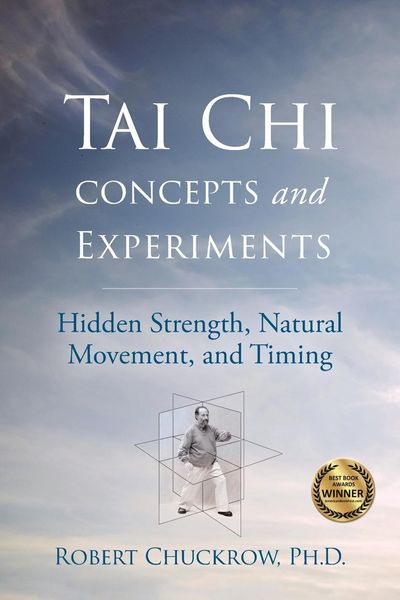
Tai CHI Concepts and Experiments Hidden Strength, Natural Movement, and Timing

24,99 €

inkl. gesetzl. MwSt., zzgl. Versandkosten


  • Kostenlose Lieferung ab 30 € Einkaufswert
  • Versandkostenfrei für Bonuscard-Kund*innen

Beschreibung

Produktdetails

Einband

Taschenbuch

Erscheinungsdatum

01.04.2021

Abbildungen

Illustrationen, nicht spezifiziert

Verlag

Ingram Publishers Services

Seitenzahl

240

Maße (L/B/H)

22,6/15/1,7 cm

Gewicht

368 g

Sprache

Englisch

ISBN

978-1-59439-741-7

Beschreibung

Produktdetails

Einband

Taschenbuch

Erscheinungsdatum

01.04.2021

Abbildungen

Illustrationen, nicht spezifiziert

Verlag

Ingram Publishers Services

Seitenzahl

240

Maße (L/B/H)

22,6/15/1,7 cm

Gewicht

368 g

Sprache

Englisch

ISBN

978-1-59439-741-7

Herstelleradresse

Libri GmbH
Europaallee 1
36244 Bad Hersfeld
DE

Email: gpsr@libri.de

Noch keine Bewertungen vorhanden

Verfassen Sie die erste Bewertung zu diesem Artikel

Helfen Sie anderen Kundinnen und Kunden durch Ihre Meinung.

Kundinnen und Kunden meinen

Bewertungen (0)

Weitere Artikel finden Sie in

Die Leseprobe wird geladen.
  • Produktbild: Tai CHI Concepts and Experiments
  • Produktbild: Tai CHI Concepts and Experiments
  • Dedication

    Acknowledgments 

    Author’s Background 

    Author’s Note

    Introduction

    CHAPTER 1: Relax

    1. Cheng Man-ch’ing
    2. Yang Cheng-fu
    3. The Meaning of Relax
    4. Attaining Sung
    5. The Importance of Releasing Tension in Doing T’ai Chi Movement
    6. Push-Hands
    7. A Seeming Contradiction
    8. Shedding Some Light on the No-Strength Paradox

    CHAPTER 2: Expansive Strength

    1. Background
    2. The Current View of Muscular Action
    3. Differences Between Contractive and Expansive Strength
    4. Some Experiential Evidence for Expansive Strength (Experiments You Can Do)
    5. A Promising Mechanism for Expansive Strength

    CHAPTER 3: Swimming on Land

    1. Professor Cheng’s Advice
    2. My Initial Skepticism
    3. My Eventual Realization
    4. The Mental Aspect
    5. “Zombie-Style T’ai Chi”
    6. Swimming on Land is Only a Tool for Recognizing Chin

    CHAPTER 4: Elucidation of Famous Masters’ Sayings on Strength

    1. Li, Chin, and Nei Chin
    2. Ch’i, Breath, and Internal and External Strength
    3. An Analysis of Cheng Man-ch’ing’s Distinction Between Two Different Types of Strength
    4. An Attempt to Further Elucidate What Professor Cheng Wrote
    5. An Analysis of Yang Cheng-fu’sCommentary on Strength
    6. Breath and the Tan T’ien
    7. Health Aspects
    8. Martial Aspects
    9. Mind, Breath, Ch’i, and Strength
    10. Summary

    CHAPTER 5: Advantages of Expansion Over Contraction in T’ai Chi

    1. Briskness of Regulation of Strength Compared for Both Types of Strength
    2. Alertness
    3. Endurance and Health Benefits
    4. Leverage and Fine-Motor Control
    5. Developing Bodily Unification
    6. Educating Bioelectrical Pathways
    7. Deception in Self-Defense

    CHAPTER 6: Health Protocols Using Expansion

    1. Expansion for Reeducating Upper-Back Alignment
    2. Expansion for Reeducating the Lower Back
    3. Improving the Cervical Spine Using Slow, Relaxed Movement
    4. Expansion for Relieving Plantar Fasciitis

    CHAPTER 7: Balance

    1. Gravity
    2. Leg Strength and Mobility
    3. Finding the Centers of the Feet
    4. Knee, Ankle, Arch Alignment
    5. Center of Mass
    6. Balance Experiments
    7. Vision
    8. Other Factors

    CHAPTER 8: An Analysis of “Rooting and Redirecting”

    1. Conditions for Optimal Stability
    2. Internal Aspects

    CHAPTER 9: Natural Movement

    1. Understanding Natural Movement
    2. Elements of Natural Movement
    3. Independence of Movement
    4. Reasons for Studying Natural Movement
    5. Examples of Unnatural Movement
    6. Tools for Studying Natural Movement
    7. Some Basic Physics Concepts
    8. Animate and Inanimate Natural Movement

    CHAPTER 10: Stepping Like a Cat

    1. T’ai-Chi Stepping
    2. Yinand Yang
    3. Weight Transfer
    4. Difficulties in Stepping Like a Cat
    5. Order of Stepping: Heel First, Toe First, or Whole Foot?
    6.  Practicing Stepping to the Side Using a Movement From the T’ai-Chi Form
    7. Stepping Naturally
    8. The Swing of the Rear Leg During Stepping Forward
    9. The Swing of the Forward Leg During Stepping Forward
    10. Stepping at the Right Moment
    11. Experiments for Attaining Proper Stepping
    12. Swing of the Arms During Walking

    CHAPTER 11: Periodic Movement and Timing

    1. Periodic Motion
    2. Periodic Motion Terms
    3. Driven Periodic Motion
    4. Linear, Driven, Horizontal Periodic Motion (“Withdraw and Push”)
    5. Analysis of the Motion in “Withdraw and Push”
    6. Importance of Timing of “Withdraw and Push”
    7. Circular Motion of Right Arm in “Single Whip”
    8. Centrifugal Effect
    9. Centrifugal Effect with Gravity
    10. Conical Pendulum
    11. “Swinging” About a Vertical Axis, Arms Swinging Side-to-Side
    12. Benefits of “Swinging”
    13. Fa Chin
    14. T’i Fang

    CHAPTER 12: Additional Physical Concepts

    1. Constraints
    2. Rolling Without Slipping

    CHAPTER 13: A Clarification of “Secret” Teachings Revealed by Cheng Man-ch’ing

    1. Basic Concepts
    2. Neutralizing
    3. Attacking
    4. Yearning K. Chen ‘s Alternative Way of Deflecting an Attack
    5. In Conclusion

    CHAPTER 14: Non-Intention, Intention, and “a Hand is Not a Hand”

    1. Non-Intention
    2. The Mental Transmission of Intention
    3. “A Hand is Not a Hand”
    4. The Transmission of Intention Over a Distance

    CHAPTER 15: Maximizing Your Progress in T’ai Chi

    1. Studying T’ai-Chi
    2. Obstacles to Learning T’ai-Chi
    3. Dealing with Obstacles
    4. Dangers of Overusing Images in Movement Arts
    5. Validating Your Progress

    CHAPTER 16: Perspectives on T’ai Chi

    1. Internal Versus External Martial Arts
    2. Lifting Versus Lowering
    3. Empty / Full, Yin/ YangParadox
    4. Some Variations of the T’ai-Chi Symbol
    5. T’ai Chi “Weapons”
    6. Misinterpretations
    7. The Yang Long Form and Professor Cheng’s Short Form
    8. The Popularization of T’ai Chi

    Afterword

    Appendix 1. Basics of Vector Addition

    Appendix 2. Analysis of Forces in Rooting

    Appendix 3. Analysis of Swing of Hanging Rods

    About the Author

    Bibliography

    Index