KI-Beratung Beta

Gutscheinbedingungen

**Gültig bis 05.10.2026 ab einem Mindestbestellwert von 30€ auf Spielzeug, Schreibwaren, Filme, Geschenke & Trends, Musik, tolino eReader & Zubehör, Hörbücher und Hörbuch-Downloads, nicht preisgebundene Bücher und Kalender online auf thalia.at und in der Thalia App. Einzelne Artikel können ausgeschlossen sein. Aufgrund der Buchpreisbindung sind deutschsprachige Bücher und eBooks ausgenommen. Zusätzlich ausgenommen sind Abos & Flatrates, Games, Geschenkkarten/-boxen, Shelfies, Software, Zeitschriften sowie einzelne Artikel von tonies®. Pro Einkauf einmal einlösbar. Nur gültig mit im Onlineshop hinterlegter Bonuscard. Click & Collect nur bei Onlinevorabzahlung möglich. Keine Barauszahlung. Nicht kombinierbar mit anderen Aktionen und Gutscheinen. Gutschein wird auf max. 500€ Bestellwert angerechnet. Nicht gültig für Versandkosten und Services. Preisgebundene Artikel sind vom Mindestbestellwert ausgeschlossen.

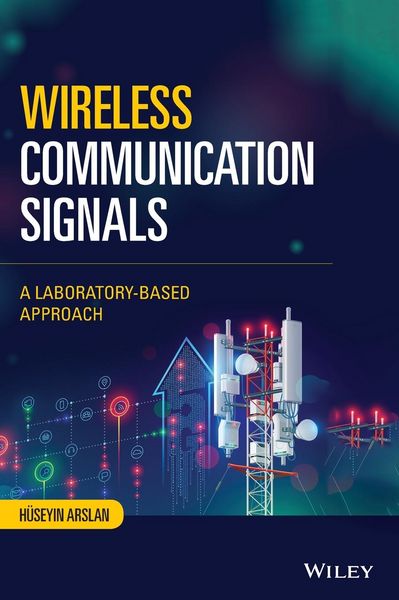
  • Produktbild: Design and Analysis of Wireless Communication Signals
  • Produktbild: Design and Analysis of Wireless Communication Signals

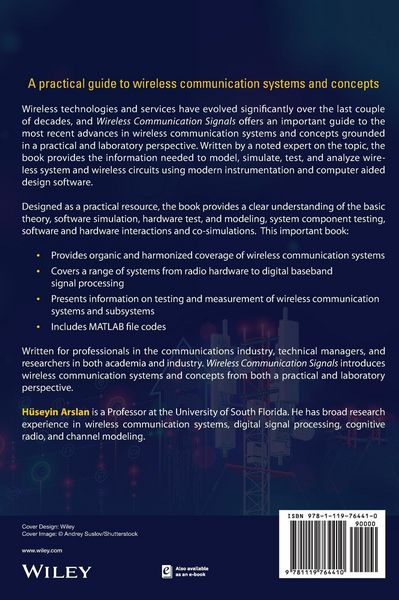
Design and Analysis of Wireless Communication Signals A Laboratory-based Approach

159,99 €

inkl. gesetzl. MwSt., Versandkostenfrei


Beschreibung

Produktdetails

Einband

Gebundene Ausgabe

Erscheinungsdatum

01.04.2021

Verlag

John Wiley & Sons

Seitenzahl

464

Maße (L/B/H)

26/18,3/2,9 cm

Gewicht

1066 g

Auflage

1. Auflage

Sprache

Englisch

ISBN

978-1-119-76441-0

Beschreibung

Produktdetails

Einband

Gebundene Ausgabe

Erscheinungsdatum

01.04.2021

Verlag

John Wiley & Sons

Seitenzahl

464

Maße (L/B/H)

26/18,3/2,9 cm

Gewicht

1066 g

Auflage

1. Auflage

Sprache

Englisch

ISBN

978-1-119-76441-0

Herstelleradresse

Libri GmbH
Europaallee 1
36244 Bad Hersfeld
DE

Email: gpsr@libri.de

Noch keine Bewertungen vorhanden

Verfassen Sie die erste Bewertung zu diesem Artikel

Helfen Sie anderen Kundinnen und Kunden durch Ihre Meinung.

Kundinnen und Kunden meinen

Bewertungen (0)

Die Leseprobe wird geladen.
  • Produktbild: Design and Analysis of Wireless Communication Signals
  • Produktbild: Design and Analysis of Wireless Communication Signals
  • Preface xv
     
    List of Contributors xix
     
    Acronyms List xx
     
    1 Hands-on Wireless Communication Experience 1
    Hüseyin Arslan
     
    1.1 Importance of Laboratory-Based Learning of Wireless Communications 1
     
    1.2 Model for a Practical Lab Bench 3
     
    1.3 Examples of Co-simulation with Hardware 6
     
    1.4 A Sample Model for a Laboratory Course 8
     
    1.4.1 Introduction to the SDR and Testbed Platform 11
     
    1.4.2 Basic Simulation 11
     
    1.4.3 Measurements and Multidimensional Signal Analysis 11
     
    1.4.4 Digital Modulation 12
     
    1.4.5 Pulse Shaping 13
     
    1.4.6 RF Front-end and RF Impairments 13
     
    1.4.7 Wireless Channel and Interference 14
     
    1.4.8 Synchronization and Channel Estimation 15
     
    1.4.9 OFDM Signal Analysis and Performance Evaluation 15
     
    1.4.10 Multiple Accessing 16
     
    1.4.11 Independent Project Development Phase 16
     
    1.4.11.1 Software Defined Radio 17
     
    1.4.11.2 Dynamic Spectrum Access and CR Experiment 17
     
    1.4.11.3 Wireless Channel 17
     
    1.4.11.4 Wireless Channel Counteractions 18
     
    1.4.11.5 Antenna Project 18
     
    1.4.11.6 Signal Intelligence 18
     
    1.4.11.7 Channel, User, and Context Awareness Project 19
     
    1.4.11.8 Combination of DSP Lab with RF and Microwave Lab 19
     
    1.4.11.9 Multiple Access and Interference Management 19
     
    1.4.11.10 Standards 20
     
    1.5 Conclusions 20
     
    References 20
     
    2 Performance Metrics and Measurements 23
    Hüseyin Arslan
     
    2.1 Signal Quality Measurements 23
     
    2.1.1 Measurements Before Demodulation 24
     
    2.1.2 Measurements During and After Demodulation 25
     
    2.1.2.1 Noise Figure 26
     
    2.1.2.2 Channel Frequency Response Estimation 26
     
    2.1.3 Measurements After Channel Decoding 26
     
    2.1.3.1 Relation of SNR with BER 27
     
    2.1.4 Error Vector Magnitude 27
     
    2.1.4.1 Error-Vector-Time and Error-Vector-Frequency 29
     
    2.1.4.2 Relation of EVM with Other Metrics 30
     
    2.1.4.3 Rho 31
     
    2.1.5 Measures After Speech or Video Decoding 31
     
    2.2 Visual Inspections and Useful Plots 32
     
    2.2.1 Advanced Scatter Plot 39
     
    2.3 Cognitive Radio and SDR Measurements 40
     
    2.4 Other Measurements 42
     
    2.5 Clarifying dB and dBm 44
     
    2.6 Conclusions 45
     
    References 45
     
    3 Multidimensional Signal Analysis 49
    Hüseyin Arslan
     
    3.1 Why Multiple Dimensions in a Radio Signal? 49
     
    3.2 Time Domain Analysis 52
     
    3.2.1 CCDF and PAPR 53
     
    3.2.2 Time Selectivity Measure 56
     
    3.3 Frequency Domain Analysis 57
     
    3.3.1 Adjacent Channel Power Ratio 59
     
    3.3.2 Frequency Selectivity Measure 61
     
    3.4 Joint Time-Frequency Analysis 62
     
    3.5 Code Domain Analysis 64
     
    3.5.1 Code Selectivity 66
     
    3.6 Correlation Analysis 67
     
    3.7 Modulation Domain Analysis 68
     
    3.8 Angular Domain Analysis 68
     
    3.8.1 Direction Finding 68
     
    3.8.2 Angular Spread 70
     
    3.9 MIMO Measurements 71
     
    3.9.1 Antenna Correlation 72
     
    3.9.2 RF Cross-Coupling 72
     
    3.9.3 EVM Versus Antenna Branches 73
     
    3.9.4 Channel Parameters 73
     
    3.10 Conclusions 73
     
    References 74
     
    4 Simulating a Communication System 77
    Muhammad Sohaib J. Solaija and Hüseyin Arslan
     
    4.1 Simulation: What,Why? 77
     
    4.2 Approaching a Simulation 78
     
    4.2.1 Strategy 78
     
    4.2.2 General Methodology 80
     
    4.3 Basic Modeling Concepts 81
     
    4.3.1 System Modeling 81
     
    4.3.