KI-Beratung Beta

Produktbild: Personhood in the Byzantine Christian Tradition

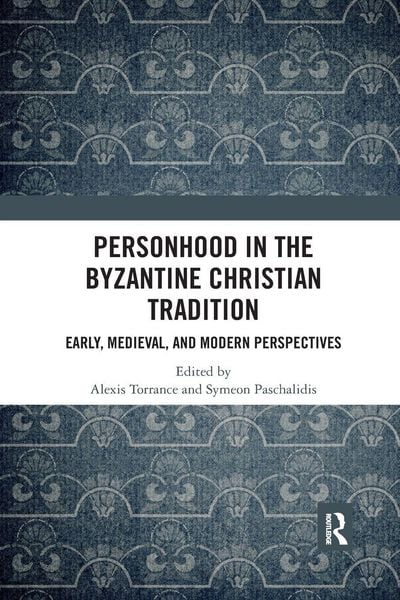
Personhood in the Byzantine Christian Tradition Early, Medieval, and Modern Perspectives

63,99 €

inkl. gesetzl. MwSt., Versandkostenfrei


Beschreibung

Bringing together international scholars from across a range of linked disciplines to examine the concept of the person in the Greek Christian East, Personhood in the Byzantine Christian Tradition stretches in its scope from the New Testament to contemporary debates surrounding personhood in Eastern...

Beschreibung

Bringing together international scholars from across a range of linked disciplines to examine the concept of the person in the Greek Christian East, Personhood in the Byzantine Christian Tradition stretches in its scope from the New Testament to contemporary debates surrounding personhood in Eastern Orthodoxy. Attention is paid to a number of pertinent areas that have not hitherto received the scholarly attention they deserve, such as Byzantine hymnography and iconology, the work of early miaphysite thinkers, as well as the relevance of late Byzantine figures to the discussion. Similarly, certain long-standing debates surrounding the question are revisited or reframed, whether regarding the concept of the person in Maximus the Confessor, or with contributions that bring patristic and modern Orthodox theology into dialogue with a variety of contemporary currents in philosophy, moral psychology, and political science.

In opening up new avenues of inquiry, or revisiting old avenues in new ways, this volume brings forward an important and on-going discussion regarding concepts of personhood in the Byzantine Christian tradition and beyond, and provides a key stimulus for further work in this field.

Produktdetails

Einband

Taschenbuch

Erscheinungsdatum

30.06.2020

Herausgeber Alexis Torrance + weitere
Verlag Taylor & Francis

Produktdetails

Einband

Taschenbuch

Erscheinungsdatum

30.06.2020

Herausgeber
Verlag Taylor & Francis
Seitenzahl

202

Maße (L/B/H)

23,1/15,5/1,8 cm

Gewicht

295 g

Sprache

Englisch

ISBN

978-0-367-59156-4

Herstelleradresse

Libri GmbH
Europaallee 1
36244 Bad Hersfeld
DE

Email: gpsr@libri.de

Noch keine Bewertungen vorhanden

Verfassen Sie die erste Bewertung zu diesem Artikel

Helfen Sie anderen Kundinnen und Kunden durch Ihre Meinung.

Kundinnen und Kunden meinen

Bewertungen (0)

Die Leseprobe wird geladen.
  • Produktbild: Personhood in the Byzantine Christian Tradition
  • Introduction, Alexis Torrance and Symeon Paschalidis Section I - Ancient Christian, Early Byzantine 1 Personal relationship as a prerequisite for moral imitation according to the Apostle Paul, Christos Karakolis 2 Emotional "scripts" and personal moral identity: insights from the Greek Fathers, Paul M. Blowers 3 Personhood in miaphysitism: Severus of Antioch and John Philoponus, Johannes Zachhuber Section II - Early to Middle Byzantine 4 Hypostasis, person and individual according to St Maximus the Confessor, with reference to the Cappadocians and St John of Damascus, Jean-Claude Larchet 5 Mary, the Mother of God, in dialogue: the drama of personal encounter in the Byzantine liturgical tradition, Mary B. Cunningham 6 Personification in Byzantine hymnography: kontakia and canons, Damaskinos Olkinuora Section III - Late Byzantine 7 The exemplar of consubstantiality: St. Gregory Palamas' hesychast as an expression of a microcosmic approach to personhood, Demetrios Harper 8 Nicholas Cabasilas of Thessaloniki: the historical dimension of the person, Marie-Hélène Congourdeau 9 Freedom, necessity and the laws of nature in the thought of Gennadios Scholarios, Matthew C. Briel Section IV - Modern 10 Flesh and Spirit: divergent Orthodox readings of the iconic body in Byzantium and the twentieth century, Evan Freeman 11 Nikos Nissiotis, the "theology of the '60s" and personhood: continuity or discontinuity? Nikolaos Asproulis 12 Eastern Christian conceptions of personhood and their political significance, Nicolas Prevelakis 13 Consubstantial Selves: a discussion between Orthodox personalism, existential psychology, Heinz Kohut, and Jean-Luc Marion, Nicholas Loudovikos