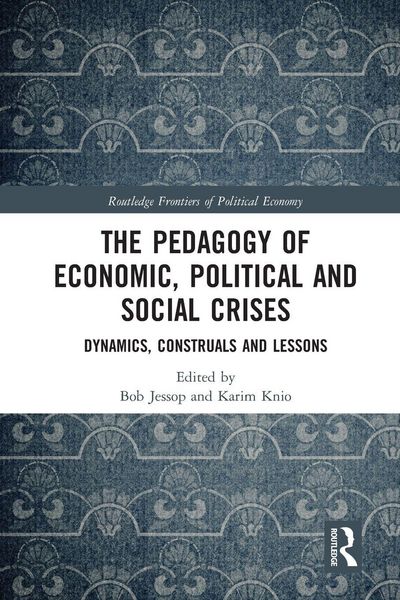
The Pedagogy of Economic, Political and Social Crises Dynamics, Construals and Lessons
-
- Taschenbuch ausgewählt
- eBook
-
Sprache:Englisch
62,99 €
inkl. gesetzl. MwSt.,
Beschreibung
Produktdetails
Einband
Taschenbuch
Erscheinungsdatum
30.06.2020
Herausgeber
Jessop Bob + weitereVerlag
Taylor and FrancisSeitenzahl
292
Maße (L/B/H)
23,1/15/1,8 cm
Gewicht
363 g
Sprache
Englisch
ISBN
978-0-367-58389-7
Crises have been studied in many disciplines and from diverse perspectives for at least 150 years. Yet recent decades have seen a marked increase in the crisis literature, reflecting growing awareness of crisis phenomena from the 1970s onwards.
Responding to this mainstream literature, this edited collection makes six key innovations. First, it distinguishes between crises as event and crises as process, as well as crises as accidental events or as the result of system-generated processes. Second, it distinguishes crises that can be managed through established crisis-management routines from crises of crisis management. Third, it focuses on the symptomatology of crisis, i.e., the challenge of moving crisis symptoms to understanding underlying causes as a basis for decisive action. Fourth, it goes beyond the cliché that crises are both threat and opportunity by distinguishing valid accounts of the origins and present nature of a crisis, from more speculative accounts of what potentially exists. Fifth, it explores how crises can disorient conventional wisdom, thus provoking efforts to interpret and learn about crises and draw lessons after a crisis has ended. Finally, the sixth element is the move away from the conventional focus on executive authorities and disaster management agencies, instead turning attention towards how other social forces construe crises and attempt to learn from them.
Offering important insights into the pedagogy of crisis throughout, this collection will offer excellent reading to both researchers and postgraduate students.
Noch keine Bewertungen vorhanden
Verfassen Sie die erste Bewertung zu diesem Artikel
Helfen Sie anderen Kundinnen und Kunden durch Ihre Meinung.
Kurze Frage zu unserer Seite
Vielen Dank für Ihr Feedback
Wir nutzen Ihr Feedback, um unsere Produktseiten zu verbessern. Bitte haben Sie Verständnis, dass wir Ihnen keine Rückmeldung geben können. Falls Sie Kontakt mit uns aufnehmen möchten, können Sie sich aber gerne an unseren Kund*innenservice wenden.
zum Kundenservice