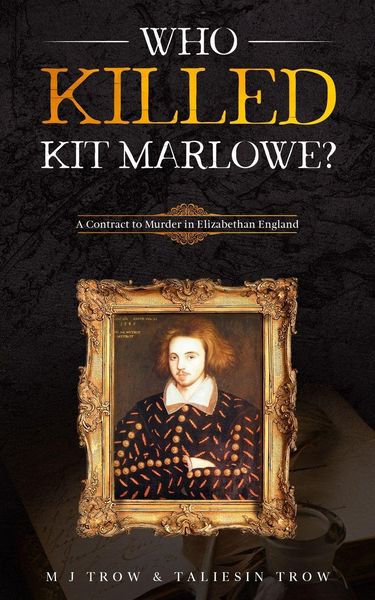
Who Killed Kit Marlowe? A Contract to Murder in Elizabethan England
-
- Taschenbuch ausgewählt
- eBook
-
Sprache:Englisch
17,99 €
inkl. gesetzl. MwSt.,
- Kostenlose Lieferung ab 30 € Einkaufswert
- Versandkostenfrei für Bonuscard-Kund*innen
Beschreibung
Produktdetails
Einband
Taschenbuch
Erscheinungsdatum
21.05.2020
Verlag
Amazon Digital Services LLC - KdpSeitenzahl
328
Maße (L/B/H)
20,3/12,7/2,1 cm
Gewicht
295 g
Sprache
Englisch
ISBN
978-1-913762-09-4
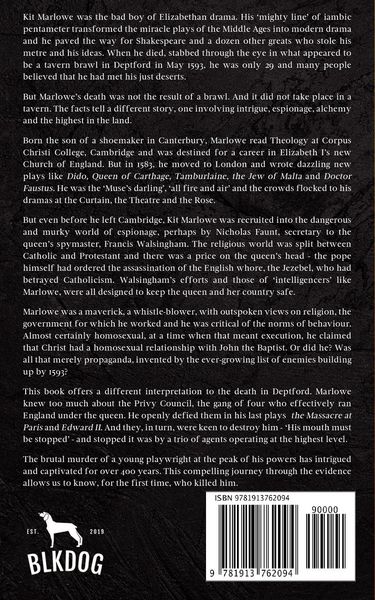
Kit Marlowe was the bad boy of Elizabethan drama. His 'mighty line' of iambic pentameter transformed the miracle plays of the Middle Ages into modern drama and he paved the way for Shakespeare and a dozen other greats who stole his metre and his ideas. When he died, stabbed through the eye in what appeared to be a tavern brawl in Deptford in May 1593, he was only 29 and many people believed that he had met his just deserts.
But Marlowe's death was not the result of a brawl. And it did not take place in a tavern. The facts tell a different story, one involving intrigue, espionage, alchemy and the highest in the land. Born the son of a shoemaker in Canterbury, Marlowe read Theology at Corpus Christi College, Cambridge and was destined for a career in Elizabeth I's new Church of England. But in 1583, he moved to London and wrote dazzling new plays like Dido, Queen of Carthage, Tamburlaine, the Jew of Malta and Doctor Faustus. He was the 'Muse's darling', 'all fire and air' and the crowds flocked to his dramas at the Curtain, the Theatre and the Rose. But even before he left Cambridge, Kit Marlowe was recruited into the dangerous and murky world of espionage, perhaps by Nicholas Faunt, secretary to the queen's spymaster, Francis Walsingham. The religious world was split between Catholic and Protestant and there was a price on the queen's head - the pope himself had ordered the assassination of the English whore, the Jezebel, who had betrayed Catholicism. Walsingham's efforts and those of 'intelligencers' like Marlowe, were all designed to keep the queen and her country safe. Marlowe was a maverick, a whistle-blower, with outspoken views on religion, the government for which he worked and he was critical of the norms of behaviour. Almost certainly homosexual, at a time when that meant execution, he claimed that Christ had a homosexual relationship with John the Baptist. Or did he? Was all that merely propaganda, invented by the ever-growing list of enemies building up by 1593? This book offers a different interpretation to the death in Deptford. Marlowe knew too much about the Privy Council, the gang of four who effectively ran England under the queen. He openly defied them in his last plays - the Massacre at Paris and Edward II. And they, in turn, were keen to destroy him - 'His mouth must be stopped' - and stopped it was by a trio of agents operating at the highest level. The brutal murder of a young playwright at the peak of his powers has intrigued and captivated for over 400 years. This compelling journey through the evidence allows us to know, for the first time, who killed him.Noch keine Bewertungen vorhanden
Verfassen Sie die erste Bewertung zu diesem Artikel
Helfen Sie anderen Kundinnen und Kunden durch Ihre Meinung.
Kurze Frage zu unserer Seite
Vielen Dank für Ihr Feedback
Wir nutzen Ihr Feedback, um unsere Produktseiten zu verbessern. Bitte haben Sie Verständnis, dass wir Ihnen keine Rückmeldung geben können. Falls Sie Kontakt mit uns aufnehmen möchten, können Sie sich aber gerne an unseren Kund*innenservice wenden.
zum Kundenservice