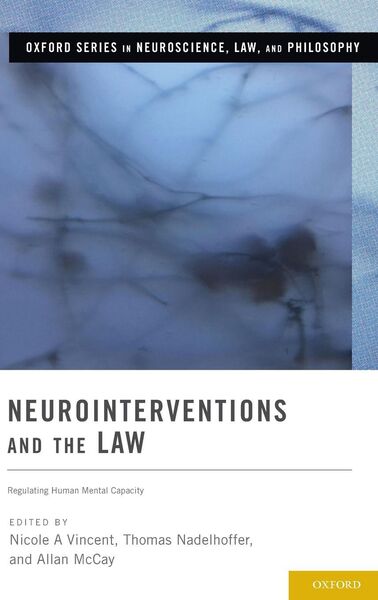
Neurointerventions and the Law Regulating Human Mental Capacity
146,99 €
inkl. gesetzl. MwSt.,
Beschreibung
Produktdetails
Einband
Gebundene Ausgabe
Erscheinungsdatum
26.03.2020
Herausgeber
Nicole A. Vincent + weitereVerlag
Oxford AcademicSeitenzahl
460
Maße (L/B/H)
24/16,1/2,9 cm
Gewicht
851 g
Sprache
Englisch
ISBN
978-0-19-065114-5
This volume makes a contribution to the field of neurolaw by investigating issues raised by the development, use, and regulation of neurointerventions. The broad range of topics covered in these chapters reflects neurolaw's growing social import, and its rapid expansion as an academic field of inquiry. Some authors investigate the criminal justice system's use of neurointerventions to make accused defendants fit for trial, to help reform convicted offenders, or to make condemned inmates sane enough for execution, while others interrogate the use, regulation, and social impact of cognitive enhancement medications and devices. Issues raised by neurointervention-based gay conversion "therapy", efficacy and safety of specific neurointervention methods, legitimacy of their use and regulation, and their implications for authenticity, identity, and responsibility are among the other topics investigated. Dwelling on neurointerventions also highlights tacit assumptions about human nature that have important implications for jurisprudence. For all we know, at present such things as people's capacity to feel pain, their sexuality, and the dictates of their conscience, are unalterable. But neurointerventions could hypothetically turn such constants into variables. The increasing malleability of human nature means that analytic jurisprudential claims (true in virtue of meanings of jurisprudential concepts) must be distinguished from synthetic jurisprudential claims (contingent on what humans are actually like). Looking at the law through the lens of neurointerventions thus also highlights the growing need for a new distinction between analytic jurisprudence and synthetic jurisprudence to tackle issues that increasingly malleable humans will face when they encounter novel opportunities and challenges.
Noch keine Bewertungen vorhanden
Verfassen Sie die erste Bewertung zu diesem Artikel
Helfen Sie anderen Kundinnen und Kunden durch Ihre Meinung.
Kurze Frage zu unserer Seite
Vielen Dank für Ihr Feedback
Wir nutzen Ihr Feedback, um unsere Produktseiten zu verbessern. Bitte haben Sie Verständnis, dass wir Ihnen keine Rückmeldung geben können. Falls Sie Kontakt mit uns aufnehmen möchten, können Sie sich aber gerne an unseren Kund*innenservice wenden.
zum Kundenservice