KI-Beratung Beta

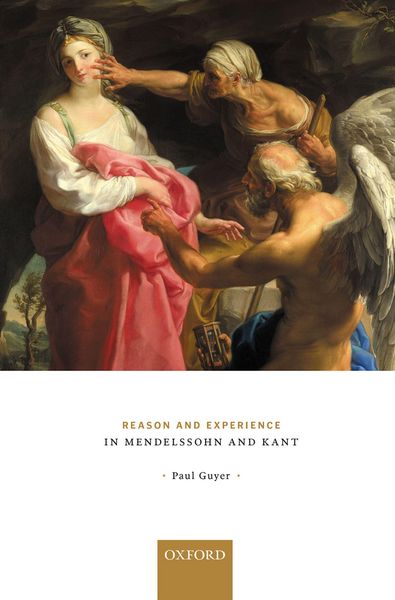
Produktbild: Reason and Experience in Mendelssohn and Kant

Reason and Experience in Mendelssohn and Kant

63,80 €

inkl. gesetzl. MwSt.

Beschreibung

Reason and Experience in Mendelssohn and Kant provides the first in-depth examination of the lifelong intellectual relationship between two of the greatest figures of the European Enlightenment, Immanuel Kant (1724-1804) and Moses Mendelssohn (1729-1786). Both were engaged in a common project of striking...

Beschreibung

Reason and Experience in Mendelssohn and Kant provides the first in-depth examination of the lifelong intellectual relationship between two of the greatest figures of the European Enlightenment, Immanuel Kant (1724-1804) and Moses Mendelssohn (1729-1786). Both were engaged in a common project of striking the right balance between rationalism and empiricism. They sometimes borrowed from one another, often disagreed with one another, and can usefully be compared even when they did not directly interact. Guyer examines a series of comparisons and contrasts: their arguments and conclusions on a range of metaphysical issues, including proofs of the existence of God, immortality, and idealism; their shared interests in aesthetics; and their path-breaking work on the "religion of reason" and the separation of church and state. Setting the work of both philosophers in historical context, Guyer shows that, where Kant sometimes provides deeper insight into the underlying structure of human thought, Mendelssohn is often the deeper student of the variety of human experience. This is evident above all in their treatments of aesthetics and religion: Mendelssohn recognizes more deeply than Kant the emotional impact of art, and while Kant imagines that organized religion will one day be superseded by pure morality, Mendelssohn argued that organized religion in all its varieties seems here to stay, and so toleration for religious variety is an inescapable requirement of human morality. Based on an exhaustive study of a wide range of texts, this study demonstrates the on-going relevance of Kant and Mendelssohn to modern thought.

Produktdetails

Format

ePUB

Kopierschutz

Ja

Family Sharing

Nein

Text-to-Speech

Ja

Produktdetails

Format

ePUB

Format

eBooks im ePUB-Format erlauben eine dynamische Anpassung des Inhalts an die jeweilige Display-Größe des Lesegeräts. Das Format eignet sich daher besonders für das Lesen auf mobilen Geräten, wie z.B. Ihrem tolino, Tablets oder Smartphones.

Kopierschutz

Ja

Kopierschutz

Zum Lesen dieses eBooks auf Geräten der tolino Familie sowie auf sonstigen eReadern und am PC benötigen Sie eine ByteBook-ID. Weitere Hinweise zum Lesen von kopiergeschützten eBooks finden Sie unter Hilfe/Downloads.

Family Sharing

Nein

Family Sharing

Mit Family Sharing können Sie eBooks innerhalb Ihrer Familie (max. sechs Mitglieder im gleichen Haushalt) teilen. Sie entscheiden selbst, welches Buch Sie mit welchem Familienmitglied teilen möchten. Auch das parallele Lesen durch verschiedene Familienmitglieder ist durch Family Sharing möglich. Um eBooks zu teilen oder geteilt zu bekommen, muss jedes Familienmitglied ein Konto bei Thalia oder einem anderen tolino-Buchhändler haben. Weitere Informationen finden Sie unter Hilfe/Family-Sharing.

Text-to-Speech

Ja

Text-to-Speech

Bedeutet Ihnen Stimme mehr als Text? Mit der Funktion Text-to-Speech können Sie sich im tolino webReader und in der aktuellen Thalia – Lesen & Hören App das eBook vorlesen lassen. Weitere Informationen finden Sie unter Hilfe/Text-to-Speech.

Erscheinungsdatum

14.05.2020

Verlag Oxford University Press
Seitenzahl

367 (Printausgabe)

Dateigröße

840 KB

Sprache

Englisch

EAN

9780192590671

Barrierefreiheit
  • keine Information zur Barrierefreiheit bekannt

Noch keine Bewertungen vorhanden

Verfassen Sie die erste Bewertung zu diesem Artikel

Helfen Sie anderen Kundinnen und Kunden durch Ihre Meinung.

Kundinnen und Kunden meinen

Bewertungen (0)

Weitere Artikel finden Sie in

Die Leseprobe wird geladen.
  • Produktbild: Reason and Experience in Mendelssohn and Kant