Gutscheinbedingungen

**Gültig bis 06.07.2026 auf fremdsprachige Bücher online auf thalia.at, in der Thalia App ab einem Mindestbestellwert von 30€ und in allen Thalia Buchhandlungen in Österreich. In den Buchhandlungen nur gültig auf lagernde Ware. Einzelne Artikel können ausgeschlossen sein. Ausgenommen sind preisgebundene Artikel & eBooks. Pro Einkauf einmal einlösbar. Nur gültig gegen Vorlage oder im Onlineshop hinterlegter Bonuscard. Infos zur Einlösung in der Buchhandlung sind auf der Bonuscard-Vorteilspreisseite zu finden. Click & Collect nur bei Onlinevorabzahlung möglich. Keine Einlösung bei Scan & Go-Bezahlung. Keine Barauszahlung. Nicht kombinierbar mit anderen Aktionen und Gutscheinen. Gutschein wird auf max. 500€ Bestellwert angerechnet. Nicht gültig für Versandkosten und Services.

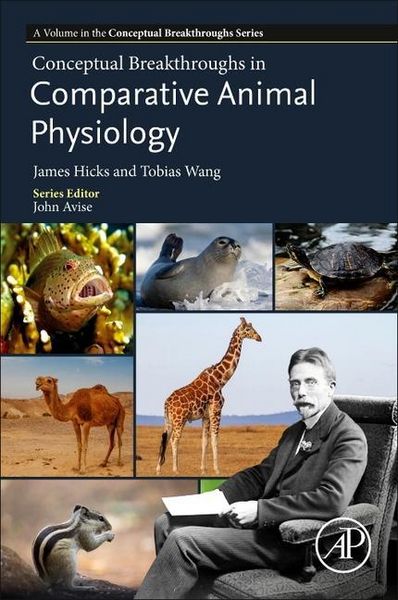
Produktbild: Conceptual Breakthroughs in Comparative Animal Physiology
Vorbesteller Neu

Conceptual Breakthroughs in Comparative Animal Physiology

159,99 €

inkl. gesetzl. MwSt., Versandkostenfrei


Beschreibung

Produktdetails

Einband

Taschenbuch

Erscheinungsdatum

01.10.2026

Verlag

Elsevier

Seitenzahl

276

Maße (L/B)

22,9/15,2 cm

Gewicht

450 g

Sprache

Englisch

ISBN

978-0-12-817366-4

Beschreibung

Produktdetails

Einband

Taschenbuch

Erscheinungsdatum

01.10.2026

Verlag

Elsevier

Seitenzahl

276

Maße (L/B)

22,9/15,2 cm

Gewicht

450 g

Sprache

Englisch

ISBN

978-0-12-817366-4

Herstelleradresse

Libri GmbH
Europaallee 1
36244 Bad Hersfeld
DE

Email: gpsr@libri.de

Noch keine Bewertungen vorhanden

Verfassen Sie die erste Bewertung zu diesem Artikel

Helfen Sie anderen Kundinnen und Kunden durch Ihre Meinung.

Kundinnen und Kunden meinen

Bewertungen (0)

  • Produktbild: Conceptual Breakthroughs in Comparative Animal Physiology
    1. 1878: Claude Bernard and "la fixité du milieu intérieur"
    2. 1910 -1961: From Reflexes to Rhythms: The Discovery of Central Pattern Generators
    3. 1914 -1948: The Concept of Critical Oxygen Tension (PcritO2) and the limits of aerobic metabolism
    4. 1929: Homeostasis and the "Wisdom of the Body"
    5. 1929: The Progress of Physiology: August Krogh at the 1929 Congress
    6. 1930 - 1935 Physiology of the Estivating Lungfish: Ecological and Evolutionary Insights
    7. 1930- 1938: The Foundations of Osmoregulation in Aquatic Vertebrates: Early Discoveries in Teleost Fish and Elasmobranchs
    8. 1931 - 1963: The History of Oxygen Secretion in the Fish Swim Bladder
    9. 1932: From Mouse to Elephant: How Kleiber Transformed Our Understanding of Metabolism
    10. 1933: James Gray and the Foundations of Animal Movement
    11. 1935-1949: Krogh and Ussing: The Early Use of Isotopes in Biology
    12. 1936-1961: Cryoprotectants in Comparative Physiology: Convergent Strategies for Life Below Zero
    13. 1939-1942: The Master Switch of Life
    14. 1940-1963: Pioneers of Desert Physiology: The Early Comparative Studies of Water Economy in Mammals
    15. 1941: Myogenic Endothermy in Insects: The mechanism of flight preparation
    16. 1944 The Desert Laboratory: Discovering Reptile Thermoregulation in the Coachella Valley
    17. 1944 - 1950: Breathing in Bursts: Discontinuous gas exchange in insects
    18. 1947: The Fry Paradigm: A Framework for Animal Activity
    19. 1948: Hibernation: connection between metabolism and body temperature
    20. 1949: Beyond One Spike, One Twitch: The Discovery of Asynchronous Muscle
    21. 1950: Coulson and Hernandez and the Alkaline Tide: Acid-Base Physiology in Postprandial Vertebrates
    22. 1950: Thermal Adaptations in Arctic and Tropical Mammals and Birds
    23. 1954: Oxygen Without Red Blood Cells, Life Without Freezing: The Polar Fish Experiment
    24. 1955-1957: Irving, Scholander and the Arctic Lesson: How Vessels Conserve Heat
    25. 1955-1975: The doubly labeled water technique: measuring field energetics
    26. 1958: Beyond the Kidney: The Salt Glands of Marine Birds and Reptiles
    27. 1963: Homeostasis in the Field: The Water Economy of Birds
    28. 1963: Ignition Point: How Arousal from Hibernation Unveiled a Thermogenic Organ
    29. 1963-1993: The Big Four in Comparative Locomotion, Inverted pendulums, running springs, elastic energy storage and dynamic similarity
    30. 1966-67: The Role of the Hypothalamus in Thermoregulation: Contributions from Comparative Physiology
    31. 1966: Low PaCO¿: The Signature Physiology of Water Breathers
    32. 1966: How Regional and Facultative Endothermy Transformed the Study of Ectothermic Physiology
    33. 1966: Cardiac Shunts: Mechanisms and Functional Significance
    34. 1966-1972: Cooling the Brain: Countercurrent Exchange and the Carotid Rete
    35. 1966: From Whalers’ Lines to Time-Depth Recorders: Tracing the Limits of Marine Mammal Diving
    36. 1968-1972: Anaerobic Scope and Anaerobic Capacity in Ectotherms
    37. 1968- 1974: The Mystery of Exercise Hyperpnea and the Role of Intrapulmonary Chemoreceptors
    38. 1966-1968: Life Without Oxygen: Metabolic Depression and the Anoxic Turtle
    39. 1970-1975: Comparative Respiratory Physiology and the Göttingen Models
    40. 1972: Fish Gills Under Competing Demands: Oxygen Uptake vs. Ionic Balance
    41. 1970-1972: The Cost of Transport: A Unifying Measure for Animal Locomotion
    42. 1972: The Buffalo Curve and The Alpha-stat Hypothesis
    43. 1971-72: Avian Gas Exchange: Countercurrent vs. Crosscurrent Mechanisms in Bird Lungs
    44. 1973: Torkel Weis-Fogh: Discovering the Clap-and-Fling Mechanism
    45. 1973-2002: Biochemical Adaptation: A Serendipitous Collaboration that Shaped a Discipline
    46. 1974-1985: Keeping Membranes Fluid: The Discovery of Homeoviscous Adaptations to Temperature and Pressure
    47. 1975: Behavioral Fever and Survival- the Logic of Fever
    48. 1977-1983: The Worms that Changed our View of Life: Chemoautotrophy at Hydrothermal Vents
    49. 1979: Maximum Metabolic Rate and the Making of Endotherms: The Aerobic Capacity Hypothesis
    50. 1980: Breath-Hold Boundaries: Defining the Aerobic Dive Limit
    51. 1980: "Drunken" Goldfish: ETOH production during anoxia
    52. 1981-1994: The Rediscovery of Safety Factors as a Principle of Form and Function
    53. 1981: Strong Ion Difference: Rethinking Acid-Base Balance Beyond Bicarbonate
    54. 1981: Symmorphosis: Economy of Design in the Oxygen Transport Cascade
    55. 1982: Norbert Heisler: preferential regulation of intracellular pH
    56. 1982: Discovering Adrenergic Control of Red Blood Cells: The Nä/H¿ Exchange Mechanism
    57. 1985: Turning Down the Heat: Comparative Patterns of Hypoxia-Induced Anapyrexia
    58. 1985: A New Way to See Muscle Work: Josephson’s Work-Loop Insight
    59. 1986: Cold Limits, Oxygen Limits: Channel Arrest as a Unifying Strategy
    60. 1987: Charting a New Course: "New Directions in Ecological Physiology"
    61. 1987: Solvent Drag and Sugar Flow: The Paracellular Pathway for Glucose
    62. 2000: The Rediscovery of Evolutionary Physiology
    63. 1990: Why Animals Don’t Burn Out: The Hidden Boundaries of Sustained Metabolism
    64. 1985-1994: Beyond Just-So Stories: Phylogenies and the Comparative Method
    65. 1994-1998: The Dynamic Cost of Eating: Specific Dynamic Action and the Rise of the "Dynamic Gut" in Comparative Physiology
    66. 1997-2003: Beyond Plasticity: The Dynamics of Phenotypic Flexibility
    67. 2001: Gene Expression Profiling in Non-model Organisms: The Introduction of ‘omics’ to Comparative Physiology
    68. 2001-2008: Limits to Life and The Ongoing Debate on Oxygen, Temperature, and Tolerance
    69. 2006: From Physiological Ecology to Conservation Physiology: Mechanisms with a Mission
    70. 2010: Beyond Birds: Unidirectional Airflow in the Reptilian Lung