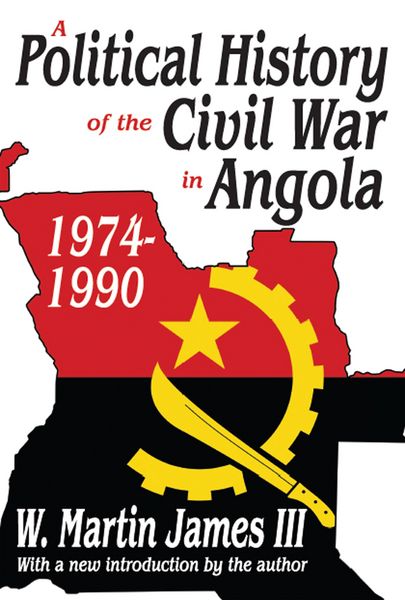
A Political History of the Civil War in Angola, 1974-1990
-
- Taschenbuch
- eBook ausgewählt
-
Form:Einzelkauf Download
-
Sprache:Englisch
-
eBook Format:ePUB 3
- ePUB 3 69,40 € ausgewählt
- PDF 69,40 €
69,40 €
inkl. gesetzl. MwSt.Beschreibung
Produktdetails
Format
ePUB 3
Kopierschutz
Ja
Family Sharing
Nein
Text-to-Speech
Ja
Erscheinungsdatum
04.05.2020
Herausgeber
W. Martin James IIIVerlag
Taylor & Francis eBooksSeitenzahl
314 (Printausgabe)
Auflage
1. Auflage
Sprache
Englisch
EAN
9781351534666
When Portugal's colonial rule in Angola ended in 1974, three liberation groups-UNITA (National Union for the Total Independence of Angola), FNLA (National Front for the Liberation of Angola), and MPLA (Popular Movement for the Liberation of Angola)-agreed to a tripartite movement for the fledgling nation. Conflicts quickly arose and the MPLA, with Cuban and Soviet assistance, drove its rivals from the capital, instigating a civil war, which continues into three periods (1975-1991, 1992-94, and 1998-2002). This volume covers the first period, focusing on the political history of the UNITA movement and its struggles with the MPLA.
The Angolan civil war was the product of personal jealousies, contrasting ideologies, and ethnic animosities. From its inception, the conflict between UNITA and Angola's Marxist government was an international affair involving the U. S., the USSR, China, and many African states: W. Martin James III, who wrote his book near the close of the first period of civil war, contends that despite Gorbachev's "new thinking" and talk of peaceful solutions to regional conflicts, Soviet policy toward Angola marked a reversion to the Brezhnev Doctrine. The biggest MPLA-Cuban offenses occurred during Gorbachev's tenure with Soviet advisers at the brigade level directing an MPLA offensive.
American policy toward Angola is also examined here. This is the first book to emphasize the dynamic role of UNITA in the Angolan liberation movement. James acknowledges that the importance of foreign powers in guaranteeing a government of national reconciliation. Just as important are strategies of compromise requiring trust in a political context where it is violated and submission for the common good where defiance is a remnant of the colonial past. Foreign policy analysts, African area specialists, and scholars of post-colonial history find this volume indispensible.
Noch keine Bewertungen vorhanden
Verfassen Sie die erste Bewertung zu diesem Artikel
Helfen Sie anderen Kundinnen und Kunden durch Ihre Meinung.
Kurze Frage zu unserer Seite
Vielen Dank für Ihr Feedback
Wir nutzen Ihr Feedback, um unsere Produktseiten zu verbessern. Bitte haben Sie Verständnis, dass wir Ihnen keine Rückmeldung geben können. Falls Sie Kontakt mit uns aufnehmen möchten, können Sie sich aber gerne an unseren Kund*innenservice wenden.
zum Kundenservice