Gutscheinbedingungen

**Gültig bis 17.08.2026 auf Schreibwaren & Office-Artikel online auf thalia.at, in der Thalia App und in teilnehmenden Thalia Buchhandlungen in Österreich mit Schulsortiment. In den Buchhandlungen nur gültig auf lagernde Ware. Einzelne Artikel können ausgeschlossen sein. Ausgenommen sind preisgebundene Artikel. Pro Einkauf einmal einlösbar. Nur gültig gegen Vorlage oder im Onlineshop hinterlegter Bonuscard. Infos zur Einlösung in der Buchhandlung sind auf der Bonuscard-Vorteilspreisseite zu finden. Click & Collect nur bei Onlinevorabzahlung möglich. Keine Einlösung bei Scan & Go-Bezahlung. Keine Barauszahlung. Nicht kombinierbar mit anderen Aktionen und Gutscheinen. Gutschein wird auf max. 500€ Bestellwert angerechnet. Nicht gültig für Geschenkkarten, Versandkosten und Services.

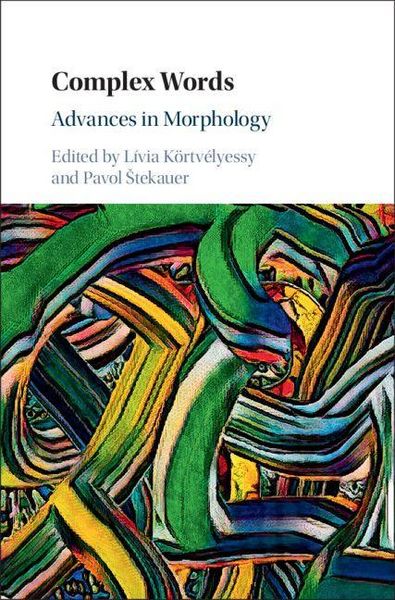
  • Produktbild: Complex Words
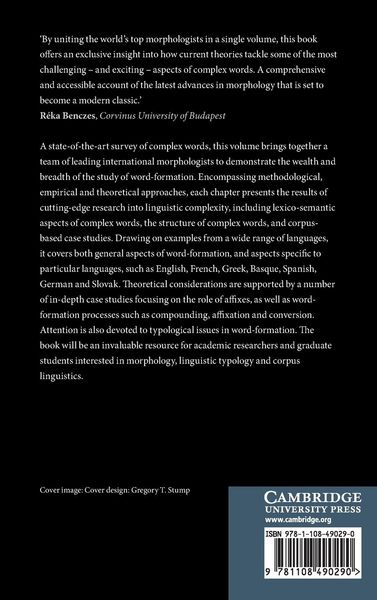
  • Produktbild: Complex Words

Complex Words Advances in Morphology

152,99 €

inkl. gesetzl. MwSt., Versandkostenfrei


Beschreibung

Produktdetails

Einband

Gebundene Ausgabe

Erscheinungsdatum

08.10.2020

Herausgeber

Lívia Körtvélyessy + weitere

Verlag

Cambridge Academic

Seitenzahl

398

Maße (L/B/H)

22,9/15,2/2,2 cm

Gewicht

730 g

Sprache

Englisch

ISBN

978-1-108-49029-0

Beschreibung

Produktdetails

Einband

Gebundene Ausgabe

Erscheinungsdatum

08.10.2020

Herausgeber

Verlag

Cambridge Academic

Seitenzahl

398

Maße (L/B/H)

22,9/15,2/2,2 cm

Gewicht

730 g

Sprache

Englisch

ISBN

978-1-108-49029-0

Herstelleradresse

Libri GmbH
Europaallee 1
36244 Bad Hersfeld
DE

Email: gpsr@libri.de

Noch keine Bewertungen vorhanden

Verfassen Sie die erste Bewertung zu diesem Artikel

Helfen Sie anderen Kundinnen und Kunden durch Ihre Meinung.

Kundinnen und Kunden meinen

Bewertungen (0)

Die Leseprobe wird geladen.
  • Produktbild: Complex Words
  • Produktbild: Complex Words
  • Introduction: advances in morphology: a summary Jan Don and Martin Everaert; Part I. Lexico-Semantic Aspects of Complex Words: 1. Formal semantics and the problem of nominalizations Rochelle Lieber; 2. Semantically subtractive morphology Stephen Anderson; 3. -less and –free Mark Aronoff; 4. Instrument Nouns in -one in Latin and Romance Franz Rainer; 5. Prominence in noun-to-verb conversion Heike Baeskow; 6. On Spanish dvandva and its restrictions Antonio Fábregas; Part II. Structure of Complex Words: 7. Estonian case inflection made simple. A case study in word and paradigm morphology with linear discriminative learning Yu-Ying Chuang, Kaidi Lõo, James P. Blevins, and R. Harald Baayen; 8. Uninflectedness: uninflecting, uninflectable, and uninflected words, or the complexity of the simplex Andrew Spencer; 9. Complex exponents Gregory Stump; 10. Derivational patterns in proto-basque word structure Juliette Blevins; 11. The complexity of greek verbal morphology: the case of prefixed verbs Artemis Alexiadou; 12. Affixoids, an intriguing intermediate category Angela Ralli; Part III. Corpus-Based Case Studies: 13. Competition between synthetic nn compounds and nn.GEN phrasal nouns in polish: semantic niches, hapax legomena and low-level construction schemas Bozena Cetnarowska; 14. An s is an s', or is it? Plural and genitive-plural are not homophonous Ingo Plag, Sonia Ben Hedia, Arne Lohmann, and Julia Zimmermann; 15. The role of word-formation families and subfamilies in the organisation of German diminutive compounds Wolfgang U. Dressler, Sonja Schwaiger, and Jutta Ransmayr; 16. Semantic patterns in noun-to-verb conversion in English Salvador Valera; 17. Onomatopoeia: on the crossroads of sound symbolism and word-formation Lívia Körtvélyessy, and Pavol Štekauer; 18. Dingsbums and thingy: placeholders for names in German and other languages Petra M. Vogel.