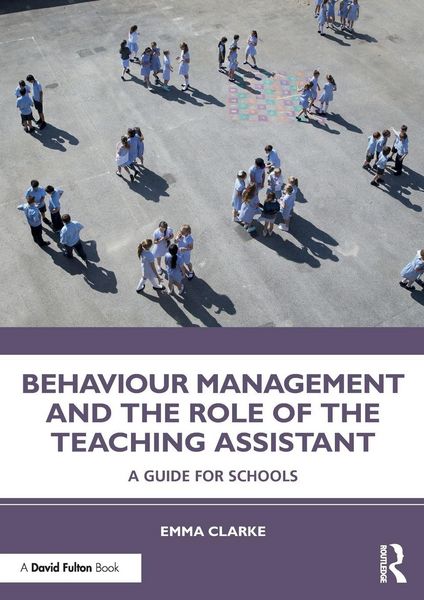
Behaviour Management and the Role of the Teaching Assistant A Guide for Schools
-
- Taschenbuch ausgewählt
- eBook
-
Sprache:Englisch
57,99 €
inkl. gesetzl. MwSt.,
Beschreibung
Produktdetails
Einband
Taschenbuch
Erscheinungsdatum
06.10.2020
Abbildungen
schwarz-weiss Illustrationen
Verlag
Taylor and FrancisSeitenzahl
222
Maße (L/B/H)
24,6/17,4/1,3 cm
Gewicht
200 g
Sprache
Englisch
ISBN
978-0-367-17561-0
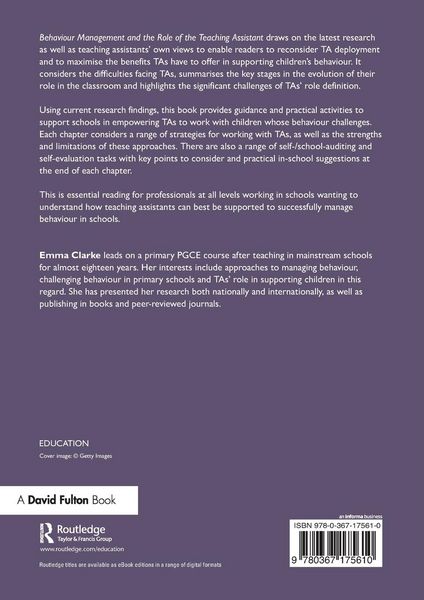
Behaviour Management and the Role of the Teaching Assistant draws on the latest research as well as teaching assistants' own views to enable readers to reconsider TA deployment and to maximise the benefits TAs have to offer in supporting children¿s behaviour.
Noch keine Bewertungen vorhanden
Verfassen Sie die erste Bewertung zu diesem Artikel
Helfen Sie anderen Kundinnen und Kunden durch Ihre Meinung.
Kurze Frage zu unserer Seite
Vielen Dank für Ihr Feedback
Wir nutzen Ihr Feedback, um unsere Produktseiten zu verbessern. Bitte haben Sie Verständnis, dass wir Ihnen keine Rückmeldung geben können. Falls Sie Kontakt mit uns aufnehmen möchten, können Sie sich aber gerne an unseren Kund*innenservice wenden.
zum Kundenservice