Gutscheinbedingungen

**Gültig bis 22.07.2026 ab einem Mindestbestellwert von 40€ auf Spielzeug, Schreibwaren, Filme, Geschenke & Trends, Musik, tolino eReader & Zubehör, Hörbücher und Hörbuch-Downloads (außer Abo), nicht preisgebundene Bücher und Kalender online auf thalia.at und in der Thalia App. Einzelne Artikel können ausgeschlossen sein. Aufgrund der Buchpreisbindung sind deutschsprachige Bücher und eBooks ausgenommen. Zusätzlich ausgenommen sind preisgebundene Artikel, Abos & Flatrates, eBooks, Games, Geschenkkarten/-boxen, Shelfies, Software, Zeitschriften sowie einzelne Artikel von tonies®. Pro Einkauf einmal einlösbar. Click & Collect nur bei Onlinevorabzahlung möglich. Keine Barauszahlung. Nicht kombinierbar mit anderen Aktionen und Gutscheinen. Gutschein wird auf max. 500€ Bestellwert angerechnet. Nicht gültig für Versandkosten und Services. Preisgebundene Artikel sind vom Mindestbestellwert ausgeschlossen.

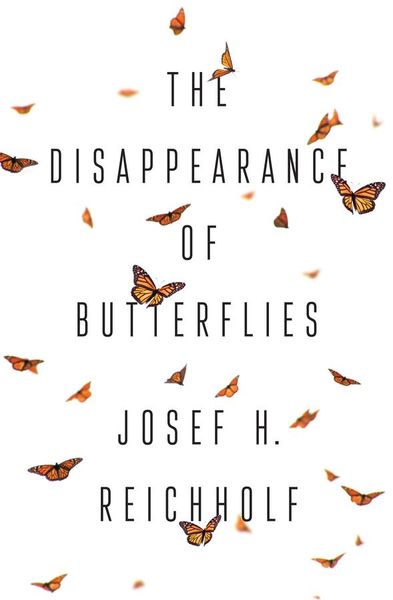
Produktbild: The Disappearance of Butterflies

The Disappearance of Butterflies

31,99 €

inkl. gesetzl. MwSt., Versandkostenfrei


Beschreibung

Produktdetails

Einband

Gebundene Ausgabe

Erscheinungsdatum

30.10.2020

Verlag

John Wiley & Sons

Seitenzahl

260

Maße (L/B/H)

23,4/15,7/2,7 cm

Gewicht

612 g

Auflage

1. Auflage

Übersetzt von

Gwen Clayton

Sprache

Englisch

ISBN

978-1-5095-3979-6

Beschreibung

Rezension

"The Disappearance of Butterflies is in many ways the fulfilment of Reichholf's entire 50-year career."
New Statesman
 
"This is a brilliant, authoritative and iconoclastic challenge to the industrial farming that is destroying insect life. But Josef Reichholf's lifetime of scrupulous scientific observation of butterflies and moths does not lead to despondency. He identifies overlooked solutions, from discarding fertiliser to embracing disorder and greening cities. And he reveals more of the miraculous biology of butterflies and moths, and their marvellous relationships with a whole web of life - including us."
Patrick Barkham, author of The Butterly Isles
 
"This engaging book, based on personal observations of the author and a broad reading of the literature, celebrates the wonderful diversity of butterflies and moths, and laments their ongoing decline in response to loss of natural habitat and intense agricultural practices. Reichholf introduces the reader to the general biology of Lepidoptera, as well as highlighting the special adaptations of some groups to their particular, and sometimes peculiar, ways of life. The second part of the book addresses the decline of butterflies and moths, why this should matter to us, and what we can do about it. Among its surprises are the roles of urban areas as refuges for some species. Reichholf makes the case that diversity is important and worth conserving, both for the functioning of the natural environment and for the pleasure we humans derive from nature."
Robert E. Ricklefs, University of Missouri-St. Louis
 
"The beauty, individuality and unique characteristics of butterflies and moths are brought to life in the first half of this authoritative book. The pages filled with a lifetime of personal experiences, scientific research and case studies. But it is the second half that really captured my imagination. Addressing the devastating decline of lepidoptera, Reichholf outlines why this should matter to us and what we can do about it. With striking insight into why over fertilisation, industrial agriculture and habitat degradation are crippling for biodiversity, the author offers hope through a range of solutions."
Lindsey Chapman, Discover Wildlife
 
"Fascinating"
Visions for Sustainability
 
"Eloquent, detailed, expertly organized and presented, The Disappearance of Butterflies is a definitive study that will have immense value to students, scientists, and the general public alike."
Midwest Book Review

Produktdetails

Einband

Gebundene Ausgabe

Erscheinungsdatum

30.10.2020

Verlag

John Wiley & Sons

Seitenzahl

260

Maße (L/B/H)

23,4/15,7/2,7 cm

Gewicht

612 g

Auflage

1. Auflage

Übersetzt von

Gwen Clayton

Sprache

Englisch

ISBN

978-1-5095-3979-6

Herstelleradresse

Libri GmbH
Europaallee 1
36244 Bad Hersfeld
DE

Email: gpsr@libri.de

Noch keine Bewertungen vorhanden

Verfassen Sie die erste Bewertung zu diesem Artikel

Helfen Sie anderen Kundinnen und Kunden durch Ihre Meinung.

Kundinnen und Kunden meinen

Bewertungen (0)

Die Leseprobe wird geladen.
  • Produktbild: The Disappearance of Butterflies
  • Foreword

    Acknowledgements

    Introduction

    Part I: The Biodiversity of Lepidoptera

    A Review of 50 Years of Butterfly and Moth Research

    Insects fly towards UV light

    Urban Lepidoptera: more common than expected

    Death's head hawk-moth: a guest that can barely live with us anymore

    The Fascinating Life of Aquatic Moths

    Evenings at the pond

    The hidden lives of the little nymphs

    How the caterpillar breathes under water

    Up and away in an air balloon

    The advantages of living in water

    A place to live or an 'ecological niche'

    The destruction of the biotopes of the little nymphs

    The Benefits of Being Attracted to Light

    Like moths to a flame

    The red blindness of butterflies

    The Strange Behaviour of the Purple Emperor

    Butterflies on drugs

    Psychedelics in the insect kingdom

    The Nettle-feeding Lepidoptera: An Instructive Community

    Nettles: indicators of overfertilization

    Nettles escape defoliation

    Maize: damaged beyond repair

    Cabbage whites: parasites and protection

    The mass flight of the map butterfly: singularities in the realm of the butterflies

    Does climate change affect the seasonal morphs of the map butterfly?

    Nature is too diverse for simple generalizations

    The Great Migrations of the Butterflies

    The migratory flights of the painted ladies

    Small tortoiseshells as travellers

    Butterfly invasions

    Poisonous Butterflies and Moths: From the Cabbage White to the Six-spot Burnet

    Cabbage whites on the Dalmatian coast

    Whenever it rains in the desert ...

    Which factors affect the reproduction of butterflies, and when?

    Useful models

    The need to go slow

    Poison in the body

    The Secret Life of Small Ermine Moths

    The bird-cherry, a tree of the riparian woods

    Toxins in bird-cherries

    The life history of the caterpillars of the ermine moth

    Helpful hungry caterpillars

    Between parasitism and population explosion

    Longer-term population cycles

    Coppice management and its consequences

    Generations and multiyear cycles of ermine moths

    Parasitoids on other ermine moths

    The lifecycles of butterflies and moths

    Hardy Winter Moths

    Life at the edge of winter

    The mastery of seasonal niches

    Why female winter moths do not need wings

    Deforestation, poison and the decline of the codling moth and the winter moth

    The common quaker moth in early spring

    Brimstones: The First Spring Butterflies

    Butterfly attacks

    The problem with early flight

    Müllerian mimicry

    The critical factor of spring weather

    'Balance' in nature

    Part II: The Disappearance of Lepidoptera

    Assessing the Abundance and Occurrence of Butterflies: A Major Challenge

    Starting with 1,000 watts

    How to successfully attract moths to light

    Change and continuity

    All praise to those who helped us with identification problems

    Butterfly and Moth Names

    The Decline of Moths and Butterflies

    The village outskirts and the open fields

    Findings in the riparian woods

    The findings from Munich

    The decline in species diversity

    Warm summers and what they mean for the moths and butterflies

    The Metropolis: The End of Nature or Salvation of Species Diversity?

    The advantage of structure

    Monocultures produce pests

    Cities as islands of warmth

    Overfertilized, poisoned land

    Nature-friendly cities

    The Inhospitality of the Countryside

    From idyll to slurry

    Monocultures and changes to the ground-level microclimate

    The cooling of fields and forests

    Increased growth reduces the abundance of moths and butterflies in the riparian woods

    Boundary ridges in the fields and meadows: a supportive network

    'Infilling' and 'compensating areas'

    The 'nutritional condition' of the landscape

    The disappearance of the cockchafers

    The turning point for our farmers: the 1970s

    The Krefeld Study

    A subsidy system without an exit mechanism

    Nature conservation and nature enthusiasts

    The Devastating Effect of Communal Maintenance Measures

    The End of the Night: The Role of Light Pollution

    Summary: A Cluster of Factors

    The Disappearance of Moths and Butterflies and Its Consequences

    What We Can Do about the Disappearance of Moths and butterflies

    The Beauty of Moths and Butterflies

    Two Findings in Place of an Epilogue

    Select Bibliography

    Index