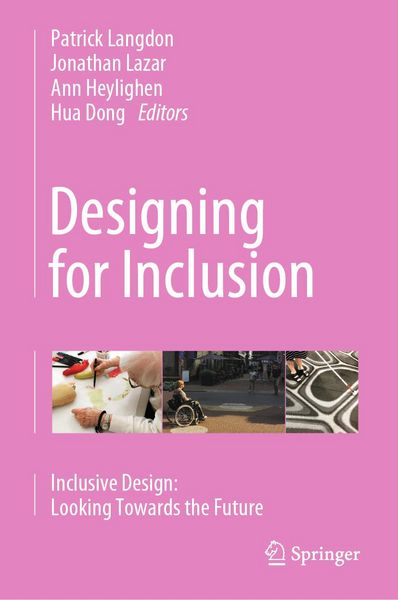
Designing for Inclusion Inclusive Design: Looking Towards the Future
-
- Hardcover
- Taschenbuch
- eBook ausgewählt
-
Form:Einzelkauf Download
-
Sprache:Englisch
186,99 €
inkl. gesetzl. MwSt.Beschreibung
Produktdetails
Format
Kopierschutz
Nein
Family Sharing
Nein
Text-to-Speech
Nein
Erscheinungsdatum
16.04.2020
Herausgeber
Patrick Langdon + weitereVerlag
SpringerSeitenzahl
194 (Printausgabe)
Dateigröße
22062 KB
Sprache
Englisch
EAN
9783030438654
This proceedings book presents papers from the 10th Cambridge Workshops on Universal Access and Assistive Technology. The CWUAAT series of workshops have celebrated a long history of interdisciplinarity, including design disciplines, computer scientists, engineers, architects, ergonomists, ethnographers, ethicists, policymakers, practitioners, and user communities. This reflects the wider increasing realisation over the long duration of the series that design for inclusion is not limited to technology, engineering disciplines, and computer science but instead requires an interdisciplinary approach. The key to this is providing a platform upon which the different disciplines can engage and see each other's antecedents, methods, and point of view.
This proceedings book of the 10th CWUAAT conference presents papers in a variety of topics including
- Reconciling usability, accessibility, and inclusive design;
- Designing inclusive assistive and rehabilitationsystems;
- Designing cognitive interaction with emerging technologies;
- Designing inclusive architecture;
- Data mining and visualising inclusion;
- Legislation, standards, and policy in inclusive design;
- Situational inclusive interfaces; and
- The historical perspective: 20 years of CWUAAT.
CWUAAT has always aimed to be inclusive in the fields that it invites to the workshop. We must include social science, psychologies, anthropologies, economists, politics, governance, and business. This requirement is now energised by imminent new challenges arising from techno-social change. In particular, artificial intelligence, wireless technologies, and the Internet of Things generate a pressing need for more socially integrated projects with operational consequences on individuals in the built environment and at all levels of design and society. Business cases and urgent environmental issues such as sustainability and transportation should now be a focus point for inclusion in an increasingly challenging world. This proceedings book continues the goal of designing for inclusion, as set out by the CWUAAT when it first started.
Noch keine Bewertungen vorhanden
Verfassen Sie die erste Bewertung zu diesem Artikel
Helfen Sie anderen Kundinnen und Kunden durch Ihre Meinung.
Kurze Frage zu unserer Seite
Vielen Dank für Ihr Feedback
Wir nutzen Ihr Feedback, um unsere Produktseiten zu verbessern. Bitte haben Sie Verständnis, dass wir Ihnen keine Rückmeldung geben können. Falls Sie Kontakt mit uns aufnehmen möchten, können Sie sich aber gerne an unseren Kund*innenservice wenden.
zum Kundenservice