KI-Beratung Beta

Gutscheinbedingungen

**Gültig am 25.11.2026 auf fremdsprachige Bücher online auf thalia.at und in der Thalia App. Einzelne Artikel können ausgeschlossen sein. Ausgenommen sind preisgebundene Artikel & eBooks. Pro Einkauf einmal einlösbar. Click & Collect nur bei Onlinevorabzahlung möglich. Keine Barauszahlung. Nicht kombinierbar mit anderen Aktionen und Gutscheinen. Gutschein wird auf max. 500€ Bestellwert angerechnet. Nicht gültig für Geschenkkarten, Versandkosten und Services.

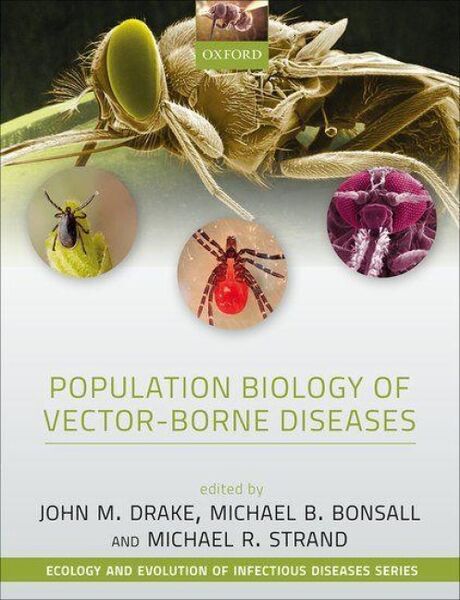
Produktbild: Population Biology of Vector-Borne Diseases

Population Biology of Vector-Borne Diseases

102,99 €

inkl. gesetzl. MwSt., Versandkostenfrei


Beschreibung

Population Biology of Vector-Borne Diseases is the first comprehensive survey of this rapidly developing field. The chapter topics provide an up-to-date presentation of classical concepts, reviews of emerging trends, synthesis of existing knowledge, and a prospective agenda for future research. The...

Beschreibung

Population Biology of Vector-Borne Diseases is the first comprehensive survey of this rapidly developing field. The chapter topics provide an up-to-date presentation of classical concepts, reviews of emerging trends, synthesis of existing knowledge, and a prospective agenda for future research. The contributions offer authoritative and international perspectives from leading thinkers in the field. The dynamics of vector-borne diseases are far more intrinsically ecological compared with their directly transmitted equivalents. The environmental dependence of ectotherm vectors means that vector-borne pathogens are acutely sensitive to changing environmental conditions. Although perennially important vector-borne diseases such as malaria and dengue have deeply informed our understanding of vector-borne diseases, recent emerging viruses such as West Nile virus, Chikungunya virus, and Zika virus have generated new scientific questions and practical problems. The study of vector-borne disease has been a particularly rich source of ecological questions, while ecological theory has provided the conceptual tools for thinking about their evolution, transmission, and spatial extent. Population Biology of Vector-Borne Diseases is an advanced textbook suitable for graduate level students taking courses in vector biology, population ecology, evolutionary ecology, disease ecology, medical entomology, viral ecology/evolution, and parasitology, as well as providing a key reference for researchers across these fields.

Produktdetails

Einband

Taschenbuch

Erscheinungsdatum

28.02.2021

Herausgeber John M. Drake + weitere
Verlag Oxford Academic

Produktdetails

Einband

Taschenbuch

Erscheinungsdatum

28.02.2021

Herausgeber
Verlag Oxford Academic
Seitenzahl

304

Maße (L/B/H)

21,8/14/1,8 cm

Gewicht

340 g

Sprache

Englisch

ISBN

978-0-19-885325-1

Herstelleradresse

Libri GmbH
Europaallee 1
36244 Bad Hersfeld
DE

Email: gpsr@libri.de

Noch keine Bewertungen vorhanden

Verfassen Sie die erste Bewertung zu diesem Artikel

Helfen Sie anderen Kundinnen und Kunden durch Ihre Meinung.

Kundinnen und Kunden meinen

Bewertungen (0)

  • Produktbild: Population Biology of Vector-Borne Diseases
    • 1: John M. Drake, Michael Bonsall and Michael Strand: Introduction: current topics in the population biology of infectious diseases
    • Section I: Theory of Population Biology
    • 2: Robert C. Reiner Jr. and David L Smith: Heterogeneity, stochasticity and complexity in the dynamics and control of mosquito-borne pathogens
    • 3: T. Alex Perkins, Guido España, Sean M. Moore, Rachel J. Oidtman, Swarnali Sharma, Brajendra Singh, Amir S. Siraj, K. James Soda, Morgan Smith, Magdalene K. Walters and Edwin Michael: Seven challenges for spatial analyses of vector-borne diseases
    • 4: Stephen A Lauer, Alexandria C Brown and Nicholas G Reich: Infectious disease forecasting for public health
    • 5: John M. Drake, Krisztian Magori, Kevin Knoblich, Sarah E. Bowden and Waheed I. Bajwa: Force of infection and variation in outbreak size in a multi-species host-pathogen system: West Nile Virus in New York City
    • Section II: Empirical Ecology
    • 6: Marta S. Shocket, Christopher B. Anderson, Jamie M. Caldwell, Marissa L. Childs, Lisa I. Couper, Songhee Han, Mallory J. Harris, Meghan E. Howard, Morgan P. Kain, Andrew J. MacDonald, Nicole Nova, and Erin A. Mordecai: Environmental drivers of vector-borne diseases
    • 7: Simon Gubbins: Population biology of Culicoides-borne viruses of livestock in Europe
    • 8: Maria A. Diuk-Wasser, Maria Pilar Fernandez and Stephen Davis: Ecological interactions influencing the emergence, abundance and human exposure to tick-borne pathogens
    • 9: Michelle V. Evans, Philip M. Newberry and Courtney C Murdock: Carry-over effects of the larval environment in mosquito-borne disease systems
    • 10: Sinead English, Antoine M. G. Barreaux, Michael B. Bonsall, John W. Hargrove, Matt J. Keeling, Kat S. Rock and Glyn A. Vale: Incorporating vector ecology and life history into disease transmission models: insights from tsetse (Glossina spp.)
    • Section III: Ecological Interactions
    • 11: Christine M Reitmayer, Michelle V. Evans, Kerri L. Miazgowicz, Philip M. Newberry, Nicole Solano, Blanka Tesla and Courtney C. Murdock: Mosquito- virus interactions
    • 12: Michael Z. Levy: Kindling, logs and coals: the dynamics of Trypanosoma cruzi, the etiological agent of Chagas Disease, in Arequipa, Peru
    • 13: Kerri L. Coon and Michael R. Strand: Gut microbiome assembly and function in mosquitoes
    • Section IV: Applications
    • 14: Sadie J. Ryan, Catherine A. Lippi, Kevin L. Bardosh, Erika F. Frydenlund, Holly D. Gaff, Naveed Heydari, Anthony J. Wilson and Anna M. Stewart-Ibarra: Direct and indirect social drivers and impacts of vector borne diseases
    • 15: Michael Bonsall: Vector control, optimal control and vector-borne disease dynamics