KI-Beratung Beta

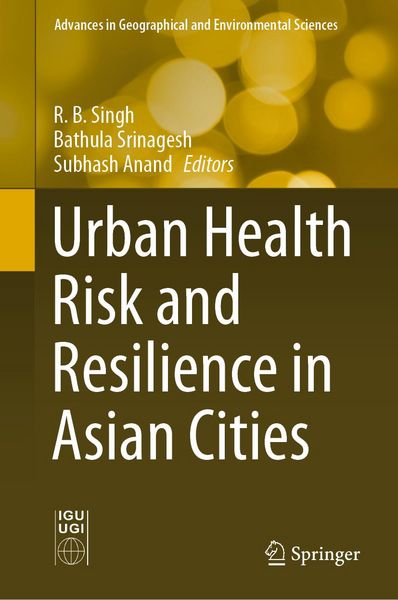
Produktbild: Urban Health Risk and Resilience in Asian Cities

Urban Health Risk and Resilience in Asian Cities

153,99 €

inkl. gesetzl. MwSt.

Beschreibung

This book focuses on understanding urban vulnerability and risk mitigation, advancing good health and wellbeing, and analysing resilience measures for various Asian cities. Today, cities are the dominant human habitat, where a large number of environmental, social, cultural and economic factors have...

Beschreibung

This book focuses on understanding urban vulnerability and risk mitigation, advancing good health and wellbeing, and analysing resilience measures for various Asian cities. Today, cities are the dominant human habitat, where a large number of environmental, social, cultural and economic factors have impacts on human health and wellbeing. Cities consist of complex, dynamic, socio-ecological, and technological systems that serve multiple functions in human health and wellbeing. Currently half of Asia's population is urban, and that figure is expected to rise to 66 percent by 2050. Since urban areas are often most vulnerable to hazards, the people living in them need good health infrastructure facilities and technological support at various scales. As such, the need of the hour is to enhance the adaptive capacity, strengthen resilience, reduce vulnerability, and take risk mitigation measures in urban areas, which requires a systematic approach based on science-policy interface that istransformative, trans-disciplinary and integrative for a sustainable urban future. Global sustainable development goals are closely tied to urban human health and wellbeing: (1) the third of the United Nations' Sustainable Development Goals is to "Ensure healthy lives and promote wellbeing for all at all ages" and (2) the eleventh is to "Make cities inclusive, safe, resilient and sustainable". By addressing these goals, this book offers a highly useful resource for anyone concerned with healthy and resilient cities in Asia, today and tomorrow.

Produktdetails

Format

PDF

Kopierschutz

Nein

Family Sharing

Nein

Text-to-Speech

Nein

Produktdetails

Format

PDF

Format

eBooks im PDF-Format haben eine festgelegte Seitengröße und eignen sich daher nur bedingt zum Lesen auf einem tolino eReader oder Smartphone. Für den vollen Lesegenuss empfehlen wir Ihnen bei PDF-eBooks die Verwendung eines Tablets oder Computers.

Kopierschutz

Nein

Kopierschutz

Dieses eBook können Sie uneingeschränkt auf allen Geräten der tolino Familie, allen sonstigen eReadern und am PC lesen. Das eBook ist nicht kopiergeschützt und kann ein personalisiertes Wasserzeichen enthalten. Weitere Hinweise zum Lesen von eBooks mit einem personalisierten Wasserzeichen finden Sie unter Hilfe/Downloads.

Family Sharing

Nein

Family Sharing

Mit Family Sharing können Sie eBooks innerhalb Ihrer Familie (max. sechs Mitglieder im gleichen Haushalt) teilen. Sie entscheiden selbst, welches Buch Sie mit welchem Familienmitglied teilen möchten. Auch das parallele Lesen durch verschiedene Familienmitglieder ist durch Family Sharing möglich. Um eBooks zu teilen oder geteilt zu bekommen, muss jedes Familienmitglied ein Konto bei Thalia oder einem anderen tolino-Buchhändler haben. Weitere Informationen finden Sie unter Hilfe/Family-Sharing.

Text-to-Speech

Nein

Text-to-Speech

Bedeutet Ihnen Stimme mehr als Text? Mit der Funktion Text-to-Speech können Sie sich im tolino webReader und in der aktuellen Thalia – Lesen & Hören App das eBook vorlesen lassen. Weitere Informationen finden Sie unter Hilfe/Text-to-Speech.

Erscheinungsdatum

06.04.2020

Herausgeber
Verlag Springer Nature Singapore
Seitenzahl

459 (Printausgabe)

Dateigröße

14895 KB

Sprache

Englisch

EAN

9789811512056

Barrierefreiheit
  • keine Information zur Barrierefreiheit bekannt

Noch keine Bewertungen vorhanden

Verfassen Sie die erste Bewertung zu diesem Artikel

Helfen Sie anderen Kundinnen und Kunden durch Ihre Meinung.

Kundinnen und Kunden meinen

Bewertungen (0)

Weitere Artikel finden Sie in

  • Produktbild: Urban Health Risk and Resilience in Asian Cities