KI-Beratung Beta

Gutscheinbedingungen

**Gültig bis 30.11.2026 auf Spielzeug, Schreibwaren, Filme, Geschenke & Trends, Musik, tolino eReader & Zubehör, Hörbücher und Hörbuch-Downloads, nicht preisgebundene Bücher und Kalender online auf thalia.at und in der Thalia App. Einzelne Artikel können ausgeschlossen sein. Aufgrund der Buchpreisbindung sind deutschsprachige Bücher und eBooks ausgenommen. Zusätzlich ausgenommen sind Abos & Flatrates, Games, Geschenkkarten/-boxen, Shelfies, Software, Zeitschriften sowie einzelne Artikel von tonies®. Pro Einkauf einmal einlösbar. Nur gültig mit im Onlineshop hinterlegter Bonuscard. Click & Collect nur bei Onlinevorabzahlung möglich. Keine Barauszahlung. Nicht kombinierbar mit anderen Aktionen und Gutscheinen. Gutschein wird auf max. 500€ Bestellwert angerechnet. Nicht gültig für Versandkosten und Services.

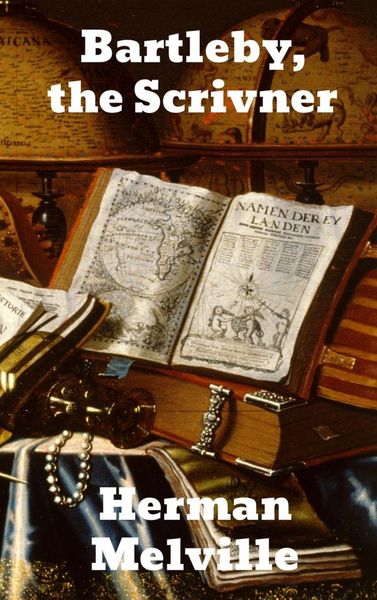
Produktbild: Bartleby, The Scrivener

Bartleby, The Scrivener

25,99 €

inkl. gesetzl. MwSt., zzgl. Versandkosten


  • Kostenlose Lieferung ab 30 € Einkaufswert
  • Versandkostenfrei für Bonuscard-Kund*innen

Beschreibung

"Bartleby, the Scrivener: A Story of Wall Street" is a short story by the American writer Herman Melville, first serialized anonymously in two parts in the November and December 1853 issues of Putnam's Magazine, and reprinted with minor textual alterations in his The Piazza Tales in 1856. A Wall Street...

Beschreibung

"Bartleby, the Scrivener: A Story of Wall Street" is a short story by the American writer Herman Melville, first serialized anonymously in two parts in the November and December 1853 issues of Putnam's Magazine, and reprinted with minor textual alterations in his The Piazza Tales in 1856. A Wall Street lawyer hires a new clerk who, after an initial bout of hard work, refuses to make copy and any other task required of him, with the words "I would prefer not to". Numerous essays have been published on what, according to scholar Robert Milder, "is unquestionably the masterpiece of the short fiction" in the Melville canon. Melville's major source for the story was an advertisement for a new book, The Lawyer's Story, printed in both the Tribune and the Times for 18 February 1853. The book was published anonymously later that year but in fact was written by popular novelist James A. Maitland. This advertisement included the complete first chapter, which had the following opening sentence: "In the summer of 1843, having an extraordinary quantity of deeds to copy, I engaged, temporarily, an extra copying clerk, who interested me considerably, in consequence of his modest, quiet, gentlemanly demeanor, and his intense application to his duties". Melville biographer Hershel Parker points out that nothing else in the chapter besides this "remarkably evocative sentence" was "notable".[3] Critic Andrew Knighton notes the debt of the story to an obscure work from 1846, Robert Grant White's Law and Laziness: or, Students at Law of Leisure. This source contains one scene and many characters — including an idle scrivener — that appear to have influenced Melville's narrative.[4] Melville may have written the story as an emotional response to the bad reviews garnered by Pierre, his preceding novel. Christopher Sten suggests that Melville found inspiration in Ralph Waldo Emerson's essays, particularly "The Transcendentalist" which shows parallels to "Bartleby". Bartleby is a scrivener—a kind of clerk or a copyist—"who obstinately refuses to go on doing the sort of writing demanded of him". During the spring of 1851, Melville felt similarly about his work on Moby Dick. Thus, Bartleby may represent Melville's frustration with his own situation as a writer, and the story itself is "about a writer who forsakes conventional modes because of an irresistible preoccupation with the most baffling philosophical questions".[7] Bartleby may also be seen to represent Melville's relation to his commercial, democratic society.[8 Melville made an allusion to the John C. Colt case in this short story. The narrator restrains his anger toward Bartleby, his unrelentingly difficult employee, by reflecting upon "the tragedy of the unfortunate Adams and the still more unfortunate Colt and how poor Colt, being dreadfully incensed by Adams [...] was unawares hurled into his fatal act".

Produktdetails

Einband

Gebundene Ausgabe

Erscheinungsdatum

01.11.1853

Verlag Binker North
Seitenzahl

50

Produktdetails

Einband

Gebundene Ausgabe

Erscheinungsdatum

01.11.1853

Verlag Binker North
Seitenzahl

50

Maße (L/B/H)

23,5/15,7/0,8 cm

Gewicht

190 g

Sprache

Englisch

ISBN

978-1-77441-322-7

Herstelleradresse

Libri GmbH
Europaallee 1
36244 Bad Hersfeld
DE

Email: gpsr@libri.de

Noch keine Bewertungen vorhanden

Verfassen Sie die erste Bewertung zu diesem Artikel

Helfen Sie anderen Kundinnen und Kunden durch Ihre Meinung.

Kundinnen und Kunden meinen

Bewertungen (0)

Die Leseprobe wird geladen.
  • Produktbild: Bartleby, The Scrivener