KI-Beratung Beta

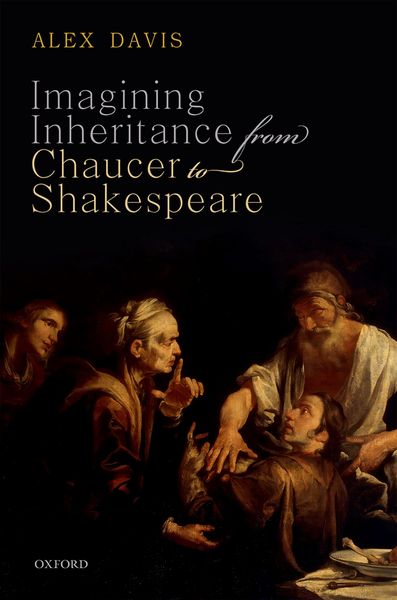
Produktbild: Imagining Inheritance from Chaucer to Shakespeare

Imagining Inheritance from Chaucer to Shakespeare

95,60 €

inkl. gesetzl. MwSt.

Beschreibung

Impossible bequests of the soul; an outlawed younger son who rises to become justice of the king's forests; the artificially-preserved corpse of the heir to an empire; a medieval clerk kept awake at night by fears of falling; a seventeenth-century noblewoman who commissions copies upon copies of her...

Beschreibung

Impossible bequests of the soul; an outlawed younger son who rises to become justice of the king's forests; the artificially-preserved corpse of the heir to an empire; a medieval clerk kept awake at night by fears of falling; a seventeenth-century noblewoman who commissions copies upon copies of her genealogy; Elizabethan efforts to eradicate Irish customs of succession; thoughts of the legacy of sin bequeathed to mankind by our first parents, Adam and Eve. This book explores how inheritance was imagined between the lifetimes of Chaucer and Shakespeare. The writing composed during this period was the product of what the historian Georges Duby has called a 'society of heirs', in which inheritance functioned as a key instrument of social reproduction, acting to ensure that existing structures of status, wealth, familial power, political influence, and gender relations were projected from the present into the future. In poetry, prose, and drama--in Chaucer's Troilus and Criseyde and his Canterbury Tales; in Spenser's Faerie Queene; in plays by Shakespeare such as Macbeth, As You Like It, and The Merchant of Venice; and in a host of other works--we encounter a range of texts that attests to the extraordinary imaginative reach of questions of inheritance between the fourteenth and the seventeenth centuries. Moving between the late medieval and early modern periods, Imagining Inheritance examines this body of writing in order to argue that an exploration of the ways in which premodern inheritance was imagined can make legible the deep structures of power that modernity wants to forget.

Produktdetails

Format

PDF

Kopierschutz

Ja

Family Sharing

Nein

Text-to-Speech

Nein

Produktdetails

Format

PDF

Format

eBooks im PDF-Format haben eine festgelegte Seitengröße und eignen sich daher nur bedingt zum Lesen auf einem tolino eReader oder Smartphone. Für den vollen Lesegenuss empfehlen wir Ihnen bei PDF-eBooks die Verwendung eines Tablets oder Computers.

Kopierschutz

Ja

Kopierschutz

Zum Lesen dieses eBooks auf Geräten der tolino Familie sowie auf sonstigen eReadern und am PC benötigen Sie eine ByteBook-ID. Weitere Hinweise zum Lesen von kopiergeschützten eBooks finden Sie unter Hilfe/Downloads.

Family Sharing

Nein

Family Sharing

Mit Family Sharing können Sie eBooks innerhalb Ihrer Familie (max. sechs Mitglieder im gleichen Haushalt) teilen. Sie entscheiden selbst, welches Buch Sie mit welchem Familienmitglied teilen möchten. Auch das parallele Lesen durch verschiedene Familienmitglieder ist durch Family Sharing möglich. Um eBooks zu teilen oder geteilt zu bekommen, muss jedes Familienmitglied ein Konto bei Thalia oder einem anderen tolino-Buchhändler haben. Weitere Informationen finden Sie unter Hilfe/Family-Sharing.

Text-to-Speech

Nein

Text-to-Speech

Bedeutet Ihnen Stimme mehr als Text? Mit der Funktion Text-to-Speech können Sie sich im tolino webReader und in der aktuellen Thalia – Lesen & Hören App das eBook vorlesen lassen. Weitere Informationen finden Sie unter Hilfe/Text-to-Speech.

Erscheinungsdatum

14.02.2020

Verlag Oxford University Press
Seitenzahl

320 (Printausgabe)

Dateigröße

55529 KB

Sprache

Englisch

EAN

9780192592125

Barrierefreiheit
  • keine Information zur Barrierefreiheit bekannt

Noch keine Bewertungen vorhanden

Verfassen Sie die erste Bewertung zu diesem Artikel

Helfen Sie anderen Kundinnen und Kunden durch Ihre Meinung.

Kundinnen und Kunden meinen

Bewertungen (0)

Weitere Artikel finden Sie in

Die Leseprobe wird geladen.
  • Produktbild: Imagining Inheritance from Chaucer to Shakespeare