KI-Beratung Beta

Gutscheinbedingungen

**Gültig am 27.11.2026 auf Spielzeug, Schreibwaren, Filme, Geschenke & Trends, Musik, tolino eReader & Zubehör, Hörbücher und Hörbuch-Downloads, nicht preisgebundene Bücher und Kalender online auf thalia.at und in der Thalia App. Einzelne Artikel können ausgeschlossen sein. Aufgrund der Buchpreisbindung sind deutschsprachige Bücher und eBooks ausgenommen. Zusätzlich ausgenommen sind Abos & Flatrates, Games, Geschenkkarten/-boxen, Shelfies, Software, Zeitschriften sowie einzelne Artikel von tonies®. Pro Einkauf einmal einlösbar. Click & Collect nur bei Onlinevorabzahlung möglich. Keine Barauszahlung. Nicht kombinierbar mit anderen Aktionen und Gutscheinen. Gutschein wird auf max. 500€ Bestellwert angerechnet. Nicht gültig für Versandkosten und Services.

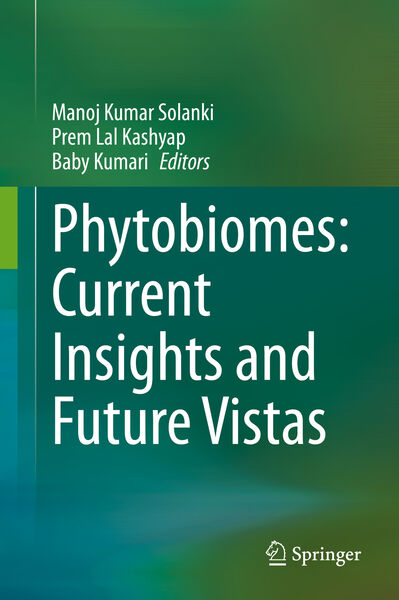
  • Produktbild: Phytobiomes: Current Insights and Future Vistas
  • Produktbild: Phytobiomes: Current Insights and Future Vistas
- 12%

Phytobiomes: Current Insights and Future Vistas

12% sparen

144,99 € UVP 164,99 €

inkl. gesetzl. MwSt., Versandkostenfrei


Beschreibung

To satisfy the food demands of the global population, advanced technology based research is needed, that can extract the information from the plant metabolism and microbial gene pool and use it for improving plant health and productivity.  Modern biotechnological tools have the ability to unlock the...

Beschreibung

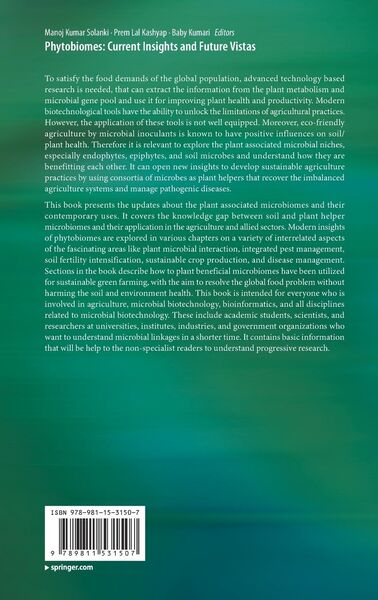
To satisfy the food demands of the global population, advanced technology based research is needed, that can extract the information from the plant metabolism and microbial gene pool and use it for improving plant health and productivity.  Modern biotechnological tools have the ability to unlock the limitations of agricultural practices. However, the application of these tools is not well equipped. Moreover, eco-friendly agriculture by microbial inoculants is known to have positive influences on soil/plant health.  Therefore it is relevant to explore the plant associated microbial niches, especially endophytes, epiphytes, and soil microbes and understand how they are benefitting each other.  It can open new insights to develop sustainable agriculture practices by using consortia of microbes as plant helpers that recover the imbalanced agriculture systems and manage pathogenic diseases. 


This book presents the updates about the plant associated microbiomesand their contemporary uses. It covers the knowledge gap between soil and plant helper microbiomes and their application in the agriculture and allied sectors. Modern insights of phytobiomes are explored in various chapters on a variety of interrelated aspects of the fascinating areas like plant microbial interaction, integrated pest management, soil fertility intensification, sustainable crop production, and disease management. Sections in the book describe how to plant beneficial microbiomes have been utilized for sustainable green farming, with the aim to resolve the global food problem without harming the soil and environment health. This book is intended for everyone who is involved in agriculture, microbial biotechnology, bioinformatics, and all disciplines related to microbial biotechnology. These include academic students, scientists, and researchers at universities, institutes, industries, and government organizations who want to understand microbial linkages in a shorter time. It contains basic information that will be help to the non-specialist readers to understand progressive research.

Portrait


Dr. Manoj Kumar Solanki
, Ph.D. (Microbiology) is working as a visiting scientist at the Volcani Center, Agricultural Research Organization, Israel. He was awarded a visiting scientist fellowship from the Guangxi Academy of Agriculture Sciences, China, and a senior research fellowship from the Indian Council of Agriculture Research (ICAR), India. He also worked as a Research Associate at the International Crops Research Institute for the Semi-Arid Tropics (ICRISAT), India in a Department of Biotechnology funded project. He has engaged in various research activities on plant-microbe interactions, soil microbiology, plant disease management, and enzymology, and has published several book chapters and research papers in prominent international journals.

Dr. Prem Lal Kashyap
, Ph.D. (Plant Pathology) is working at the ICAR-Indian Institute of Wheat and Barley Research (IIWBR), India. His major research areas include wheat pathology, biocontrol, diagnostics, microbial nanotechnology and host–parasite interactions. He has published over 60 research papers in high impact factor journals along with several book chapters, technical bulletins and books. In recognition of his significant achievements in the field of crop protection, he has received several prestigious awards including the NAAS Young Scientist Award, Dr. Basant Ram Young Scientist Award, Prof.  Abrar Mustafa Memorial Award, M.K. Patel Memorial Young Scientist Award, and a NAAS Associateship at the national level.

Dr. (Mrs.) Baby Kumari
MSc, Ph.D. (Biotechnology) has worked as a researcher (part of her Ph.D. work) at the Bhabha Atomic Research Centre, India. She has engaged in various research activities on plant-microbe interactions, soil microbiology, plant disease management, and nanotechnology, and has published many research papers in prominent international journals. Her research interests include plant-microbiome interactions, especially in medicinal plants, as well as nanoparticle biosynthesis and its application in plant disease management, biosensors, and bioremediation.

Produktdetails

Einband

Gebundene Ausgabe

Erscheinungsdatum

11.07.2020

Abbildungen

X, 403 p. 39 illus., 38 illus. in color.

Herausgeber Manoj Kumar Solanki + weitere

Produktdetails

Einband

Gebundene Ausgabe

Erscheinungsdatum

11.07.2020

Abbildungen

X, 403 p. 39 illus., 38 illus. in color.

Herausgeber
Verlag Springer Singapore
Seitenzahl

403

Maße (L/B/H)

24,1/16/2,8 cm

Gewicht

736 g

Auflage

20001 Auflage 1st edition 2020

Sprache

Englisch

ISBN

978-981-15-3150-7

Herstelleradresse

Springer-Verlag GmbH
Europaplatz 3
69115 Heidelberg
DE

Email: ProductSafety@springernature.com

Noch keine Bewertungen vorhanden

Verfassen Sie die erste Bewertung zu diesem Artikel

Helfen Sie anderen Kundinnen und Kunden durch Ihre Meinung.

Kundinnen und Kunden meinen

Bewertungen (0)

  • Produktbild: Phytobiomes: Current Insights and Future Vistas
  • Produktbild: Phytobiomes: Current Insights and Future Vistas
  • Chapter 1. Phytobiomes: role in nutrient stewardship and soil health.- Chapter 2. Role of a quorum sensing signal, acyl-homoserine lactone in a phytobiome.- Chapter 3. Plant Microbiomes: Understanding the Above Ground Benefits.- Chapter 4. Plant Mycobiome: Current Research and Applications.- Chapter 5. Role of Soil Fauna: en route to Ecosystem Services and its effect on soil health.- Chapter 6. An insight into current trends of pathogen identification in plants.- Chapter 7. Linkages of Microbial Plant Growth Promoters towards the Profitable Farming.- Chapter 8. Wheat microbiome: present status and future perspective.- Chapter 9. Entomopathogenic Fungi: A potential source for biological control of insect pests.- Chapter 10. Role of microbiotic factors against the soil-borne phytopathogens.- Chapter 11. Zinc solubilizing microbes for sustainable crop production: Current understanding, opportunities, and challenges.- Chapter 12. Endophytic phytobiomes as defense elicitors: current insights and future prospectus.- Chapter 13. Role of biotechnology in the exploration of soil and plant microbiomes.- Chapter 14. Plant parasitic nematodes management by phytobiomes and application of fly ash.- Chapter 15. Phytobiome Engineering and its impact on Next Generation Agriculture.-