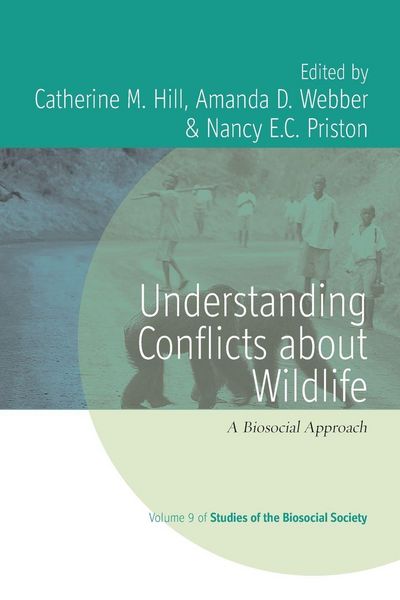
Produktbild: Understanding Conflicts about Wildlife
Band 9

Understanding Conflicts about Wildlife A Biosocial Approach

49,99 €

inkl. gesetzl. MwSt., Versandkostenfrei


Beschreibung

Produktdetails

Verkaufsrang

23811

Einband

Taschenbuch

Erscheinungsdatum

01.02.2020

Abbildungen

Illustrationen, nicht spezifiziert

Herausgeber

Catherine M. Hill + weitere

Verlag

Ingram Publishers Services

Seitenzahl

228

Maße (L/B/H)

22,9/15,2/1,3 cm

Gewicht

340 g

Sprache

Englisch

ISBN

978-1-78920-820-7

Beschreibung

Produktdetails

Verkaufsrang

23811

Einband

Taschenbuch

Erscheinungsdatum

01.02.2020

Abbildungen

Illustrationen, nicht spezifiziert

Herausgeber

Verlag

Ingram Publishers Services

Seitenzahl

228

Maße (L/B/H)

22,9/15,2/1,3 cm

Gewicht

340 g

Sprache

Englisch

ISBN

978-1-78920-820-7

Herstelleradresse

Libri GmbH
Europaallee 1
36244 Bad Hersfeld
DE

Email: GPSR Kontakt

Noch keine Bewertungen vorhanden

Verfassen Sie die erste Bewertung zu diesem Artikel

Helfen Sie anderen Kundinnen und Kunden durch Ihre Meinung.

Kundinnen und Kunden meinen

Bewertungen (0)

Die Leseprobe wird geladen.
  • Produktbild: Understanding Conflicts about Wildlife
  • List of Figures and Tables
    Acknowledgements

    Introduction: Complex Problems: Using a Biosocial Approach to Understanding Human-Wildlife Interactions
    Catherine M. Hill

    Chapter 1. People, Perceptions and 'Pests': Human-Wildlife Interactions and the Politics of Conflict
    Phyllis C. Lee

    Chapter 2. Block, Push or Pull? Three Responses to Monkey Crop-Raiding in Japan
    John Knight

    Chapter 3. ¿Unintended Consequences in Conservation: How Conflict Mitigation May Raise the Conflict Level¿ - The Case of Wolf Management in Norway
    Ketil Skogen

    Chapter 4. Badger-Human Conflict: An Overlooked Historical Context for Bovine TB Debates in the UK
    Angela Cassidy

    Chapter 5. Savage Values: Conservation and Personhood in Southern Suriname
    Marc Brightman

    Chapter 6¿. Wildlife Value Orientations as an Approach to Understanding the Social Context of Human-Wildlife Conflict
    ¿Alia M. Dietsch, Michael J. Manfredo and Tara L. Teel ¿

    Chapter 7. A Long Term Comparison of Local Perceptions of Crop Loss to Wildlife at Kibale National Park, Uganda: Exploring Consistency Across Individuals and Sites
    Lisa Naughton-Treves, Jessica L'Roe, Andrew L'Roe and Adrian Treves

    Chapter 8. Conservation Conflict Transformation: Addressing the Missing Link in Wildlife Conservation
    Francine Madden and Brian McQuinn

    Chapter 9. Engaging Farmers and Understanding Their Behaviour to Develop Effective Deterrents to Crop Damage by Wildlife
    Graham E. Wallace and Catherine M. Hill

    Chapter 10. Using Geographic Information Systems (GIS) at Sites of Negative Human-Wildlife Interactions: Current Applications and Future Developments
    Amanda D. Webber, Stewart Thompson, Neil Bailey and Nancy E. C. Priston

    Index