KI-Beratung Beta

Gutscheinbedingungen

**Gültig am 15.10.2026 auf Spielzeug, Schreibwaren, Filme, Geschenke & Trends, Musik, tolino eReader & Zubehör, Hörbücher und Hörbuch-Downloads, nicht preisgebundene Bücher und Kalender in der Thalia App. Einzelne Artikel können ausgeschlossen sein. Aufgrund der Buchpreisbindung sind deutschsprachige Bücher und eBooks ausgenommen. Zusätzlich ausgenommen sind Abos & Flatrates, Games, Geschenkkarten/-boxen, Shelfies, Software, Zeitschriften sowie einzelne Artikel von tonies®. Pro Einkauf einmal einlösbar. Click & Collect nur bei Onlinevorabzahlung möglich. Keine Barauszahlung. Nicht kombinierbar mit anderen Aktionen und Gutscheinen. Gutschein wird auf max. 500€ Bestellwert angerechnet. Nicht gültig für Versandkosten und Services.

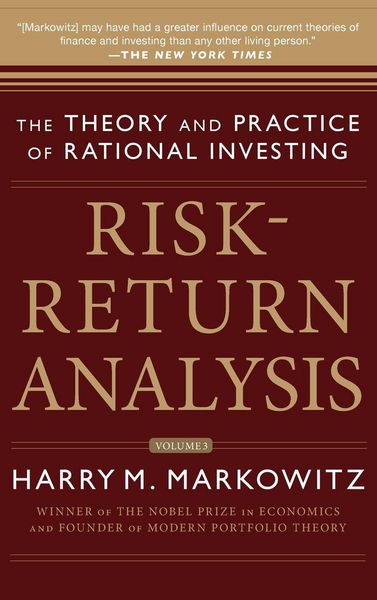
Produktbild: Risk-Return Analysis Volume 3

Risk-Return Analysis Volume 3

72,99 €

inkl. gesetzl. MwSt., Versandkostenfrei


Beschreibung

Produktdetails

Einband

Gebundene Ausgabe

Erscheinungsdatum

15.04.2020

Abbildungen

Illustrationen, nicht spezifiziert

Verlag

Mcgraw Hill Higher Education

Seitenzahl

338

Maße (L/B/H)

23,5/15,7/2,3 cm

Gewicht

558 g

Sprache

Englisch

ISBN

978-0-07-181831-5

Beschreibung

Produktdetails

Einband

Gebundene Ausgabe

Erscheinungsdatum

15.04.2020

Abbildungen

Illustrationen, nicht spezifiziert

Verlag

Mcgraw Hill Higher Education

Seitenzahl

338

Maße (L/B/H)

23,5/15,7/2,3 cm

Gewicht

558 g

Sprache

Englisch

ISBN

978-0-07-181831-5

Herstelleradresse

Libri GmbH
Europaallee 1
36244 Bad Hersfeld
DE

Email: gpsr@libri.de

Noch keine Bewertungen vorhanden

Verfassen Sie die erste Bewertung zu diesem Artikel

Helfen Sie anderen Kundinnen und Kunden durch Ihre Meinung.

Kundinnen und Kunden meinen

Bewertungen (0)

  • Produktbild: Risk-Return Analysis Volume 3
  • Preface
    The Rational Decision Maker
    Words of Wisdom
    John von Neumann

    Acknowledgments

    13. Predecessors
    Introduction
    René Descartes
    There Is No "Is," Only "Was" and "Will Be"
    Working Hypotheses
    RDM Reasoning
    David Hume
    Eudaimonia
    Financial Economic Discoveries
    Economic Analyses That Have Stood
    the Test of Time
    Constructive Skepticism
    Isaac Newton, Philosopher
    Fields Other Than Physics
    Karl Popper
    Mysticism
    Caveats
    Charles Peirce
    Immanuel Kant
    What an RDM Can Know A Priori

    14. Deduction First Principles
    Introduction
    The Great Debate
    One More Reason for Studying
    Cantor's Set Theory
    "Very Few Understood It"
    Finite Cardinal Arithmetic
    Relative Sizes of Finite Sets
    Finite Ordinal Arithmetic
    Standard Ordered Sets (SOSs)
    Finite Cardinal and Ordinal Numbers
    Cantor (101)
    Theorem
    Proof
    Corollary
    Proof
    Transfinite Cardinal Numbers
    The Continuum Hypothesis
    Transfinite Cardinal Arithmetic
    Lemma
    Transfinite Ordinal Numbers
    Examples of Well-Ordered and
    Not Well-Ordered Sets
    Transfinite Ordinal Arithmetic
    Extended SOSs
    Lemma
    Proof
    The Paradoxes (a.k.a. Antimonies)
    Three Directions
    From Aristotle to Hume to Hilbert
    British Empiricism versus Continental
    Rationalism
    Who Created What?
    Cantor Reconsidered
    Brouwer's Objections
    Axiomatic Set Theory
    Peano's Axioms (PAs)
    Hilbert's Programs
    Whitehead and Russell
    Zermelo's Axioms
    The "Axiom of Choice"
    The Trichotomy Equivalent to the Axiom of Choice
    Kurt Gödel (1906-1978)
    Thoralf Skolem (1887-1863)

    15. Logic is Programming is Logic
    Introduction
    Terminology
    Number Systems and the EAS Structures
    Built on Them
    Deductive Systems as Programming Languages
    A Variety of Deductive DSSs
    Alternative Rules of Inference
    "Ladders" and "Fire Escapes"
    Organon 2000: From Ancient Greek
    to "Symbolic Logic"
    So, What's New?
    Immediate Consequences
    Two Types of Set Ownership
    Modeling Modeling
    EAS-E Deduction: Status

    16. The Infinite and The Infinitesimal
    Points and Lines
    Fields
    Constructing the Infinitesimals
    Infinite-Dimensional Utility Analysis
    The Algebraic Structure Called "A Field"

    17. Induction Theory
    Introduction
    The Story Thus Far
    Concepts
    Basic Relationships
    Examples
    "Objective" Probability
    The Formal M59 Model
    Initial Consequences
    Bayes's Rule
    A Bayesian View of MVA
    Judgment, Approximation and Axiom III
    (1) A Philosophical Difference between
    S54 and M59
    Examples of Clearly "Objective" Probabilities"
    Propositions about Propositions
    A Problem with Axiom II
    Are the ¿j
    Probabilities the Scaling of the ¿j
    ?
    The ¿j
    "Mix on a Par" with Objective Probabilities

    18. Induction Practice
    Introduction
    R. A. Fisher and Neyman-Pearson Hypothesis Tests
    The Likelihood Principle
    Andrei Kolmogorov
    A Model of Models
    The R.A. Fisher Argument
    Bayesian Conjugate Prior Procedures

    19. Eudaimonia
    Review
    Eudaimonia for the Masses

    Notes

    References

    Index