Gutscheinbedingungen

**Gültig bis 28.07.2026 auf Spielzeug, Schreibwaren, Filme, Geschenke & Trends, Musik, tolino eReader & Zubehör, Hörbücher und Hörbuch-Downloads (außer Abo), nicht preisgebundene Bücher und Kalender in der Thalia App. Einzelne Artikel können ausgeschlossen sein. Aufgrund der Buchpreisbindung sind deutschsprachige Bücher und eBooks ausgenommen. Zusätzlich ausgenommen sind preisgebundene Artikel, Abos & Flatrates, eBooks, Games, Geschenkkarten/-boxen, Shelfies, Software, Zeitschriften sowie einzelne Artikel von tonies®. Pro Einkauf einmal einlösbar. Click & Collect nur bei Onlinevorabzahlung möglich. Keine Barauszahlung. Nicht kombinierbar mit anderen Aktionen und Gutscheinen. Gutschein wird auf max. 500€ Bestellwert angerechnet. Nicht gültig für Versandkosten und Services.

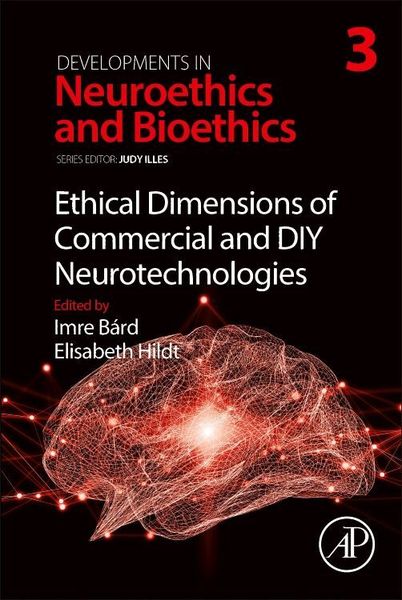
Produktbild: Ethical Dimensions of Commercial and DIY Neurotechnologies

Ethical Dimensions of Commercial and DIY Neurotechnologies

169,99 €

inkl. gesetzl. MwSt., Versandkostenfrei


Beschreibung

Produktdetails

Einband

Taschenbuch

Erscheinungsdatum

20.04.2020

Herausgeber

Imre Bárd + weitere

Verlag

Elsevier Science & Technology

Maße (L/B/H)

1,4/15,2/22,9 cm

Gewicht

480 g

Sprache

Englisch

ISBN

978-0-12-816181-4

Beschreibung

Portrait

Imre Bard is at The London School of Economics and Political Science, UK

Elisabeth Hildt is professor of philosophy and director of the Center for the Study of Ethics in the Professions at Illinois Institute of Technology, where her research focuses on philosophical and ethical issues in neuroscience, most significantly the field of cognitive enhancement. Her previous appointments include scientific coordinator of the interdisciplinary project European Network for Biomedical Ethics and assistant professor at the Chair for Ethics in the Life Sciences at the University of Tübingen. Prior to moving to the Illinois Institute of Technology in 2014, she spent six years as the head of the Research Group on Neuroethics/Neurophilosophy at the University of Mainz. She serves on the editorial board of PLOS ONE and the American Journal of Bioethics Neuroscience (AJOB Neuroscience). She has authored and edited twelve other books on neuroethics and biomedical ethics, and is the author of 70 articles on the subject.

Produktdetails

Einband

Taschenbuch

Erscheinungsdatum

20.04.2020

Herausgeber

Verlag

Elsevier Science & Technology

Maße (L/B/H)

1,4/15,2/22,9 cm

Gewicht

480 g

Sprache

Englisch

ISBN

978-0-12-816181-4

EU-Ansprechpartner

Zeitfracht Medien GmbH
Ferdinand-Jühlke-Straße 7|99095|Erfurt|DE
produktsicherheit@zeitfracht.de

Herstelleradresse

Elsevier Science & Technology
125 London Wall|EC2Y 5AS|London|GB
tradeorders@elsevier.com

Noch keine Bewertungen vorhanden

Verfassen Sie die erste Bewertung zu diesem Artikel

Helfen Sie anderen Kundinnen und Kunden durch Ihre Meinung.

Kundinnen und Kunden meinen

Bewertungen (0)

Die Leseprobe wird geladen.
  • Produktbild: Ethical Dimensions of Commercial and DIY Neurotechnologies
      1. Peering into the mind? The ethics of consumer neuromonitoring devices
      2. Iris Coates McCall and Anna Wexler

      3. A field with a view: Ethical considerations for the fields of consumer neuroscience and neuromarketing
      4. Kimberly Rose Clark

      5. Trusting the bot: Addressing the ethical challenges of consumer digital mental health therapy
      6. Nicole Martinez-Martin

      7. Tailoring reality-The neuroethics of DIY and consumer sensory enhancement
      8. Imre Bárd

      9. Do-it-yourself and direct-to-consumer neurostimulation
      10. Anna Wexler

      11. Neuroenhancement using transcranial electrical brain stimulation in adolescence: Ethical and social concerns
      12. Maya Willms and Naznin Virji-Babul

      13. DIY brain stimulation: On the difficulty of measuring effectiveness and its ethical implications
      14. Ying-Tung Lin

      15. What is neurohacking? Defining the conceptual, ethical and legal boundaries
      16. Marcello Ienca and James Scheibner

      17. Assessing current mechanisms for the regulation of direct-to-consumer neurotechnology
      18. Ishan Dasgupta

      19. A view on incidental findings and adverse events associated with neurowearables in the consumer marketplace

    Nicole Minielly, Viorica Hrincu and Judy Illes