KI-Beratung Beta

Gutscheinbedingungen

**Gültig bis 09.11.2026 auf tolino shine color (4016621130473), tolino vision color (4016621130183) und tolino vision color weiß (4016621131456) online auf thalia.at, in der Thalia App und in allen Thalia Buchhandlungen in Österreich. In den Buchhandlungen nur gültig auf lagernde Ware. Pro Einkauf einmal einlösbar. Nur gültig gegen Vorlage oder im Onlineshop hinterlegter Bonuscard. Infos zur Einlösung in der Buchhandlung sind auf der Bonuscard-Vorteilspreisseite zu finden. Click & Collect nur bei Onlinevorabzahlung möglich. Keine Einlösung bei Scan & Go-Bezahlung. Keine Barauszahlung. Nicht kombinierbar mit anderen Aktionen und Gutscheinen. Nicht gültig für Geschenkkarten, Versandkosten und Services. Nur solange der Vorrat reicht.

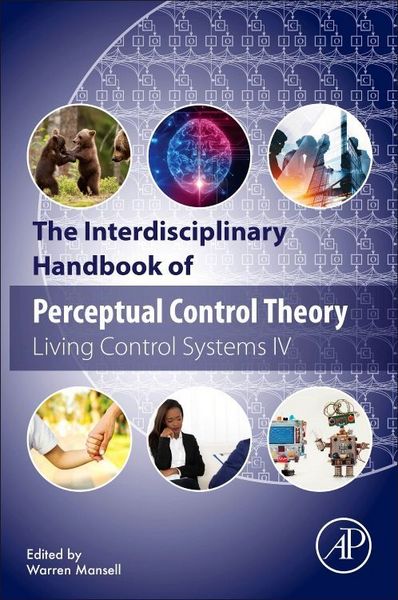
Produktbild: INTERDISCIPLINARY HANDBK OF PE

INTERDISCIPLINARY HANDBK OF PE

184,99 €

inkl. gesetzl. MwSt., Versandkostenfrei


Beschreibung

Produktdetails

Einband

Taschenbuch

Erscheinungsdatum

21.05.2020

Herausgeber

Warren Mansell

Verlag

Elsevier Science & Technology

Seitenzahl

680

Maße (L/B/H)

22,9/15,2/3,1 cm

Gewicht

1090 g

Sprache

Englisch

ISBN

978-0-12-818948-1

Beschreibung

Rezension

"This is a marvelous book. It serves as a tribute to Bill Powers, as the father of PCT (now grandfather, as he himself says), and as a comprehensive overview of the history, theory and application of PCT within the social and natural sciences. The subject range is vast, from neurodynamics to organizational psychology, from animal contests to psychotherapy, with each chapter beautifully judged in terms of coverage and detail. The Interdisciplinary Handbook of Perceptual Control Theory thus makes the strongest possible case for PCT as both a unifying theory within psychology, and a bridge to other disciplines. Everyone involved in its production should be congratulated, and everyone else should read it." --Louise Barrett, FRSC, Professor of Psychology, Canada Research Chair in Cognition, Evolution and Behaviour, Department of Psychology, University of Lethbridge, Alberta, Canada

"More than a century after John Dewey's insight that the response is not merely to the stimulus but it is into it, William Powers' community continues to challenge the "central dogma" of behavioral neuroscience: stimulus, then processing and, finally, response. While defining behavior as output is a form of covert anthropomorphism, conceiving behavior as control of perception better respects the nature of life and mind." --Alex Gomez-Marin, Principal Investigator, Behaviour of Organisms Laboratory Cellular and Systems Neurobiology Unit Instituto de Neurociencias CSIC-UMH, Alicante, Spain

"Perceptual control theory is a fascinating, complex, and profoundly fertile understanding of human being that combines scientific rigour with a deeply humanistic ethos. This interdisciplinary handbook is a much needed resource which pulls together contemporary thinking and research in the field. Ranging from robotics to neuroscience to psychotherapy, the book will be of great value to those who want to deepen their understanding of this unique approach and apply its insight to the fields of psychological and social practices." --Mick Cooper, Professor of Counselling Psychology, Department of Psychology, University of Roehampton, London, UK

"This powerful volume is the amplifying extension of Bill Powers legacy that the academic world has long needed. While other, more popular psychological theories have foundered in the much discussed "replication crisis", this collection of dogged researchers, and others like them, have quietly and persistently been piling up increasing evidence of the profound explanatory power nestled within the elegant simplicity of PCT. Skillfully curated by editor, Mansell, the rigour of their revolutionary work across a wide spectrum of fields within the biological and social sciences stands as compelling evidence that PCT is no longer simply an idea whose "time has come", but is, rather, a powerful field of application that has well and truly "arrived"." --Tom Scholte, Professor, Department of Theatre and Film, The University of British Columbia

Portrait

Dr. His work on PCT has appeared on UK national television, in science museums, and online newspaper and magazine articles. He has authored and edited various books, including: Coping with Fears and Phobias (2007), A Transdiagnostic Approach to CBT using Method of Levels Therapy (2012), Principles-Based Counselling and Psychotherapy (2015), Oxford Guide to Metaphors in CBT (2010), and The Bluffer's Guide to Psychology (2006).

Produktdetails

Einband

Taschenbuch

Erscheinungsdatum

21.05.2020

Herausgeber

Warren Mansell

Verlag

Elsevier Science & Technology

Seitenzahl

680

Maße (L/B/H)

22,9/15,2/3,1 cm

Gewicht

1090 g

Sprache

Englisch

ISBN

978-0-12-818948-1

EU-Ansprechpartner

Elsevier B.V.
Radarweg 29
1043 NX Amsterdam
NL
productsafety@elsevier.com

Herstelleradresse

Elsevier Science & Technology
London Wall 125
EC2Y 5AS London
GB
tradeorders@elsevier.com

Noch keine Bewertungen vorhanden

Verfassen Sie die erste Bewertung zu diesem Artikel

Helfen Sie anderen Kundinnen und Kunden durch Ihre Meinung.

Kundinnen und Kunden meinen

Bewertungen (0)

  • Produktbild: INTERDISCIPLINARY HANDBK OF PE
  • Part I

    Why do we need perceptual control theory?

    1. The world according to PCT

    2. Understanding purposeful systems: the application

    of control theory in engineering and psychology

    3. The crisis in neuroscience

    4. When causation does not imply correlation: robust

    violations of the faithfulness axiom

    Part II

    Models of brain and behavior

    5. Unraveling the dynamics of dyadic interactions:

    perceptual control in animal contests

    6. How the brain gets a roaring campfire: Structuring

    for Perceptual Results

    7. How the brain gets a roaring campfire: input and

    output functions

    8. The phylogeny, ontogeny, causation and function of

    regression periods explained by reorganizations of the

    hierarchy of perceptual control systems

    Part III

    Collective control and communication

    9. Social structure and control: perceptual control theory

    and the science of sociology

    10. Perceptual control in cooperative interaction

    11. Language and thought as control of perception

    Part IV

    Applications

    12. Perceptions of control theory in

    industrial-organizational psychology: disturbances

    and counter-disturbances

    13. Method of Levels Therapy

    14. Robotics in the real world: the perceptual control

    theory approach

    15. PCT and beyond: toward a computational framework

    for 'intelligent' communicative systems

    Part V

    Synthesis

    16. Ten vital elements of perceptual control theory,

    tracing the pathway from implicit influence to

    scientific advance