• Produktbild: The Oxford Handbook of the Archaeology of Death & Burial
  • Produktbild: The Oxford Handbook of the Archaeology of Death & Burial

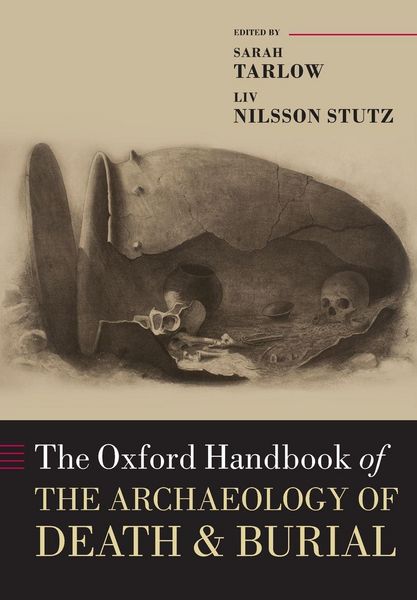
The Oxford Handbook of the Archaeology of Death & Burial

65,99 €

inkl. gesetzl. MwSt., Versandkostenfrei


Beschreibung

Produktdetails

Einband

Taschenbuch

Erscheinungsdatum

19.12.2019

Abbildungen

126 in-text illustrations, maps, and plans

Herausgeber

Tarlow Sarah + weitere

Verlag

Oxford University Press

Seitenzahl

870

Maße (L/B/H)

24,4/17/4,6 cm

Gewicht

1472 g

Sprache

Englisch

ISBN

978-0-19-885525-5

Beschreibung

Produktdetails

Einband

Taschenbuch

Erscheinungsdatum

19.12.2019

Abbildungen

126 in-text illustrations, maps, and plans

Herausgeber

Verlag

Oxford University Press

Seitenzahl

870

Maße (L/B/H)

24,4/17/4,6 cm

Gewicht

1472 g

Sprache

Englisch

ISBN

978-0-19-885525-5

Herstelleradresse

Libri GmbH
Europaallee 1
36244 Bad Hersfeld
DE

Email: gpsr@libri.de

Kundinnen und Kunden meinen

0 Bewertungen

Informationen zu Bewertungen

Zur Abgabe einer Bewertung ist eine Anmeldung im Konto notwendig. Die Authentizität der Bewertungen wird von uns nicht überprüft. Wir behalten uns vor, Bewertungstexte, die unseren Richtlinien widersprechen, entsprechend zu kürzen oder zu löschen.

Die Bewertungen sind nach Format, Anzahl Sterne und Datum sortiert.

Verfassen Sie die erste Bewertung zu diesem Artikel

Helfen Sie anderen Kund*innen durch Ihre Meinung

Kundinnen und Kunden meinen

0 Bewertungen filtern

Die Leseprobe wird geladen.
  • Produktbild: The Oxford Handbook of the Archaeology of Death & Burial
  • Produktbild: The Oxford Handbook of the Archaeology of Death & Burial
    • List of Figures

    • List of Text Boxes

    • List of Tables

    • List of Contributors

    • 1: Liv Nilsson Stutz and Sarah Tarlow: Beautiful Things and Bones of Desire: Emerging Issues in the Archaeology of Death and Burial

    • Part 1: Approaches to Death and Burial

    • 2: Adam Stout: Cultural History, Race, and Peoples

    • 3: Did Prehistoric Man Bury his Deada Early Debates on Palaeolithic Burials in a National Context

    • 4: Robert Chapman: Death, Burial, and Social Representation

    • 5: Susan Kus: Death and the Cultural Entanglements of the Experienced, the Learned, the Expressed, the Contested, and the Imagined

    • Part 2: The Nature of the Evidence

    • 6: Charlotte Roberts: The Bioarchaeology of Health and Well-being: Its Contribution to Understanding the Past

    • 7: Barbara Bramanti: The Use of DNA Analysis in the Archaeology of Death and Burial

    • 8: Gunilla Eriksson: Stable Isotope Analysis of Humans

    • 9: Jacqueline McKinley: Cremation: Excavation, Analysis and Interpretation of Material from Cremation-related Contexts

    • 10: Fredrik Ekengren: Contextualising Grave Goods: Theoretical Perspectives and Methodological Implications

    • Part 3: The Human Experience of Death across Cultural Contexts

    • 11: Howard Williams: Death, Memory, and Material Culture: Catalytic Commemoration and the Cremated Dead

    • 12: David Edwards: African Perspectives on Death, Burial, and Mortuary Archaeology

    • 13: Lars Fogelin: The Place of Veneration in Early South Asican Buddhism

    • 14: Andrew Petersen: The Archaeology of Death and Burial in the Islamic World

    • 15: Deirdre O Sullivan: Burial of the Christian Dead in the Later Middle Ages

    • 16: Estella Weiss-Krejci: The Unburied Dead

    • 17: Julien Riel-Salvatore and Claudine Gravel-Miguel: Upper Palaeolithic Mortuary Practices in Eurasia: A Critical Look at the Burial Record

    • 18: Chantal Coneller: Power and Society: Mesolithic Europe

    • 19: James Brown: Archaeological Study of Mortuary Practices in the Eastern United States

    • 20: Robert Chapman: The Living and the Dead in Later Prehistoric Iberia

    • 21: Peter Kaulicke: The Powerful Dead of the Inca

    • 22: Joshua Wright: Land-ownership and Landscape Belief: Introduction and Contexts

    • 23: Magdalena Midgley: Megaliths in North-West Europe: the Cosmology of Sacred Landscapes

    • 24: John Robb: Creating Death: an Archaeology of Dying

    • 25: Alexander Gramsch: Treating Bodies Transformative and Communicative Practices

    • 26: Melanie Giles: Preserving the Body

    • 27: Terje Oestigaard: Cremations in Culture and Cosmology

    • 28: Chris Fowler: Identities in Transformation: Identities, Funerary Rites, and the Mortuary Process

    • 29: Joanna Sofaer and Marie Louise Stig Sørensen: Death and Gender

    • 30: Gillian Shepherd: Ancient Identities: Age, Gender, and Ethnicity in Ancient Greek Burials

    • 31: Maureen Carroll: Ethnicity and Gender in Roman Funerary Commemoration: Case Studies from the Empire s Frontiers

    • 32: Alice Yao: Engendering Ancestors through Death Ritual in Ancient China

    • 33: Erica Hill: Death, Emotion, and the Household among the Late Moche

    • 34: Sarah Tarlow: Belief and the Archaeology of Death

    • 35: Erella Hovers and Anna Belfer-Cohen: Insights into Early Mortuary Practices of Homo

    • 36: Claudia Naeser: Equipping and Stripping the Dead: A Case-study on the Procurement, Compilation, Arrangement, and Frag­ment­ation of Grave Inventories in New Kingdom Thebes

    • Part 4: The Ethics and Politics of Burial Archaeology

    • 37: Sapient trouble-tombs'a Archaeologists'Mmoral Obligations to the Dead

    • 38: Morag Kersel and Meredith Chesson: Looting Matters Early Bronze Age Cemeteries of Jordan's southeast Dead Sea Plain in the Past and Present

    • 39: Joe Watkins: How Ancients Become Ammunition: Politics and Ethics of the Human Skeleton

    • 40: Cressida Fforde: In Search of Others: the History and Legacy of 'race' collections

    • 41: Colin Pardoe: Repatriation, Reburial, and Biological Research in Australia: Rhetoric and Practice

    • 42: Layla Renshaw: The Archaeology and Material Culture of Modern Military Death

    • 43: Layla Renshaw: The Exhumation of Civilian Victims of Conflict and Human Rights Abuses: Political, Ethical, and Theoretical Considerations

    • 44: Liv Nilsson Stutz: Contested Burials: The Dead as Witnesses, Victims, and Tools