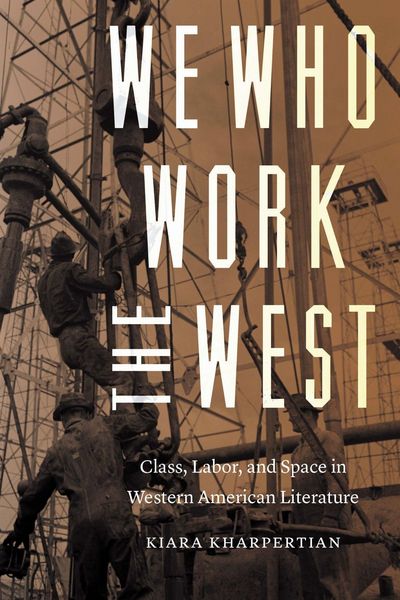
Produktbild: We Who Work the West

We Who Work the West Class, Labor, and Space in Western American Literature

65,99 €

inkl. gesetzl. MwSt., Versandkostenfrei


Beschreibung

Produktdetails

Einband

Gebundene Ausgabe

Erscheinungsdatum

01.06.2020

Herausgeber

Carlo Rotella + weitere

Verlag

Nebraska

Seitenzahl

288

Maße (L/B/H)

22,9/15,2/1,9 cm

Gewicht

585 g

Sprache

Englisch

ISBN

978-1-4962-0884-2

Beschreibung

Produktdetails

Einband

Gebundene Ausgabe

Erscheinungsdatum

01.06.2020

Herausgeber

Verlag

Nebraska

Seitenzahl

288

Maße (L/B/H)

22,9/15,2/1,9 cm

Gewicht

585 g

Sprache

Englisch

ISBN

978-1-4962-0884-2

Herstelleradresse

Libri GmbH
Europaallee 1
36244 Bad Hersfeld
DE

Email: gpsr@libri.de

Kundinnen und Kunden meinen

0 Bewertungen

Informationen zu Bewertungen

Zur Abgabe einer Bewertung ist eine Anmeldung im Konto notwendig. Die Authentizität der Bewertungen wird von uns nicht überprüft. Wir behalten uns vor, Bewertungstexte, die unseren Richtlinien widersprechen, entsprechend zu kürzen oder zu löschen.

Die Bewertungen sind nach Format, Anzahl Sterne und Datum sortiert.

Verfassen Sie die erste Bewertung zu diesem Artikel

Helfen Sie anderen Kund*innen durch Ihre Meinung

Kundinnen und Kunden meinen

0 Bewertungen filtern

Die Leseprobe wird geladen.
  • Produktbild: We Who Work the West
  • Editors’ Note    
    Acknowledgments    
    Introduction: How to Tell a Western Story    
    1. Naturalism’s Handiwork: Labor, Class, and Space in Frank Norris’s McTeague: A Story of San Francisco    
    2. Civic Identity and the Ethos of Belonging: María Amparo Ruiz de Burton’s The Squatter and the Don and Raymond Barrio’s The Plum Plum Pickers    
    3. Watching the West Erode in the 1930s: Sanora Babb’s Whose Names Are Unknown, Frank Waters’s Below Grass Roots, and John Fante’s Wait Until Spring, Bandini and Ask the Dust    
    4. He Was a Good Cowboy: Identity and History on the Post–World War II Texas Ranch in Larry McMurtry’s Horseman, Pass By, Elmer Kelton’s The Time It Never Rained, and Cormac McCarthy’s All the Pretty Horses    
    5. Tradition and Modernization Battle It Out on Rocky Soil: Sherman Alexie’s The Lone Ranger and Tonto Fistfight in Heaven, Stephen Graham Jones’s The Bird Is Gone, and Linda Hogan’s Mean Spirit    
    6. From Prairie to Oil: Hybridization and Belonging via Class, Labor, and Space in Philipp Meyer’s The Son    
    Notes    
    References    
    Index