KI-Beratung Beta

Gutscheinbedingungen

**Gültig bis 30.11.2026 auf Spielzeug, Schreibwaren, Filme, Geschenke & Trends, Musik, tolino eReader & Zubehör, Hörbücher und Hörbuch-Downloads, nicht preisgebundene Bücher und Kalender online auf thalia.at und in der Thalia App. Einzelne Artikel können ausgeschlossen sein. Aufgrund der Buchpreisbindung sind deutschsprachige Bücher und eBooks ausgenommen. Zusätzlich ausgenommen sind Abos & Flatrates, Games, Geschenkkarten/-boxen, Shelfies, Software, Zeitschriften sowie einzelne Artikel von tonies®. Pro Einkauf einmal einlösbar. Nur gültig mit im Onlineshop hinterlegter Bonuscard. Click & Collect nur bei Onlinevorabzahlung möglich. Keine Barauszahlung. Nicht kombinierbar mit anderen Aktionen und Gutscheinen. Gutschein wird auf max. 500€ Bestellwert angerechnet. Nicht gültig für Versandkosten und Services.

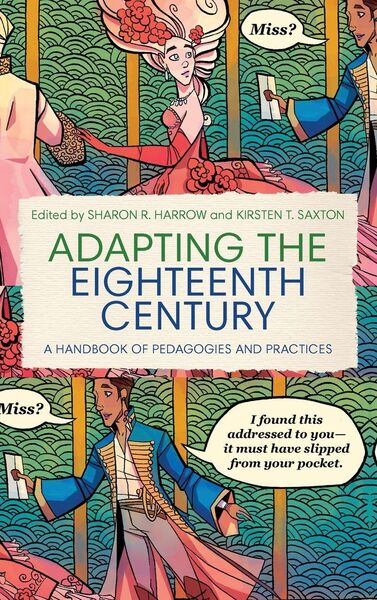
Produktbild: Adapting the Eighteenth Century

Adapting the Eighteenth Century A Handbook of Pedagogies and Practices

58,99 €

inkl. gesetzl. MwSt., Versandkostenfrei


Beschreibung

The eighteenth century was a golden age of adaptation: classical epics were adapted to contemporaneous mock-epics, life-writing to novels, novels to plays, and unauthorized sequels abounded. In our own time, cultural products of the long eighteenth century continue to be widely adapted. Early novels...

Beschreibung

The eighteenth century was a golden age of adaptation: classical epics were adapted to contemporaneous mock-epics, life-writing to novels, novels to plays, and unauthorized sequels abounded. In our own time, cultural products of the long eighteenth century continue to be widely adapted. Early novels such as Robinson Crusoe and Gulliver's Travels, the founding documents of the United States, Jane Austen's novels, Mary Shelley's Frankenstein-all of these have been adapted so often that they are ubiquitous cultural mythoi, even for people who have never read them. Eighteenth-century texts appear in consumer products, comics, cult mashups, fan fiction, films, network and streaming shows, novels, theater stagings, and web serials. Adapting the Eighteenth Century provides innovative, hands-on pedagogies for teaching eighteenth-century studies and adaptation across disciplines and levels. Among the works treated in or as adaptations are novels by Austen, Defoe, and Shelley, as well as the current worldwide musical sensation Hamilton. Essays offer tested models for the teaching of practices such as close reading, collaboration, public scholarship, and research; in addition, they provide a historical grounding for discussions of such issues as the foundations of democracy, critical race and gender studies, and notions of genre. The collection as a whole demonstrates the fruitfulness of teaching about adaptation in both period-specific and generalist courses across the curriculum. SHARON R. HARROW is Professor of English at Shippensburg University of Pennsylvania. KIRSTEN T. SAXTON is Professor of English at Mills College.

Portrait

Sharon R. Harrow, Kirsten T. Saxton

Produktdetails

Einband

Gebundene Ausgabe

Erscheinungsdatum

01.04.2020

Herausgeber Sharon R. Harrow + weitere
Verlag University of Rochester Press

Produktdetails

Einband

Gebundene Ausgabe

Erscheinungsdatum

01.04.2020

Herausgeber
Verlag University of Rochester Press
Seitenzahl

316

Maße (L/B/H)

23,5/15,7/2,2 cm

Gewicht

563 g

Sprache

Englisch

ISBN

978-1-58046-983-8

Herstelleradresse

Libri GmbH
Europaallee 1
36244 Bad Hersfeld
DE

Email: gpsr@libri.de

Noch keine Bewertungen vorhanden

Verfassen Sie die erste Bewertung zu diesem Artikel

Helfen Sie anderen Kundinnen und Kunden durch Ihre Meinung.

Kundinnen und Kunden meinen

Bewertungen (0)

  • Produktbild: Adapting the Eighteenth Century
  • Acknowledgments Introduction Sharon R. Harrow and Kirsten T. Saxton 1 "Je suis Voltaire," or, Appropriating the Philosophe in the Social Media Age Maria Park Bobroff 2 "Who Lives, Who Dies, Who Tells Your Story?": The Uses of Hamilton in Special Collections Pedagogy and Public Engagement Jeremy Brett and Cait Coker 3 Performing Frankenstein in the South: Sex, Race, and Science across the Disciplines Chase Bringardner, Lindsay Doukopoulos, and Emily C. Friedman 4 French Fairy Tales and Adaptations in the Twenty-First-Century Classroom Peggy Schaller Elliott 5 Select Trials at the Sessions-House in the Old-Bailey (1742) and Mark Ravenhill's Mother Clap's Molly House (2001) Jason Gieger 6 Teaching with The Pilgrim's Progress Video Game Jason J. Gulya 7 Eliza Haywood's "Bad Habits": Teaching Adaptations of Fantomina: or, Love in a Maze and The Distress'd Orphan; or, Love in a Madhouse Sharon R. Harrow 8 Teaching Eighteenth-Century Literature through Eighteenth Century Adaptations: Adaptive Structures Aleksondra Hultquist 9 "A Private Had Been Flogged": Adaptation and the "Invisible World" of Jane Austen Catherine Ingrassia 10 Fifty Shades of Pamela in the Undergraduate Classroom Ula Lukszo Klein 11 Teaching the Austen-Monster-Mashup: Sense and Sensibility and Sea Monsters Misty Krueger 12 Learning to Adapt: Teaching Pride and Prejudice and Its Adaptations in General Education Courses Nora Nachumi and Heather King 13 Race and Romance: Adapting Free Women of Color in the Long Eighteenth Century Robin Runia 14 The Crusoeiana: Material Crusoe Rivka Swenson 15 Adaptation in Strange Places: Terrence Malick's To the Wonder and the Narrative Effect and Form of Samuel Richardson's Pamela Kathleen E. Urda 16 Adapting the Tombeaux des Princes: A Study in Media Variations Anne Betty Weinshenker 17 Experiential Pedagogy to Join the Thread of Conversation with Paul et Virginie Servanne Woodward 18 "Lookin' for a Mind at Work": Hamilton, Adaptation, and Enlightenment Ideals for the Core Curriculum Jodi L. Wyett Notes on the Contributors Index