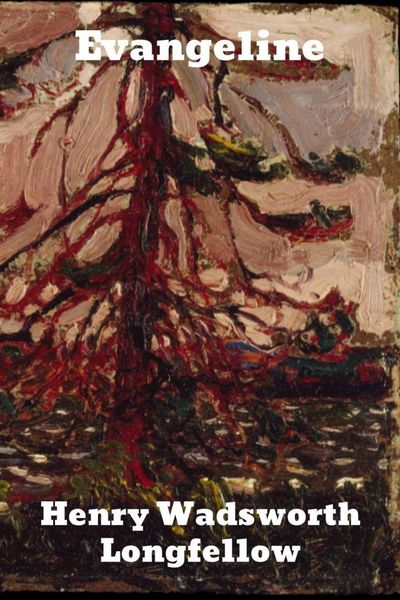
Evangeline A Tale of Acadie
-
- Hardcover
- Taschenbuch ausgewählt
- eBook
- Hörbuch
-
Sprache:Englisch
- Englisch 16,99 € ausgewählt
- Französisch 16,99 €
16,99 €
inkl. gesetzl. MwSt.,
- Kostenlose Lieferung ab 30 € Einkaufswert
- Versandkostenfrei für Bonuscard-Kund*innen
Beschreibung
Produktdetails
Einband
Taschenbuch
Erscheinungsdatum
01.11.1847
Verlag
Binker NorthSeitenzahl
94
Maße (L/B/H)
22,9/15,2/0,5 cm
Gewicht
150 g
Sprache
Englisch
ISBN
978-1-989708-83-5
Evangeline, A Tale of Acadie is an epic poem by the American poet Henry Wadsworth Longfellow, written in English and published in 1847. The poem follows an Acadian girl named Evangeline and her search for her lost love Gabriel, set during the time of the Expulsion of the Acadians. The idea for the poem came from Longfellow's friend Nathaniel Hawthorne. Longfellow used dactylic hexameter, imitating Greek and Latin classics. Though the choice was criticized, it became Longfellow's most famous work in his lifetime and remains one of his most popular and enduring works. The poem had a powerful effect in defining both Acadian history and identity in the nineteenth and twentieth centuries. More recent scholarship has revealed the historical errors in the poem and the complexity of the Expulsion and those involved, which the poem ignores. Evangeline became Longfellow's most famous work in his lifetime and was widely read. Contemporary reviews were very positive. A reviewer for The Metropolitan Magazine said, "No one with any pretensions to poetic feeling can read its delicious portraiture of rustic scenery and of a mode of life long since defunct, without the most intense delight". Longfellow's friend Charles Sumner said he had met a woman who "has read 'Evangeline' some twenty times and thinks it the most perfect poem in the language".Other admirers of the poem included King Leopold I of Belgium. It has been called the first important long poem in American literature. Prior to the influence of Longfellow's poem, historians generally focused on the British founding of Halifax (1749) as the beginning of Nova Scotia. Longfellow's poem shed light on the 150 years of Acadian settlement that preceded the establishment of Halifax. The Expulsion was planned and executed by New Englanders and British. Longfellow omitted from the poem New England's responsibility for the event. Through his poem, Longfellow defines the British as responsible for the expulsion and America is cast as a place of refuge. Longfellow's account was later challenged by Francis Parkman, in his book Montcalm and Wolfe (1884). Rather than blaming the British, Parkman defined the real problem in expulsion as the French influence on Acadians, particularly by Abbé Jean-Louis Le Loutre. American historian John Brebner eventually wrote New England's Outpost (1927), which identified how instrumental New Englanders were in the expulsion of the Acadians.
Noch keine Bewertungen vorhanden
Verfassen Sie die erste Bewertung zu diesem Artikel
Helfen Sie anderen Kundinnen und Kunden durch Ihre Meinung.
Kurze Frage zu unserer Seite
Vielen Dank für Ihr Feedback
Wir nutzen Ihr Feedback, um unsere Produktseiten zu verbessern. Bitte haben Sie Verständnis, dass wir Ihnen keine Rückmeldung geben können. Falls Sie Kontakt mit uns aufnehmen möchten, können Sie sich aber gerne an unseren Kund*innenservice wenden.
zum Kundenservice