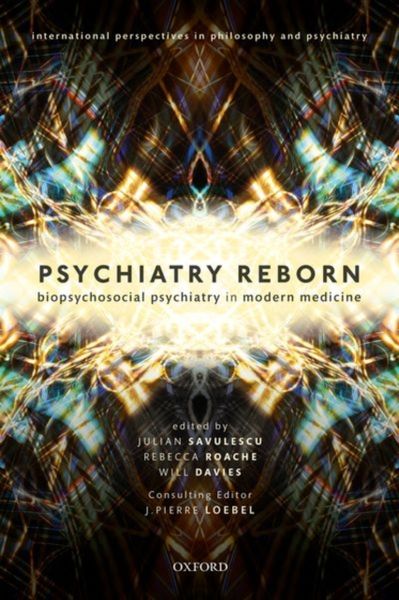
Psychiatry Reborn: Biopsychosocial Psychiatry in Modern Medicine
-
- Taschenbuch ausgewählt
- eBook
-
Sprache:Englisch
68,99 €
inkl. gesetzl. MwSt.,
Beschreibung
Produktdetails
Einband
Taschenbuch
Erscheinungsdatum
21.12.2020
Herausgeber
Julian Savalescu + weitereVerlag
Oxford University PressSeitenzahl
432
Maße (L/B/H)
23,1/15,4/2,1 cm
Gewicht
716 g
Sprache
Englisch
ISBN
978-0-19-878969-7
Spanning the sciences and philosophy of psychiatry, the essays offer complementary perspectives on the ever more urgent importance of the biopsychosocial approach to modern medicine. The collection brings together ideas from the series of Loebel Lectures by world leaders in the field of psychiatry and associated Workshops at the University of Oxford, including revised versions of the Lectures themselves, and a wide range of related commentaries and position pieces. With contributions from psychiatry, psychology, neuroscience, and philosophy, the book provides the most comprehensive account to date of the interplay between biological, psychological, and social factors in mental health and their ethical dimensions.
The 23 chapters of this multi-authored book review the history and place of the biopsychosocial model in medicine, and explore its strengths and shortcomings. In particular, it considers how understanding this interplay might lead to more effective treatments for mental health disorders, as developments in genomic and neurobiological medicine challenge traditional conceptions and approaches to the research and treatment of mental health disorders.
The book explores the challenges and rewards of developing diagnostic tools and clinical interventions that take account of the inextricably intertwined bio-psycho-social domains, and the ethical implications of the conceptualization. It concludes with chapters drawing together the book's range of expertise to propose a best conception of the model, and how it might be adopted going forward in an age of exponentially increasing technological advances and of integrated/collaborative care. The volume is intended to present the BPS model as it stands today in the academy, the lab, and the clinic, and to start to address the challenges and potential that the model has for each.
Noch keine Bewertungen vorhanden
Verfassen Sie die erste Bewertung zu diesem Artikel
Helfen Sie anderen Kundinnen und Kunden durch Ihre Meinung.
Kurze Frage zu unserer Seite
Vielen Dank für Ihr Feedback
Wir nutzen Ihr Feedback, um unsere Produktseiten zu verbessern. Bitte haben Sie Verständnis, dass wir Ihnen keine Rückmeldung geben können. Falls Sie Kontakt mit uns aufnehmen möchten, können Sie sich aber gerne an unseren Kund*innenservice wenden.
zum Kundenservice