Gutscheinbedingungen

**Gültig von 22.06.2026 ab 19 Uhr bis 23.06.2026 24 Uhr auf Spielzeug, Schreibwaren, Filme, Geschenke & Trends, Musik, tolino eReader & Zubehör, Hörbücher und Hörbuch-Downloads (außer Abo), nicht preisgebundene Bücher und Kalender online auf thalia.at und in der Thalia App. Einzelne Artikel können ausgeschlossen sein. Aufgrund der Buchpreisbindung sind deutschsprachige Bücher und eBooks ausgenommen. Zusätzlich ausgenommen sind preisgebundene Artikel, Abos & Flatrates, eBooks, Games, Geschenkkarten/-boxen, Shelfies, Software, Zeitschriften sowie einzelne Artikel von tonies®. Pro Einkauf einmal einlösbar. Click & Collect nur bei Onlinevorabzahlung möglich. Keine Barauszahlung. Nicht kombinierbar mit anderen Aktionen und Gutscheinen. Gutschein wird auf max. 500€ Bestellwert angerechnet. Nicht gültig für Versandkosten und Services.

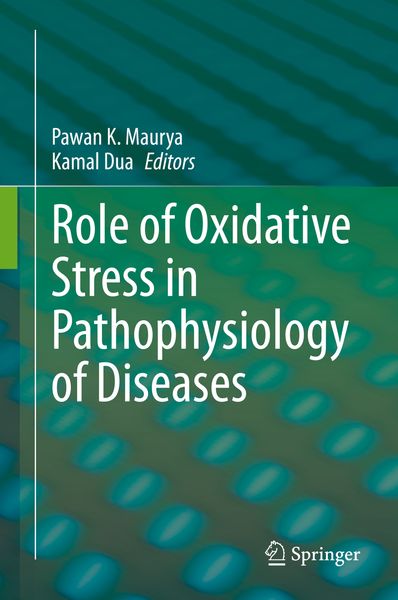
Produktbild: Role of Oxidative Stress in Pathophysiology of Diseases
- 11%

Role of Oxidative Stress in Pathophysiology of Diseases

11% sparen

96,99 € UVP 109,99 €

inkl. gesetzl. MwSt., Versandkostenfrei


Beschreibung

Produktdetails

Einband

Gebundene Ausgabe

Erscheinungsdatum

16.06.2020

Herausgeber

Pawan K. Maurya + weitere

Verlag

Springer Singapore

Seitenzahl

297

Maße (L/B/H)

24,1/16/2,3 cm

Gewicht

635 g

Auflage

1st ed. 2020

Sprache

Englisch

ISBN

978-981-15-1567-5

Beschreibung

Portrait

Dr. Pawan Kumar Maurya  is currently an Associate Professor at the Department of Biochemistry, Central University of Haryana. He is also Deputy Director of Deen Dayal Upadhyay Kaushal Kendra (DDUKK) at the same university. He holds a Ph.D. from the University of Allahabad and pursued research work as a Postdoctoral researcher at Taipei Medical University, Taiwan and the Federal University of Sao Paulo (UNIFESP), Brazil. His research focuses on oxidative stress, aging, telomere biology, biochemical diagnostics, nanomedicine, and clinical biochemistry. Dr. Maurya has received several national and international awards such as Science without Borders, Brazil (2014), and a Distinguished Service Award, Allahabad (2018). He has published 1 book, 10 book chapters, and over 60 research articles in respected international journals. He has also served on numerous technical program committees and organizing committees for various international conferences.

Dr. Kamal Dua  is currently a lecturer at the Graduate School of Health (Pharmacy), University of Technology Sydney, Australia. He holds two doctoral degrees in Pharmaceutical Sciences and Immunology & Microbiology, Master of Pharmacy, MPharm (with a Major in Pharmaceutics), and Bachelor of Pharmacy (BPharm). He has also been awarded four professional diplomas in the areas of Clinical Research, Product Development, Drug Regulatory Affairs & Documentation and Intellectual Property Rights (IPR). He has received various awards and fellowships for his academic and professional achievements, including the Excellence Award in Pharmacy (2018); Young Scientist Award (2011); and the Sri. K. Sri Harsha Memorial Gold Medal & Rank Certificate (2004). 

He also holds a conjoint lecturer position at the School of Biomedical Sciences and Pharmacy, Faculty of Health and Medicine, The University of Newcastle, Australia and Visiting Researcher at the Hunter Medical Research Institute (HMRI) and Centre for Inflammation, Centenary Institute, Australia. He is also a Visiting Academic at various other universities, including the School of Pharmaceutical Sciences, University of São Paulo, Brazil; School of Pharmaceutical Sciences, Shoolini University; School of Pharmaceutical Sciences, Lovely Professional University; and Saveetha Institute of Medical And Technical Sciences, Saveetha University, India.

His research experience spans 12 years which lies on the interdisciplinary boundary between the acquired extensive knowledge on the application of the principles of pharmacy (primarily formulation and pharmaceutics) to biomedical sciences (immunology and microbiology). He has published 90 peer-reviewed manuscripts in various respected pharmacy and pharmacology journals and has authored 2 books, 4 book chapters.

Produktdetails

Einband

Gebundene Ausgabe

Erscheinungsdatum

16.06.2020

Herausgeber

Verlag

Springer Singapore

Seitenzahl

297

Maße (L/B/H)

24,1/16/2,3 cm

Gewicht

635 g

Auflage

1st ed. 2020

Sprache

Englisch

ISBN

978-981-15-1567-5

Herstelleradresse

Springer-Verlag GmbH
Tiergartenstr. 17
69121 Heidelberg
DE

Email: ProductSafety@springernature.com

Kundinnen und Kunden meinen

0 Bewertungen

Informationen zu Bewertungen

Zur Abgabe einer Bewertung ist eine Anmeldung im Konto notwendig. Die Authentizität der Bewertungen wird von uns nicht überprüft. Wir behalten uns vor, Bewertungstexte, die unseren Richtlinien widersprechen, entsprechend zu kürzen oder zu löschen.

Die Bewertungen sind nach Format, Anzahl Sterne und Datum sortiert.

Verfassen Sie die erste Bewertung zu diesem Artikel

Helfen Sie anderen Kund*innen durch Ihre Meinung

Kundinnen und Kunden meinen

0 Bewertungen filtern

  • Produktbild: Role of Oxidative Stress in Pathophysiology of Diseases
  • Chapter 1. Oxidative stress and oral diseases.- Chapter 2. Role of Oxidative stress in Chronic Liver Diseases.- Chapter 3. In-vitro and In-vivo Antioxidant activity of nanoparticles.- Chapter 4. Oxidative stress in neurology and neurodegenerative processes.- Chapter 5. The role of oxidative stress in respiratory diseases.- Chapter 6. Role of Synbiotics in alleviating oxidative stress in colorectal cancer.- Chapter 7. Oxidative Stress and Immunological Complexities in Multi-Drug Resistant Tuberculosis.- Chapter 8. Infection-induced Oxidative Stress in Chronic Respiratory Diseases.- Chapter 9. Oxidative stress in neuropsychiatric and neurodegenerative diseases.- Chapter 10. Oxidative stress monitoring in in vitro and in vivo models.- Chapter 11. Effects of Yoga on Aging.