KI-Beratung Beta

Gutscheinbedingungen

**Gültig bis 30.11.2026 auf Spielzeug, Schreibwaren, Filme, Geschenke & Trends, Musik, tolino eReader & Zubehör, Hörbücher und Hörbuch-Downloads, nicht preisgebundene Bücher und Kalender online auf thalia.at und in der Thalia App. Einzelne Artikel können ausgeschlossen sein. Aufgrund der Buchpreisbindung sind deutschsprachige Bücher und eBooks ausgenommen. Zusätzlich ausgenommen sind Abos & Flatrates, Games, Geschenkkarten/-boxen, Shelfies, Software, Zeitschriften sowie einzelne Artikel von tonies®. Pro Einkauf einmal einlösbar. Nur gültig mit im Onlineshop hinterlegter Bonuscard. Click & Collect nur bei Onlinevorabzahlung möglich. Keine Barauszahlung. Nicht kombinierbar mit anderen Aktionen und Gutscheinen. Gutschein wird auf max. 500€ Bestellwert angerechnet. Nicht gültig für Versandkosten und Services.

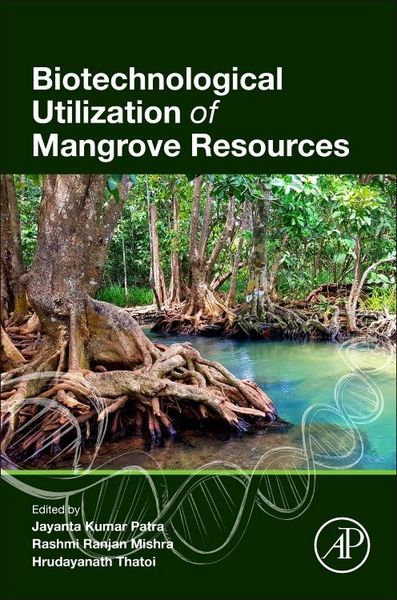
Produktbild: Biotechnological Utilization of Mangrove Resources

Biotechnological Utilization of Mangrove Resources

171,99 €

inkl. gesetzl. MwSt., Versandkostenfrei


Beschreibung

Mangroves are typically tropical coastal ecosystems found in the inter-tidal zones of river deltas and back water areas. They represent highly dynamic and fragile ecosystems, yet they are the most productive and biologically diversified habitats of various life forms including plants, animals and microorganisms....

Beschreibung

Mangroves are typically tropical coastal ecosystems found in the inter-tidal zones of river deltas and back water areas. They represent highly dynamic and fragile ecosystems, yet they are the most productive and biologically diversified habitats of various life forms including plants, animals and microorganisms. Mangroves are a resource of many different products, including; microorganisms that harbor a diverse group of industrially important enzymes, antibiotics, therapeutic proteins and vaccines; timber resistant to rot and insects; and medicinal plants.

Divided into three main parts, Biotechnological Utilization of Mangrove Resources first provides a broad introduction into mangrove ecology. Subsequent chapters discuss the biodiversity of mangroves, including the diverse nature of the organisms within the mangroves themselves. The final part pays special attention to biotechnological utilization of mangroves. Topics such as antimicrobial activity of mangrove-derived products, anti-oxidant activity of mangrove derived products and pharmaceutical applications, are covered in detail.

Biotechnological Utilization of Mangrove Resources brings the latest research and technologies in mangrove biology into one platform, providing readers with an up-to-date view on the area. This would serve as an excellent reference book for researchers and students in the field of marine biology especially interested in mangrove ecosystems.

Portrait

Prof. Dr. Jayanta Kumar Patra, M.Sc., Ph.D., P.D.F, is currently working as an Associate Professor
at Dongguk University, Republic of Korea. He holds about 14 years of research and teaching experience in the fields of food, pharmacology, and nano-biotechnology. To his credit, he has published more than 200 papers in various national and international peer-reviewed journals and around 50 book chapters
in different edited books. Dr. Patra has also authored 22 books in various academic publications.Dr. Mishra received his PhD in 2010 from North Orissa University and his thesis focused on Microbial Diversity in Mangroves. He has 17 journal publications and has co-authored 3 book chapters.

Dr. Hrudayanath Thatoi is Director of the Centre for Industrial Biotechnology Research (CIBR) at Siksha "O” Anusandhan Univeristy, India. He obtained his MSc and PhD from Utkal University, India, and served as Chairman of the P.G. Council of MSCB University and as a mangrove biologist and Senior Scientist at the MS Swaminathan Research Foundation prior to his current role. Dr. Thatoi's research interests span molecular biology, industrial biotechnology, microbiology, and aquaculture. He serves as a member of several scientific societies and editorial boards of national and international journals. He is a recipient of the Samanta Chandra Sekhar Award by DST, Government of Odisha; the Prof. Harihar Pattanaik Award for environmental science by the Orissa Botanical Society; and Fellow of the Society of Applied Biotechnology. He has worked on several Elsevier titles, including Biotechnological Utilization of Mangrove Resources; Applications of Metagenomics; Innovations in Fermentation and Phytopharmaceutical Technologies; and Emerging Trends and Imminent Applications.

Produktdetails

Einband

Taschenbuch

Erscheinungsdatum

20.04.2020

Herausgeber Jayanta Kumar Patra + weitere
Verlag Elsevier Science & Technology

Produktdetails

Einband

Taschenbuch

Erscheinungsdatum

20.04.2020

Herausgeber
Verlag Elsevier Science & Technology
Seitenzahl

512

Maße (L/B/H)

22,9/15,2/2,4 cm

Gewicht

820 g

Sprache

Englisch

ISBN

978-0-12-819532-1

EU-Ansprechpartner

Elsevier B.V.
Radarweg 29
1043 NX Amsterdam
NL
productsafety@elsevier.com

Herstelleradresse

Elsevier Science & Technology
London Wall 125
EC2Y 5AS London
GB
tradeorders@elsevier.com

Noch keine Bewertungen vorhanden

Verfassen Sie die erste Bewertung zu diesem Artikel

Helfen Sie anderen Kundinnen und Kunden durch Ihre Meinung.

Kundinnen und Kunden meinen

Bewertungen (0)

Die Leseprobe wird geladen.
  • Produktbild: Biotechnological Utilization of Mangrove Resources
  • 1. Potential Contribution of Multifunctional Mangrove Resources and Its Conservation
    2. Mangroves: Source of Endophytic Microorganisms and Efficiency of Endophytes in Biotechnological Aspects
    3. Devastating Effect and Challenges of The Exotic Mangrove Nypa Fruticans Van Wurmb (Arecaceae) on the Mangroves of West and Central Africa
    4. Sylvo-Socioeconomic Study of Urban Mangrove Patches: Case of Kribi, Cameroon
    5. Secondary Metabolites from Mangrove Plants and Their Biological Actives
    6. Assessment of Diversity and Physico-Chemical Characteristics of Mangrove Vegetation of, Odisha, India
    7. Fungal Diversity in Mangroves of India and a Note on Their Medicinal Potential
    8. Bioprospecting Potential of Mangrove Resources
    9. Nutraceutical Potential of Ripened Beans of Mangrove Wild Legume Sesbania Speciosa
    10. Neuroprotective Effects of Mangrove Plants
    11. Therapeutic Potentials of Littoral Vegetation: An Antifungal Perspective
    12. Bactericidal Activity of Endophytic Bacteria Isolated from Acanthus Ilicifolius - A Mangrove Plant of Divar Island, Goa Against Human Pathogenic Bacteria
    13. Biotechnological Potential of Microbial Pigments from Mangrove Ecosystems: A Review
    14. Mangrove Plant Derived Bioactive Compounds to Overcome Diabetes and Its Associated Complications
    15. Industrial Applications of Enzymes Derived from Indian Mangroves
    16. Mangrove Plant Assisted Synthesis of Nanoparticles and Their Pharmaceutical Applications - A Review
    17. Mangrove - An Abode for Microorganisms with Promising Enzymatic Activity
    18. Biotechnological Aspects of Microfloral Mangrove Ecosystems
    19. Bio-Nano Technological Approaches for Degradation and Decolonization of Dyes by Mangrove Plants
    20. Diversity of Halotolerant and Halophilic Bacteria from Mangrove and Their Biotechnological Potentials
    21. Role of Mangrove Endophytic Fungi in Diabetes Mellitus (Dm)
    22. Vaccines from Mangrove Microbes