Beschreibung
Produktdetails
Einband
Taschenbuch
Erscheinungsdatum
30.04.2020
Abbildungen
17 bw illus
Verlag
Bloomsbury PublishingSeitenzahl
386
Maße (L/B/H)
21,6/14/2 cm
Gewicht
447 g
Sprache
Englisch
ISBN
978-1-350-15907-5
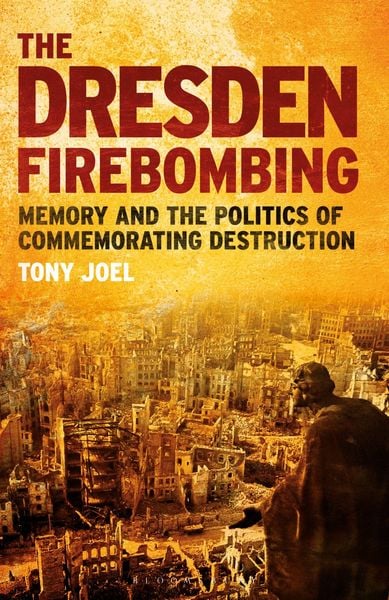
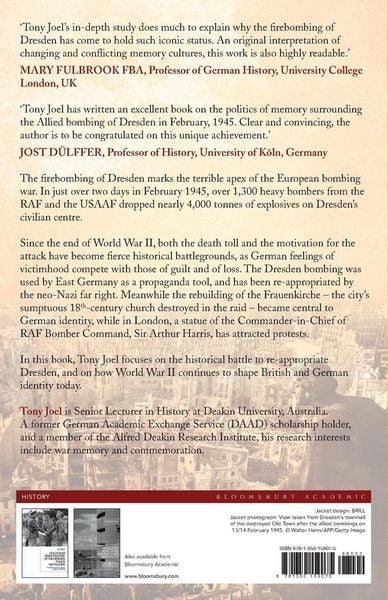
The firebombing of Dresden marks the terrible apex of the European bombing war. In just over two days in February 1945, over 1,300 heavy bombers from the RAF and the USAAF dropped nearly 4,000 tonnes of explosives on Dresden's civilian centre. Since the end of World War II, both the death toll and the motivation for the attack have become fierce historical battlegrounds, as German feelings of victimhood complete with those of guilt and loss. The Dresden bombing was used by East Germany as a propaganda tool, and has been re-appropriated by the neo-Nazi far right. Meanwhile the rebuilding of the Frauenkirche- the city's sumptuous eighteenth-century church destroyed in the raid-became central to German identity, while in London, a statue of the Commander-in-Chief of RAF Bomber Command, Sir Arthur Harris, has attracted protests. In this book, Tony Joel focuses on the historical battle to re-appropriate Dresden, and on how World War II continues to shape British and German identity today.
Noch keine Bewertungen vorhanden
Verfassen Sie die erste Bewertung zu diesem Artikel
Helfen Sie anderen Kundinnen und Kunden durch Ihre Meinung.
Kurze Frage zu unserer Seite
Vielen Dank für Ihr Feedback
Wir nutzen Ihr Feedback, um unsere Produktseiten zu verbessern. Bitte haben Sie Verständnis, dass wir Ihnen keine Rückmeldung geben können. Falls Sie Kontakt mit uns aufnehmen möchten, können Sie sich aber gerne an unseren Kund*innenservice wenden.
zum Kundenservice