KI-Beratung Beta

Gutscheinbedingungen

**Gültig bis 18.11.2026 auf englischsprachige Klassiker (klassiker-32728) online auf thalia.at und in der Thalia App. Einzelne Artikel können ausgeschlossen sein. Ausgenommen sind preisgebundene Artikel & eBooks. Pro Einkauf einmal einlösbar. Click & Collect nur bei Onlinevorabzahlung möglich. Keine Barauszahlung. Nicht kombinierbar mit anderen Aktionen und Gutscheinen. Gutschein wird auf max. 500€ Bestellwert angerechnet. Nicht gültig für Geschenkkarten, Versandkosten und Services.

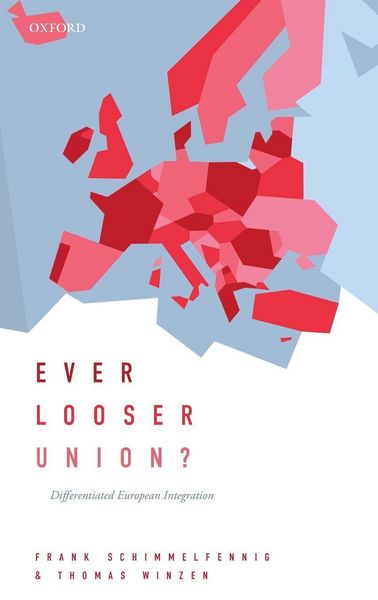
  • Produktbild: Ever Looser Union?
  • Produktbild: Ever Looser Union?

Ever Looser Union? Differentiated European Integration

145,99 €

inkl. gesetzl. MwSt., Versandkostenfrei


Beschreibung

Differentiated integration has become a durable feature of the European Union and is a major alternative for its future development and reform. This book provides a comprehensive conceptual, theoretical, and empirical analysis of differentiation in European integration. It explains differentiation in...

Beschreibung

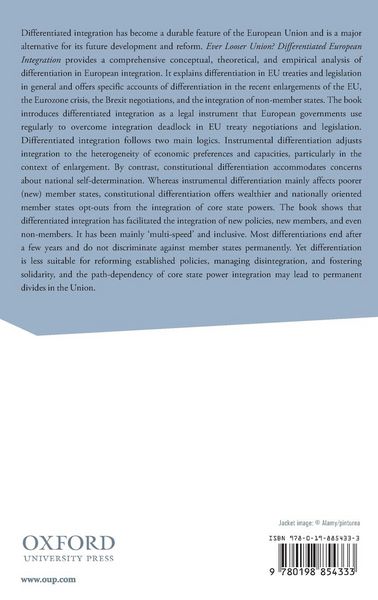
Differentiated integration has become a durable feature of the European Union and is a major alternative for its future development and reform. This book provides a comprehensive conceptual, theoretical, and empirical analysis of differentiation in European integration. It explains differentiation in EU treaties and legislation in general and offers specific accounts of differentiation in the recent enlargements of the EU, the Eurozone crisis, the Brexit negotiations, and the integration of non-member states. Ever Looser Union? introduces differentiated integration as a legal instrument that European governments use regularly to overcome integration deadlock in EU treaty negotiations and legislation. Differentiated integration follows two main logics. Instrumental differentiation adjusts integration to the heterogeneity of economic preferences and capacities, particularly in the context of enlargement. By contrast, constitutional differentiation accommodates concerns about national self-determination. Whereas instrumental differentiation mainly affects poorer (new) member states, constitutional differentiation offers wealthier and nationally oriented member states opt-outs from the integration of core state powers. The book shows that differentiated integration has facilitated the integration of new policies, new members, and even non-members. It has been mainly 'multi-speed' and inclusive. Most differentiations end after a few years and do not discriminate against member states permanently. Yet differentiation is less suitable for reforming established policies, managing disintegration and fostering solidarity, and the path-dependency of core state power integration may lead to permanent divides in the Union.

Produktdetails

Einband

Gebundene Ausgabe

Erscheinungsdatum

23.03.2020

Verlag Oxford Academic
Seitenzahl

248

Produktdetails

Einband

Gebundene Ausgabe

Erscheinungsdatum

23.03.2020

Verlag Oxford Academic
Seitenzahl

248

Maße (L/B/H)

24/16,1/1,8 cm

Gewicht

490 g

Sprache

Englisch

ISBN

978-0-19-885433-3

Herstelleradresse

Libri GmbH
Europaallee 1
36244 Bad Hersfeld
DE

Email: gpsr@libri.de

Noch keine Bewertungen vorhanden

Verfassen Sie die erste Bewertung zu diesem Artikel

Helfen Sie anderen Kundinnen und Kunden durch Ihre Meinung.

Kundinnen und Kunden meinen

Bewertungen (0)

Die Leseprobe wird geladen.
  • Produktbild: Ever Looser Union?
  • Produktbild: Ever Looser Union?
    • 1: Introduction
    • Part 1. Mapping and Explaining Differentiated Integration
    • 2: Concepts: Differentiated Integration and its Modes
    • 3: Theory: The Choice for Differentiated Integration
    • 4: Mapping Differentiated Integration
    • 5: Explaining Differentiation in EU Treaties
    • 6: Explaining Differentiation in EU Legislation
    • Part 2. Extensions
    • 7: Normalization: New Member States and Differentiated Integration
    • 8: Path Dependence: Differentiated Integration in the Euro Crisis
    • 9: Differentiated Disintegration: Brexit
    • 10: Regional Differentiation: Beyond the EU Member States
    • 11: Conclusions; Is Differentiation Good for Europe?