List of Contributors xv
Preface xix
List of Abbreviations xxi
Section 1 Introduction 1
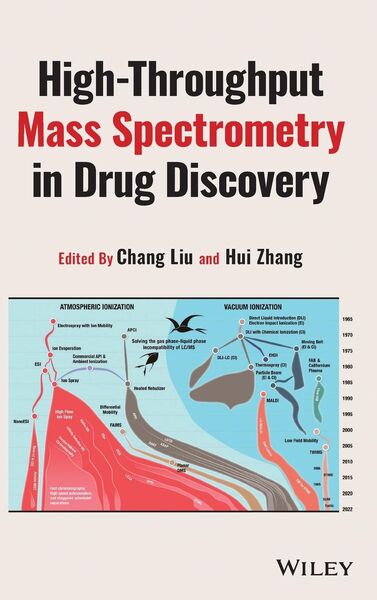
1 Forty-Year Evolution of High-Throughput Mass Spectrometry: A Perspective 3
Thomas R. Covey
1.1 Introduction 3
1.2 Ionization Foundations of High-Throughput Mass Spectrometry 5
1.2.1 Historical Context of the Development of LC/MS. Ionization in Vacuum or at Atmospheric Pressure? 7
1.2.2 Ambient Sample Introduction Methods (Ambient Ionization) into an API Ion Source Without LC and Their HT-MS Potential 13
1.2.3 Direct and Indirect Affinity Measurements with ESI/MS for HTS 16
1.3 High-Speed Serial Chromatographic Sample Introduction 18
1.3.1 High Flow Rate Ion Sources 19
1.3.2 Fast Serial Scheduled, Staggered Chromatographic Separations with Fast Autosamplers 22
1.3.3 High-Speed Column Stationary Phases 24
1.4 Parallel Chromatographic Sample Introduction 26
1.4.1 Overview of Multichannel Indexed Ion Sources 26
1.4.2 Fluid Indexing 27
1.4.3 Spray Aerosol Indexing 28
1.4.4 Ion Beam Indexing 28
1.4.5 Ionization Indexing 29
1.4.6 Multichannel Autosampler and Pumps 30
1.5 High Repetition Rate Lasers 32
1.6 Ion Mobility for High-Speed Gas-Phase Separations 35
1.6.1 Motivation and Commercial Options 35
1.6.2 Origins of DMS 36
1.6.3 Chemically Based Selectivity with DMS to Mimic Chromatography 37
1.7 Mass Spectrometer Sensitivity 40
1.7.1 Historical Gains and Motivation for Sensitivity Improvements 40
1.8 High-Speed Sub-Microliter Volume Sampling 42
1.8.1 Small Sample Size and Low Volume Dispensing HT-MS Technologies 42
1.8.2 Shoot N' Dilute Nanoliter Droplets 44
1.9 Conclusions and Future Prospects 53
References 56
Section 2 LC-MS 75
2 The LeadSampler (LS-1) Sample Delivery System: Integrated Design and Features for High-Efficiency Bioanalysis 77
Brendon Kapinos and John Janiszewski
2.1 Introduction 77
2.2 Hardware and System Design 80
2.3 Software Integration 84
2.4 Enabling Emerging Techniques 90
2.5 Concluding Remarks 96
References 97
3 Evolution of Multiplexing Technology for High-Throughput LC/MS Analyses 103
Adam Latawiec
3.1 Introduction and Historical Developments 103
3.2 Developments Toward Fully Integrated Multiplexing Systems 105
3.3 Broadening Customer Options 108
3.4 Workflow and End-User Considerations 113
3.5 Conclusion 115
References 116
Section 3 ESI-MS Without Chromatographic Separation 121
4 Direct Online SPE-MS for High-Throughput Analysis in Drug Discovery 123
Andrew D. Wagner and Wilson Z. Shou
4.1 Introduction 123
4.2 History of the Development of Direct Online SPE-MS 124
4.3 Hardware Details and Data Processing 126
4.4 Instrument Performance Highlights 132
4.5 Applications 133
4.6 Others 134
4.7 Future Perspectives 135
References 135
5 Acoustic Sampling for Mass Spectrometry: Fundamentals and Applications in High-Throughput Drug Discovery 143
Chang Liu, Lucien Ghislain, Jonathan Wingfield, Sammy Datwani, and Hui Zhang
5.1 Introduction 143
5.2 Technology Overview 145
5.2.1 Ami-MS 145
5.2.2 Ade-OPI-MS 151
5.2.2.1 System Description 151
5.2.2.2 System Tuning and Assay Development 152
5.2.2.3 ADE-OPI-MS Automated Data Processing and Automation Integration 154
5.3 System Performance 154
5.3.1 AMI-MS Performance 154
5.3.2 ADE-OPI-MS Performance 160
5.4 Applications 162
5.4.1 High-Throughput Screening 162
5.4.1.1 AMI-MS for HTS 162
5.4.1.2 ADE-OPI-MS for HTS 166
5.4.2 High-Throughput ADME 168
5.4.3 In