KI-Beratung Beta

Gutscheinbedingungen

**Gültig bis 30.11.2026 auf Spielzeug, Schreibwaren, Filme, Geschenke & Trends, Musik, tolino eReader & Zubehör, Hörbücher und Hörbuch-Downloads, nicht preisgebundene Bücher und Kalender online auf thalia.at und in der Thalia App. Einzelne Artikel können ausgeschlossen sein. Aufgrund der Buchpreisbindung sind deutschsprachige Bücher und eBooks ausgenommen. Zusätzlich ausgenommen sind Abos & Flatrates, Games, Geschenkkarten/-boxen, Shelfies, Software, Zeitschriften sowie einzelne Artikel von tonies®. Pro Einkauf einmal einlösbar. Nur gültig mit im Onlineshop hinterlegter Bonuscard. Click & Collect nur bei Onlinevorabzahlung möglich. Keine Barauszahlung. Nicht kombinierbar mit anderen Aktionen und Gutscheinen. Gutschein wird auf max. 500€ Bestellwert angerechnet. Nicht gültig für Versandkosten und Services.

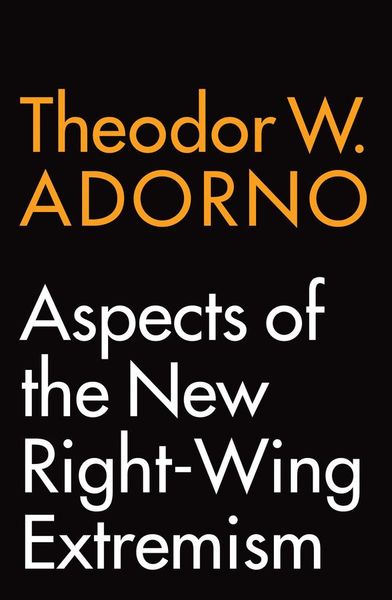
Produktbild: Aspects of the New Right-Wing Extremism

Aspects of the New Right-Wing Extremism

12,99 €

inkl. gesetzl. MwSt., zzgl. Versandkosten


  • Kostenlose Lieferung ab 30 € Einkaufswert
  • Versandkostenfrei für Bonuscard-Kund*innen

Beschreibung

On 6 April 1967, at the invitation of the Socialist Students of Austria at the University of Vienna, Theodor W. Adorno gave a lecture which is not merely of historical interest. Against the background of the rise of the National Democratic Party of Germany, which had enjoyed remarkable electoral success...

Beschreibung

On 6 April 1967, at the invitation of the Socialist Students of Austria at the University of Vienna, Theodor W. Adorno gave a lecture which is not merely of historical interest. Against the background of the rise of the National Democratic Party of Germany, which had enjoyed remarkable electoral success in the first two years after its formation in November 1964, Adorno analysed the goals, resources and tactics of the new right-wing nationalism of this time. Contrasting it with the 'old' fascism of the Nazis, Adorno gave particular attention to the ways in which far-right movements elicited enthusiastic support in sections of the West German population, 20 years after the war had ended. Much has changed since then, but some elements have remained the same or resurfaced in new forms, 50 years later. Adorno's penetrating analysis of the sources of right-wing radicalism is as relevant today as it was five decades ago. It is a prescient message to future generations who find themselves embroiled once again in a struggle against a resurgent nationalism and right-wing extremism.

Rezension

"When Adorno speaks to us from beyond the grave on right-wing extremism, we should all listen."
Cas Mudde, University of Georgia
 
"Fifty years on, Theodor Adorno's warnings of populist demagoguery remain all too relevant"
Financial Times
 
"Delivered as a lecture to a meeting of the Socialist Students of Austria, Aspects of the New Right-Wing Extremism provides one of the clearer views on the subject by the composer of notoriously recondite texts."
TheBattleground.eu
 
"[Adorno's] 1967 lecture on the new right-wing extremism deftly encapsulates his general view that fascism was never really defeated but resides in the everyday facets of both social structure and personal conduct and must always be combated anew."
The Nation

Produktdetails

Einband

Taschenbuch

Erscheinungsdatum

24.04.2020

Verlag John Wiley & Sons Inc
Seitenzahl

100

Produktdetails

Einband

Taschenbuch

Erscheinungsdatum

24.04.2020

Verlag John Wiley & Sons Inc
Seitenzahl

100

Maße (L/B/H)

18,8/12/0,7 cm

Gewicht

98 g

Auflage

1. Auflage

Übersetzt von

Wieland Hoban

Sprache

Englisch

ISBN

978-1-5095-4145-4

Herstelleradresse

Libri GmbH
Europaallee 1
36244 Bad Hersfeld
DE

Email: gpsr@libri.de

Noch keine Bewertungen vorhanden

Verfassen Sie die erste Bewertung zu diesem Artikel

Helfen Sie anderen Kundinnen und Kunden durch Ihre Meinung.

Kundinnen und Kunden meinen

Bewertungen (0)

Die Leseprobe wird geladen.
  • Produktbild: Aspects of the New Right-Wing Extremism
  • Aspects of the New Right-Wing Extremism

    Notes

    Publisher's Note

    Afterword by Volker Weiss

    Notes

    About the Authors