KI-Beratung Beta

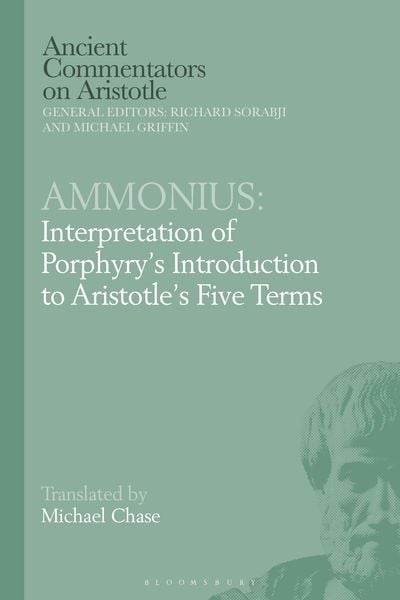
Produktbild: Ammonius: Interpretation of Porphyry's Introduction to Aristotle's Five Terms

Ammonius: Interpretation of Porphyry's Introduction to Aristotle's Five Terms

39,10 €

inkl. gesetzl. MwSt.

Beschreibung

One of his six introductions to philosophy, widely used by students in Alexandria, Ammonius' lecture on Porphyry was recorded in writing by his students in the commentary translated here. Along with five other types of introductions (three of which are translated in the Ancient Commentators on Aristotle...

Beschreibung

One of his six introductions to philosophy, widely used by students in Alexandria, Ammonius' lecture on Porphyry was recorded in writing by his students in the commentary translated here. Along with five other types of introductions (three of which are translated in the Ancient Commentators on Aristotle volume Elias and David: Introductions to Philosophy with Olympiodorus: Introduction to Logic) it made Greek philosophy more accessible to other cultures. These introductions became standard in Ammonius' school and included a popular set of five or more definitions of philosophy, some of them drawn from commentaries on quite different works.
Ammonius' lecture expounded the most celebrated and discussed previous introduction written by Porphyry 200 years earlier, which was devoted to five main technical terms of Aristotle's logic. Ammonius was sympathetic to Porphyry because they both sought to harmonise the views of Plato and Aristotle with each other, arguing in different ways that the two philosophers did not disagree about the nature of universals. Porphyry's introduction was a hugely influential work for centuries after its composition, and this commentary by Ammonius served to maintain its position at the centre of later schools of philosophy.
This English translation of Ammonius' work is the latest volume in the Ancient Commentators on Aristotle series and makes this philosophical work accessible to a modern readership. The translation is accompanied by an introduction, comprehensive commentary notes, bibliography, glossary of translated terms and a subject index.

Produktdetails

Format

ePUB

Kopierschutz

Ja

Family Sharing

Nein

Text-to-Speech

Ja

Produktdetails

Format

ePUB

Format

eBooks im ePUB-Format erlauben eine dynamische Anpassung des Inhalts an die jeweilige Display-Größe des Lesegeräts. Das Format eignet sich daher besonders für das Lesen auf mobilen Geräten, wie z.B. Ihrem tolino, Tablets oder Smartphones.

Kopierschutz

Ja

Kopierschutz

Zum Lesen dieses eBooks auf eReadern außerhalb der tolino Familie sowie am PC benötigen Sie eine Adobe ID. Weitere Hinweise zum Lesen von kopiergeschützten eBooks finden Sie unter Hilfe/Downloads.

Family Sharing

Nein

Family Sharing

Mit Family Sharing können Sie eBooks innerhalb Ihrer Familie (max. sechs Mitglieder im gleichen Haushalt) teilen. Sie entscheiden selbst, welches Buch Sie mit welchem Familienmitglied teilen möchten. Auch das parallele Lesen durch verschiedene Familienmitglieder ist durch Family Sharing möglich. Um eBooks zu teilen oder geteilt zu bekommen, muss jedes Familienmitglied ein Konto bei Thalia oder einem anderen tolino-Buchhändler haben. Weitere Informationen finden Sie unter Hilfe/Family-Sharing.

Text-to-Speech

Ja

Text-to-Speech

Bedeutet Ihnen Stimme mehr als Text? Mit der Funktion Text-to-Speech können Sie sich im tolino webReader und in der aktuellen Thalia – Lesen & Hören App das eBook vorlesen lassen. Weitere Informationen finden Sie unter Hilfe/Text-to-Speech.

Erscheinungsdatum

05.09.2019

Verlag Bloomsbury eBooks UK
Seitenzahl

208 (Printausgabe)

Auflage

1. Auflage

Sprache

Englisch

EAN

9781350089242

Barrierefreiheit
  • keine Information zur Barrierefreiheit bekannt

Noch keine Bewertungen vorhanden

Verfassen Sie die erste Bewertung zu diesem Artikel

Helfen Sie anderen Kundinnen und Kunden durch Ihre Meinung.

Kundinnen und Kunden meinen

Bewertungen (0)

Weitere Artikel finden Sie in

Die Leseprobe wird geladen.
  • Produktbild: Ammonius: Interpretation of Porphyry's Introduction to Aristotle's Five Terms