Gutscheinbedingungen

**Gültig am 28.06.2026 auf Spielzeug, Schreibwaren, Filme, Geschenke & Trends, Musik, tolino eReader & Zubehör, Hörbücher und Hörbuch-Downloads (außer Abo), nicht preisgebundene Bücher und Kalender online auf thalia.at und in der Thalia App. Einzelne Artikel können ausgeschlossen sein. Aufgrund der Buchpreisbindung sind deutschsprachige Bücher und eBooks ausgenommen. Zusätzlich ausgenommen sind preisgebundene Artikel, Abos & Flatrates, eBooks, Games, Geschenkkarten/-boxen, Shelfies, Software, Zeitschriften sowie einzelne Artikel von tonies®. Pro Einkauf einmal einlösbar. Click & Collect nur bei Onlinevorabzahlung möglich. Keine Barauszahlung. Nicht kombinierbar mit anderen Aktionen und Gutscheinen. Gutschein wird auf max. 500€ Bestellwert angerechnet. Nicht gültig für Versandkosten und Services.

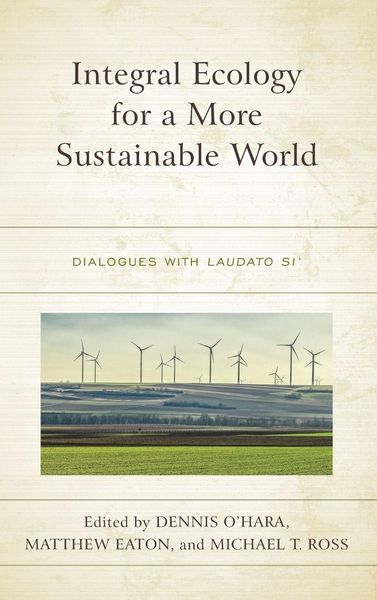
  • Produktbild: Integral Ecology for a More Sustainable World
  • Produktbild: Integral Ecology for a More Sustainable World

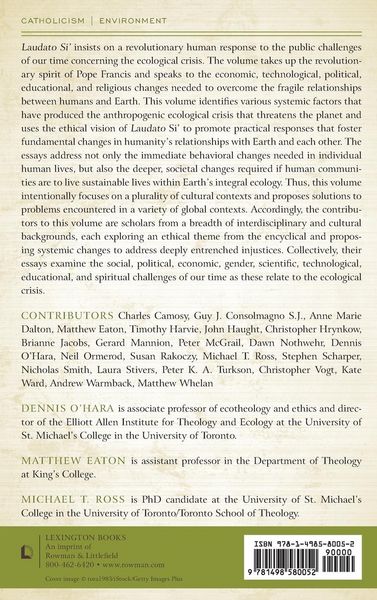
Integral Ecology for a More Sustainable World Dialogues with Laudato Si'

174,99 €

inkl. gesetzl. MwSt., Versandkostenfrei


Beschreibung

Produktdetails

Einband

Gebundene Ausgabe

Erscheinungsdatum

25.10.2019

Herausgeber

Dennis O'Hara + weitere

Verlag

Lexington Books

Seitenzahl

414

Maße (L/B/H)

23,5/15,7/2,9 cm

Gewicht

820 g

Sprache

Englisch

ISBN

978-1-4985-8005-2

Beschreibung

Produktdetails

Einband

Gebundene Ausgabe

Erscheinungsdatum

25.10.2019

Herausgeber

Verlag

Lexington Books

Seitenzahl

414

Maße (L/B/H)

23,5/15,7/2,9 cm

Gewicht

820 g

Sprache

Englisch

ISBN

978-1-4985-8005-2

Herstelleradresse

Libri GmbH
Europaallee 1
36244 Bad Hersfeld
DE

Email: gpsr@libri.de

Kundinnen und Kunden meinen

0 Bewertungen

Informationen zu Bewertungen

Zur Abgabe einer Bewertung ist eine Anmeldung im Konto notwendig. Die Authentizität der Bewertungen wird von uns nicht überprüft. Wir behalten uns vor, Bewertungstexte, die unseren Richtlinien widersprechen, entsprechend zu kürzen oder zu löschen.

Die Bewertungen sind nach Format, Anzahl Sterne und Datum sortiert.

Verfassen Sie die erste Bewertung zu diesem Artikel

Helfen Sie anderen Kund*innen durch Ihre Meinung

Kundinnen und Kunden meinen

0 Bewertungen filtern

Die Leseprobe wird geladen.
  • Produktbild: Integral Ecology for a More Sustainable World
  • Produktbild: Integral Ecology for a More Sustainable World
  • Preface: Evolution of the Concept of Integral Ecology in Papal Teaching

    Cardinal Peter K. A. Turkson, Cardinal-Priest of San Liborio,

    Introduction:

    Dennis O'Hara, Matthew Eaton, Michael Ross

    Part I: Laudato Si' in Context

    Chapter 1: Laudato Si': Social Analysis and Political Engagement in the Tradition of Catholic Social Thought

    Christopher Vogt, St. John's University

    Chapter 2: A Compassionate Science: Pope Francis, Climate Change, and the Fate of Creation

    Stephen Scharper, University of Toronto

    Part II: The Throwaway Culture: Consumption and Economics

    Chapter 3: Growth is an Idol in a Throwaway Culture: Ecotheology Against Neutrality

    Timothy Harvie, St. Mary's University

    Chapter 4: Pope Francis Contra 21st Century Capitalism: The Power of Joined-up Social Ethics

    Gerard Mannion, Georgetown University

    Chapter 5: Wealthy Hyperagency in the Throwaway Culture: Inequality and Environmental Death

    Kate Ward, Marquette University

    Chapter 6: The Peril and the Promise of Agriculture in Laudato Si'

    Matthew Whelan, Baylor University

    Part III: The Gospel of Creation: Theology and Anthropology

    Chapter 7: "The 'Brown Thread' in Laudato Si': Grounding Ecological Conversion and Theological Ethics Praxis"

    Dawn Nothwehr, Catholic Theological Union

    Chapter 8: Ecological Conversion in the Light of Ecofeminist Concerns: A Post-Lonergan Dialogue

    Susan Rakoczy, St Joseph's Theological Institute/University of KwaZulu-Natal

    Chapter 9: Reframing Ecotheological Anthropology within a More Integral Ecology

    Dennis Patrick O'Hara, University of St. Michael's College

    Chapter 10: Locating Laudato Si' along a Catholic Trajectory of Concern for Non-Human Animals

    Charles Camosy, Fordham University

    Part IV: The Technocratic Paradigm: Science and Technology

    Chapter 11: From Galileo to Laudato Si': The Uses of Science: How Science Needs Faith

    Guy J. Consolmagno, S.J., Vatican Observatory

    Chapter 12: Cosmology, Theology, and Laudato Si'

    John Haught, Georgetown University

    Chapter 13: The Technocratic Paradigm: Diagnosis and Therapy

    Neil Ormerod, Australian Catholic University

    Chapter 14: Suffering in the Technocratic Paradigm

    Brianne Jacobs, Fordham University

    Part V: Social Ecologies: Politics and Activism

    Chapter 15: Ecological Citizenship and a New Habitus

    Anne Marie Dalton, St. Mary's University

    Chapter 16: Preservationism, Environmental Justice, Smart Growth: Care for Our Common Home

    Laura Stivers, Dominican University of California

    Chapter 17: Resisting Nuclear Energy in South Africa: Drawing Inspiration from Laudato Si'

    Andrew Warmback, St. Paul's Church, Diocese of Natal, Anglican Church of Southern Africa

    Chapter 18: An Integral Issue: Population, Sustainable Development & Sexual Ethics

    Michael Ross, University of St. Michael's College

    Part VI: New Lifestyles: Education and Spirituality

    Chapter 19: Placing Integral Ecology at the Heart of Education: Transformative Learning in Critical Conversation with Laudato Si'

    Christopher Hrynkow, St. Thomas More College

    Chapter 20:, Laudato Si': The Ecological Imperative of the Liturgy

    Peter McGrail, Liverpool Hope University

    Chapter 21: The Francis Effect? Investigating the Impact of Laudato Si' on Catholic Climate Change Engagement

    Nicholas Smith, University of Westminster

    Conclusion: Ecocide as Deicide: Eschatological Lamentation and the Possibility of Hope

    Matthew Eaton, Kings College