Gutscheinbedingungen

**Gültig von 22.06.2026 ab 19 Uhr bis 23.06.2026 24 Uhr auf Spielzeug, Schreibwaren, Filme, Geschenke & Trends, Musik, tolino eReader & Zubehör, Hörbücher und Hörbuch-Downloads (außer Abo), nicht preisgebundene Bücher und Kalender online auf thalia.at und in der Thalia App. Einzelne Artikel können ausgeschlossen sein. Aufgrund der Buchpreisbindung sind deutschsprachige Bücher und eBooks ausgenommen. Zusätzlich ausgenommen sind preisgebundene Artikel, Abos & Flatrates, eBooks, Games, Geschenkkarten/-boxen, Shelfies, Software, Zeitschriften sowie einzelne Artikel von tonies®. Pro Einkauf einmal einlösbar. Click & Collect nur bei Onlinevorabzahlung möglich. Keine Barauszahlung. Nicht kombinierbar mit anderen Aktionen und Gutscheinen. Gutschein wird auf max. 500€ Bestellwert angerechnet. Nicht gültig für Versandkosten und Services.

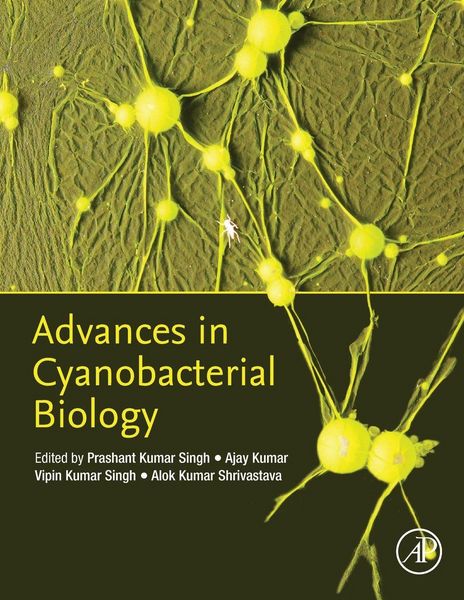
  • Produktbild: Advances in Cyanobacterial Biology
  • Produktbild: Advances in Cyanobacterial Biology

Advances in Cyanobacterial Biology

235,99 €

inkl. gesetzl. MwSt., Versandkostenfrei


Portrait

Dr. Prashant Kumar Singh is currently working as an Assistant Professor at the Department of Biotechnology, Pachhunga University College, Mizoram University, Aizawl, Mizoram. He completed his Ph.D. degree from Banaras Hindu University, Varanasi, India. In his 14 years of research carrier, he has published more than 50 articles and book chapters and one book related to cyanobacteria and plant molecular biology. Dr. Singh also has exposure to various national and international institutes. Dr. Singh is also awarded by the Young Scientist Award and lifetime members of various scientific societies as well as reviewer of various peer reviewed journals.

Ajay Kumar is currently an Assistant Professor at the Amity Institute of Biotechnology, Amity University, Noida, India. He previously served as a Visiting Scientist at the Agricultural Research Organization, Volcani Center, Israel (2018–2022), and completed his doctoral research at the Department of Botany, Institute of Science, Banaras Hindu University, Varanasi, India, focusing on plant–microbe interactions. Dr. Kumar’s research expertise spans plant–microbe interactions, microbial biocontrol, postharvest fruit disease management, microbial endophytes of medicinal plants, and cyanobacteria–pesticide interactions. He is a prolific author in leading international journals and is also actively engaged in academic editing with major publishers such as Elsevier, Springer, CRC Press, and Wiley. Dr. Kumar currently serves as an Associate Editor for Frontiers in Microbiology and BMC Microbiology, a Guest Editor for Microorganisms and Plants (MDPI), and a Series Editor for Plant and Soil Microbiome (Elsevier).

Dr. Vipin Kumar Singh is currently working as CSIR Research Associate in the Department of Botany, Centre of Advanced Study, Banaras Hindu University, Varanasi, Uttar Pradesh, India. He obtained his Ph.D. degree in Botany from the Banaras Hindu University, Varanasi, Uttar Pradesh, India in the year 2015. He has worked in the UGC project entitled “Detoxification of arsenic contaminated groundwater by transgenic eco-friendly microbes.” He has more than nine years of research experience in the area of groundwater hydro-geochemistry and bioremediation approaches to clean the contaminated groundwater sites. His area of interest includes the use of fast-growing plants and microbes to clean the contaminated soil and water system. Dr. Singh has published eight book chapters, twenty-one research articles in journals of national and international repute. He is a life time member of Indian Association of Hydrologists (IAH) and Association of Microbiologists of India (AMI). Currently, he is the member of editorial board in Indian Journal of Microbiology research and Water open access journal. So far, he has reviewed more than dozens of research articles and book chapters of international repute. He has actively participated in many national and international seminars, symposia, conferences and workshop related to the application of microbes in the management of contaminated sites.

Dr. Alok Kumar Shrivastava is an Assistant Professor at the Department of Botany, Mahatma Gandhi Central University, Bihar, India. He has published papers in reputed international journals such as Aquatic toxicology, Journal of Proteomics, Biochemical and Biophysical Acta, Functional and Integrative Genomics, Gene, Archives of Microbiology, Journal of Basic Micro Biology, and various book chapters in Taylors and Francis Group as well as Elsevier publishing group. He completed his Ph.D. degree on the title “Molecular analysis of AhpC of Anabaena sp. PCC7120 to decodes its role in abiotic stress management.

Produktdetails

Einband

Taschenbuch

Erscheinungsdatum

28.02.2020

Herausgeber

Prashant Kumar Singh + weitere

Verlag

Elsevier

Seitenzahl

420

Maße (L/B/H)

27,9/21,6/2,2 cm

Gewicht

1160 g

Sprache

Englisch

ISBN

978-0-12-819311-2

Portrait

Produktdetails

Einband

Taschenbuch

Erscheinungsdatum

28.02.2020

Herausgeber

Verlag

Elsevier

Seitenzahl

420

Maße (L/B/H)

27,9/21,6/2,2 cm

Gewicht

1160 g

Sprache

Englisch

ISBN

978-0-12-819311-2

Herstelleradresse

Libri GmbH
Europaallee 1
36244 Bad Hersfeld
DE

Email: gpsr@libri.de

Kundinnen und Kunden meinen

0 Bewertungen

Informationen zu Bewertungen

Zur Abgabe einer Bewertung ist eine Anmeldung im Konto notwendig. Die Authentizität der Bewertungen wird von uns nicht überprüft. Wir behalten uns vor, Bewertungstexte, die unseren Richtlinien widersprechen, entsprechend zu kürzen oder zu löschen.

Die Bewertungen sind nach Format, Anzahl Sterne und Datum sortiert.

Verfassen Sie die erste Bewertung zu diesem Artikel

Helfen Sie anderen Kund*innen durch Ihre Meinung

Kundinnen und Kunden meinen

0 Bewertungen filtern

Die Leseprobe wird geladen.
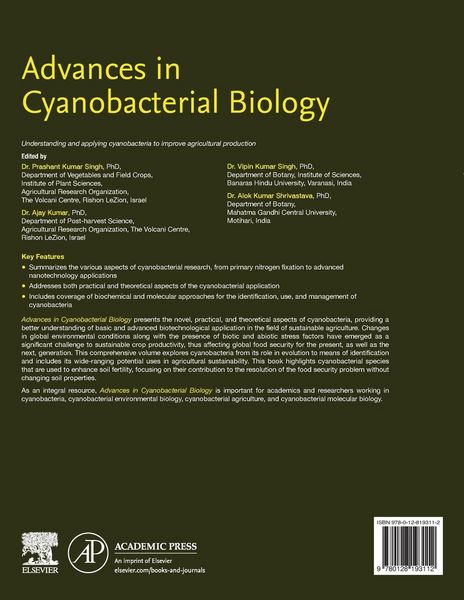
  • Produktbild: Advances in Cyanobacterial Biology
  • Produktbild: Advances in Cyanobacterial Biology
  • 1. Cyanobacterial imprints in diversity and phylogeny2. Cyanobacterial Diversity: Molecular Insights Under Multifarious Environments3. Cyanobacteria in tropical and sub-tropical marine environments: Diversity, and ecological role4. Database Resources for Cyanobacterial Research5. Cyanobacterial pigment and their fluorescence characteristics6. Cyanobacterial membrane biology under stress with particular reference to photosynthesis and photomorphogenesis7. Cyanobacteria and iron homeostasis: Advancements in siderophores and metal transporters8. Molecular chaperones in protein folding and stress management in cyanobacteria9. cyanobacterial genome editing toolboxes: Recent advancement and future projections for basic and synthetic biology researches10. Impact of pesticide applications on the growth and function of cyanobacteria11. Cyanoomics: An advancement in the fields cyanobacterial omics biology with special reference to proteomics and transcriptomics12. Algae and cyanobacteria as a source of novel bioactive compounds for biomedical applications13. Cyanobacterial stress-responsive small RNAs (sRNAs): Players of stress and developmental responses14. Physiological aspects of cyanobacterial nitrogen fixation and its applications in modern sciences15. Mycosporine-like amino acids (MAAs) in Cyanobacteria: Biosynthesis, Functions and Applications16. Heterocyst and akinete differentiation in cyanobacteria: A view towards cyanobacterial symbiosis17. Cyanobacterial peroxiredoxins and its role in cyanobacterial stress biology18. Cyanobacteria as a biofuel source: Recent Advances and Applications19. Cyanobacteria as an indispensable tool for heavy metal removal from wastewater: Advancement in the field of biosorption20. Dynamics of harmful cyanobacterial blooms and their toxins: environmental and human health perspectives and management strategies21. Cyanobacteria as a source of nanoparticles: Application and future projections22. Role of algae and cyanobacteria in bioremediation: Prospects in polyethylene bio-degradation23. Cyanobacteria: Potential source of biofertilizer and synthesizer of metallic-nanoparticles24. Cyanobacteria: potential source of Anticancer Drugs25. Cyanobacteria as a source of biofertilizers for sustainable agriculture