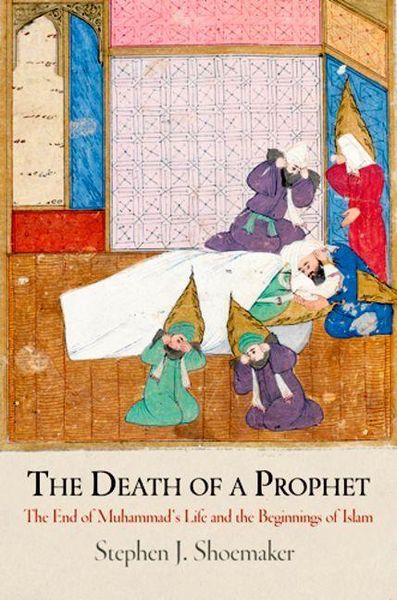
The Death of a Prophet The End of Muhammad's Life and the Beginnings of Islam
-
- Hardcover
- Taschenbuch
- eBook ausgewählt
-
Form:Einzelkauf Download
-
Sprache:Englisch
42,89 €
inkl. gesetzl. MwSt.Beschreibung
Produktdetails
Format
ePUB
Kopierschutz
Nein
Family Sharing
Nein
Text-to-Speech
Ja
Erscheinungsdatum
29.11.2011
Verlag
University Press Of MississippiSeitenzahl
416 (Printausgabe)
Sprache
Englisch
EAN
9780812205138
The oldest Islamic biography of Muhammad, written in the mid-eighth century, relates that the prophet died at Medina in 632, while earlier and more numerous Jewish, Christian, Samaritan, and even Islamic sources indicate that Muhammad survived to lead the conquest of Palestine, beginning in 634-35. Although this discrepancy has been known for several decades, Stephen J. Shoemaker here writes the first systematic study of the various traditions.
Using methods and perspectives borrowed from biblical studies, Shoemaker concludes that these reports of Muhammad's leadership during the Palestinian invasion likely preserve an early Islamic tradition that was later revised to meet the needs of a changing Islamic self-identity. Muhammad and his followers appear to have expected the world to end in the immediate future, perhaps even in their own lifetimes, Shoemaker contends. When the eschatological Hour failed to arrive on schedule and continued to be deferred to an ever more distant point, the meaning of Muhammad's message and the faith that he established needed to be fundamentally rethought by his early followers.
The larger purpose of The Death of a Prophet exceeds the mere possibility of adjusting the date of Muhammad's death by a few years; far more important to Shoemaker are questions about the manner in which Islamic origins should be studied. The difference in the early sources affords an important opening through which to explore the nature of primitive Islam more broadly. Arguing for greater methodological unity between the study of Christian and Islamic origins, Shoemaker emphasizes the potential value of non-Islamic sources for reconstructing the history of formative Islam.
Noch keine Bewertungen vorhanden
Verfassen Sie die erste Bewertung zu diesem Artikel
Helfen Sie anderen Kundinnen und Kunden durch Ihre Meinung.
Kurze Frage zu unserer Seite
Vielen Dank für Ihr Feedback
Wir nutzen Ihr Feedback, um unsere Produktseiten zu verbessern. Bitte haben Sie Verständnis, dass wir Ihnen keine Rückmeldung geben können. Falls Sie Kontakt mit uns aufnehmen möchten, können Sie sich aber gerne an unseren Kund*innenservice wenden.
zum Kundenservice